
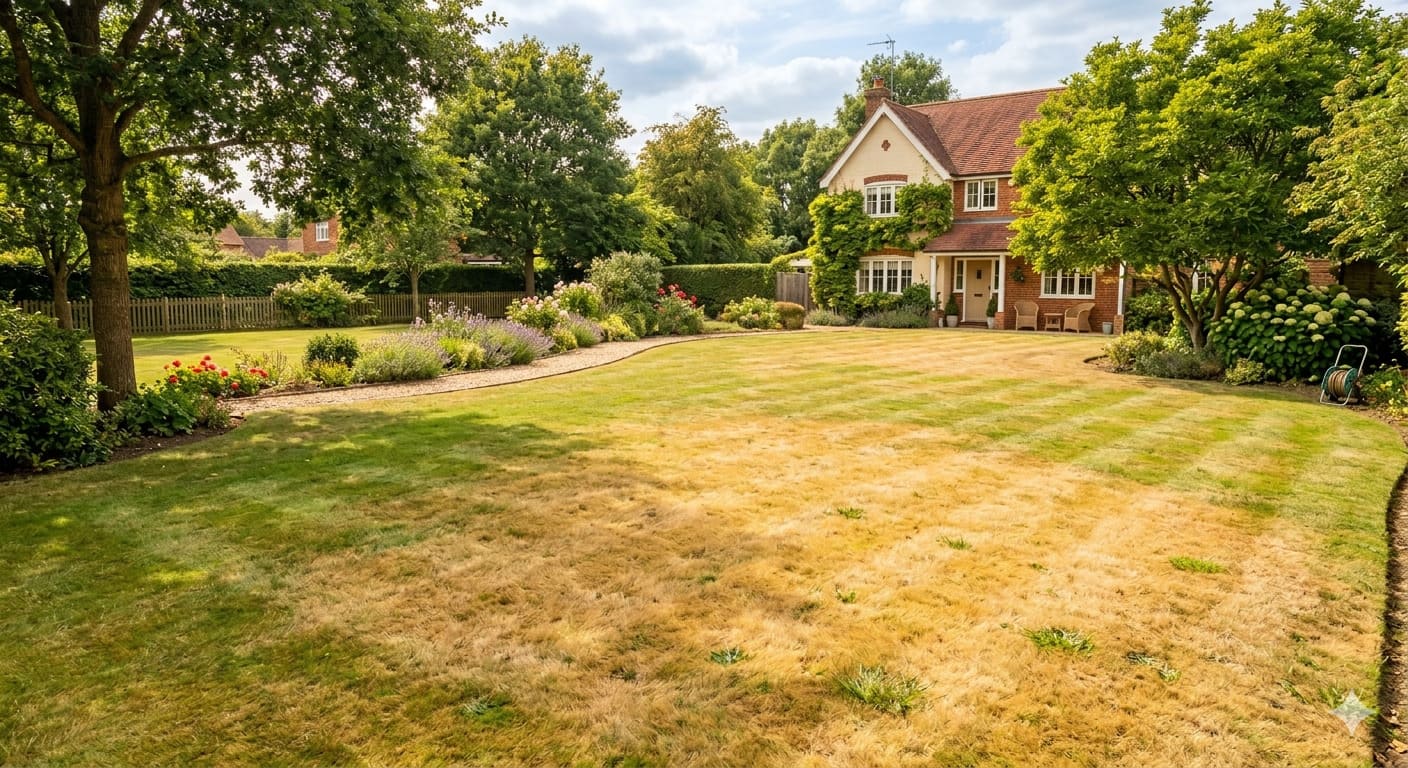
Nothing’s more disheartening than watching your once-lush green lawn slowly turn an unsightly shade of yellow! If you’re staring out at your lawn wondering what’s gone wrong, you’re certainly not alone. In fact, yellowing lawns are one of the most common concerns we hear about from homeowners across south yorkshire.
Did you know that over 60% of British lawns experience yellowing at some point during the year? The good news? Most yellow lawn problems are completely fixable once you know what’s causing them. Whether it’s been a particularly wet summer, you’ve been a bit heavy-handed with the hose, or your grass is simply crying out for some TLC, we’re here to help you get to the bottom of it.
With years of experience caring for British lawns, we’ve seen it all – and more importantly, we know exactly how to bring your grass back to its former glory. Let’s dive into the seven most common reasons your lawn might be turning yellow and, crucially, what you can do about it.
The Most Common Culprit: Overwatering and Poor Drainage
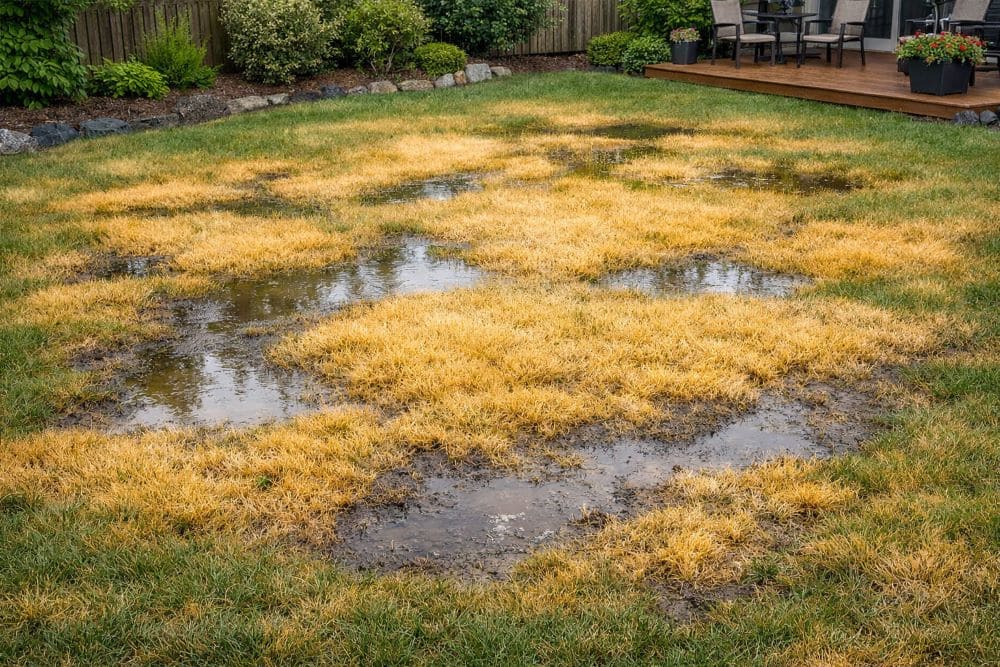
Here in Britain, you might think drought is rarely an issue – but overwatering is surprisingly common! Our clay-heavy soils, combined with generous rainfall, can quickly create waterlogged conditions that suffocate grass roots.
Read More: The Complete Guide to Lawn Watering
When soil becomes waterlogged, grass roots can’t access the oxygen they desperately need. This leads to root rot, which manifests as yellowing patches across your lawn. You might notice a musty smell, spongy areas when you walk, or even mushrooms popping up.
Quick Diagnosis: Try the screwdriver test. Push a long screwdriver into your lawn – if it goes in easily but comes out muddy and wet, you’ve got drainage issues.
The Fix:
- Reduce watering frequency immediately
- Consider installing drainage channels for severe cases
- Aerate compacted areas to improve water flow
- Add sand or organic matter to heavy clay soils
If you’re dealing with persistent waterlogging, it might be time to bring in drainage specialists. Your lawn will thank you for it!
Nutrient Deficiency: When Your Grass Is Crying Out for Food
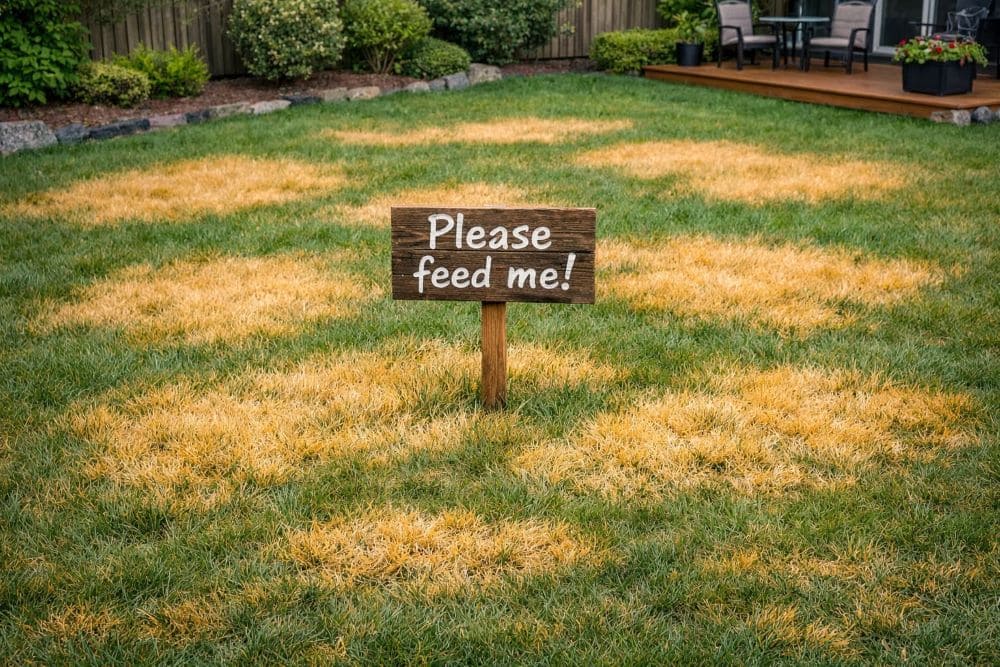
Just like us, grass needs proper nutrition to stay healthy and vibrant. Nitrogen deficiency is the single most common cause of yellowing lawns we encounter. Without adequate nitrogen, grass simply can’t produce the chlorophyll needed for that gorgeous green colour.
The telltale signs? Your lawn starts looking pale and anaemic, beginning with the older grass blades. You might notice the yellowing starts from the tips and works its way down. Iron deficiency is another culprit, particularly common in alkaline soils found across much of England.
What’s happening: Urban and suburban soils often lack the natural nutrient cycling found in wild grasslands. Years of mowing and removing clippings gradually depletes soil nutrients.
The Solution:
- Apply a balanced NPK fertiliser in early spring
- Consider slow-release organic options for steady feeding
- Test your soil pH – it should be between 6.0-7.0 for optimal nutrient uptake
- Don’t forget autumn feeding to prepare for winter
Remember, little and often beats heavy, infrequent feeding. Your grass will respond much better to consistent nutrition.
Drought Stress: Yes, Even in Rainy Britain!
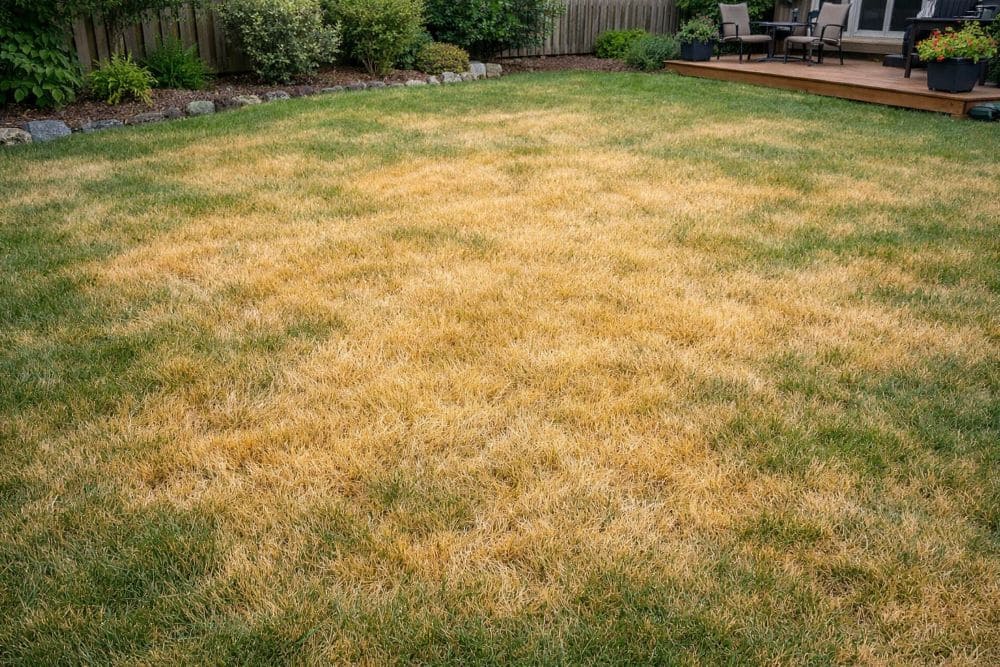
It might sound mad, but drought stress affects British lawns more than you’d think! Even with our famously unpredictable weather, we do get prolonged dry spells – and when we do, lawns suffer quickly.
Grass has a clever survival mechanism: when water becomes scarce, it goes dormant to conserve energy. This dormancy often appears as yellowing or browning, starting from the leaf tips. The good news is that dormant grass isn’t dead grass – it’s just waiting for better conditions.
Spotting Drought Stress:
- Yellowing appears uniform across the lawn
- Grass feels crispy underfoot
- Footprints remain visible longer than usual
- No signs of disease or pests
Recovery Strategy:
- Water deeply but infrequently (better than frequent shallow watering)
- Water early morning to reduce evaporation
- Raise your mowing height to help retain moisture
- Consider drought-resistant grass varieties for renovation
The key is patience – stressed grass takes time to recover, but it will bounce back with proper care.
Fungal Diseases: The Dark Side of Our Damp Climate
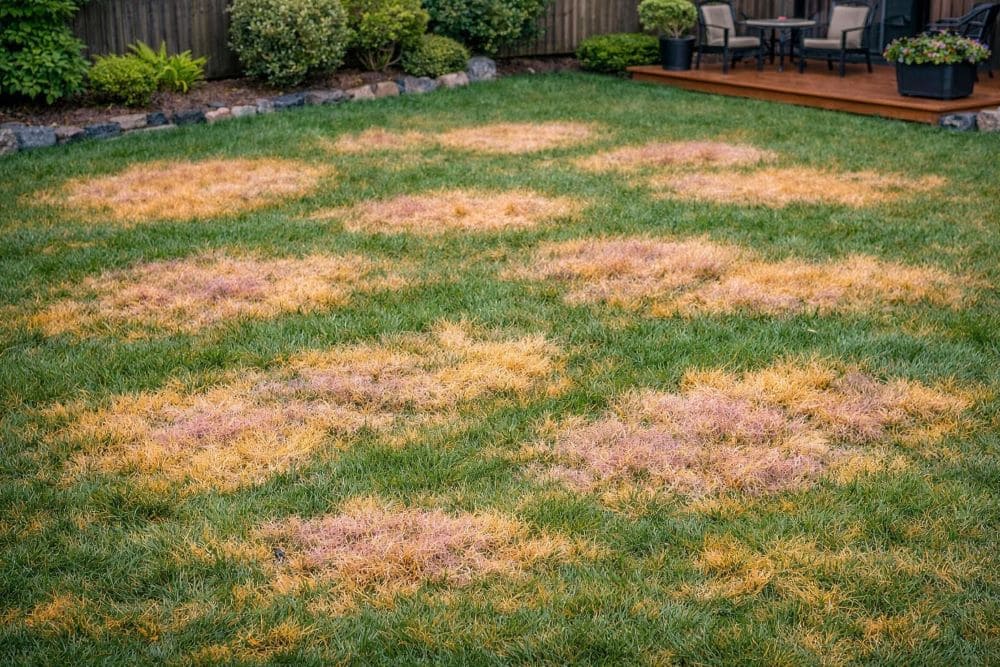
Our lovely British weather creates perfect conditions for grass – and unfortunately, for lawn diseases too! Fungal infections thrive in our mild, damp climate and can quickly turn healthy green grass into yellowing, patchy nightmare.
Red thread disease is particularly common across the UK, appearing as pink or red threadlike growths on grass blades. Fairy ring creates those mysterious circles of yellowing or dying grass that seem to expand each year. Fusarium patch, meanwhile, creates yellow patches that often have a water-soaked appearance.
Disease vs. Other Issues:
- Fungal problems often appear in circular or irregular patterns
- Look for visible signs like threads, spots, or unusual growths
- Diseases spread gradually from infected areas
- Often coincide with prolonged damp periods
Treatment Approach:
- Improve air circulation by reducing thatch buildup
- Avoid watering in the evening
- Apply appropriate fungicide treatments when necessary
- Ensure proper lawn nutrition to boost natural resistance
Prevention is always better than cure with lawn diseases. Keeping your grass healthy and well-maintained is your best defence.
Pet-Related Yellow Spots: Love Your Dog, Save Your Lawn
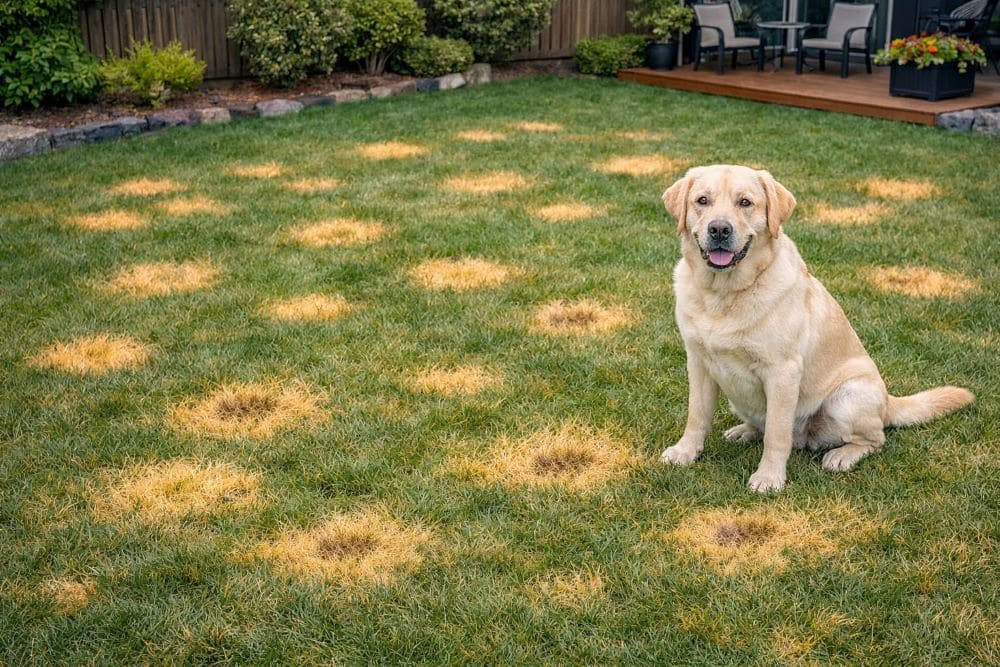
We absolutely adore our four-legged family members, but their toilet habits can wreak havoc on our lawns! Dog urine contains high concentrations of nitrogen which, in small doses feeds the grass, but in larger amounts literally burns it.
You’ll typically see small, circular yellow or brown patches with darker green rings around the edges – that’s where the diluted nitrogen actually fertilises the grass. Female dogs and smaller breeds often cause more damage because they tend to empty their bladders in one spot.
Immediate Action:
- Flush affected areas with water immediately after accidents
- Train your dog to use a designated area (perhaps gravel or bark chips)
- Consider dietary supplements that reduce nitrogen in urine
- Create barriers around sensitive lawn areas
Repair Methods:
- Remove dead grass and reseed affected patches
- Apply gypsum to help neutralise the soil
- Overseed with hardier grass varieties
- Be patient – repairs take 4-6 weeks to establish properly
Remember, a few yellow spots are a small price to pay for the joy our pets bring us!
Soil Compaction: When Your Lawn Can’t Breathe
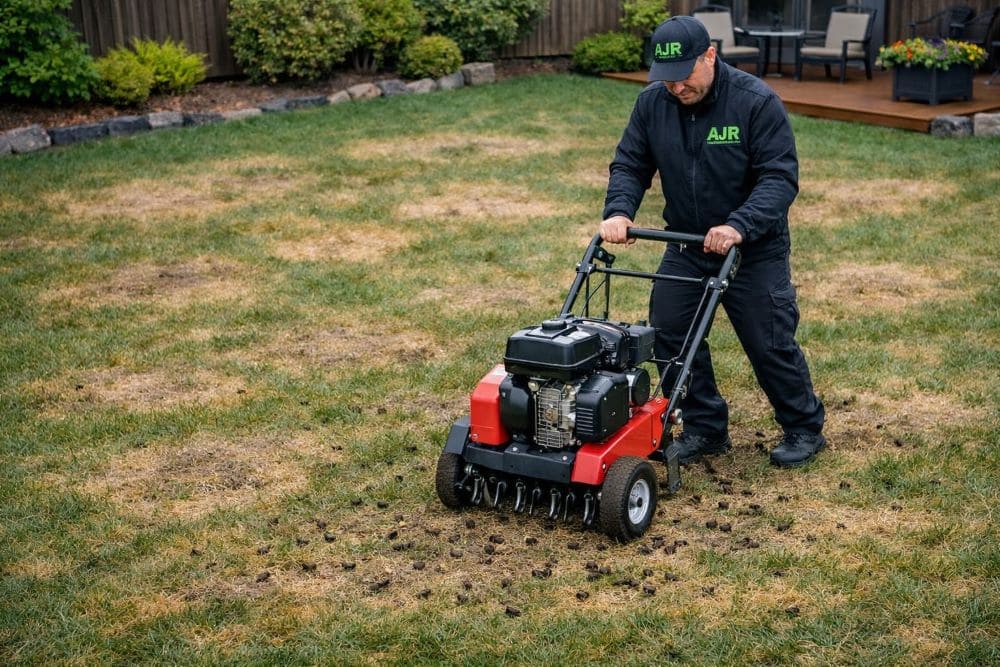
Heavy foot traffic, garden machinery, and even prolonged wet weather can compress your soil, making it nearly impossible for grass roots to access air, water, and nutrients. Compacted lawns often develop a yellowish, thin appearance because the grass is literally struggling to survive.
This is particularly common around pathways, under washing lines, or anywhere the family regularly walks. Clay soils, prevalent across much of the UK, are especially prone to compaction.
Signs of Compaction:
- Water pools on the surface after rain
- Soil feels rock-hard when dry
- Moss begins taking over thin grass areas
- Grass appears sparse and weak
Solutions:
- Aerate your lawn annually using a garden fork or aerator
- Avoid walking on wet grass whenever possible
- Consider installing proper pathways for high-traffic areas
- Add organic matter to improve soil structure over time
Professional core aeration can work wonders for severely compacted lawns. It’s an investment that pays dividends in lawn health.
Seasonal Factors: Working with Nature’s Cycle
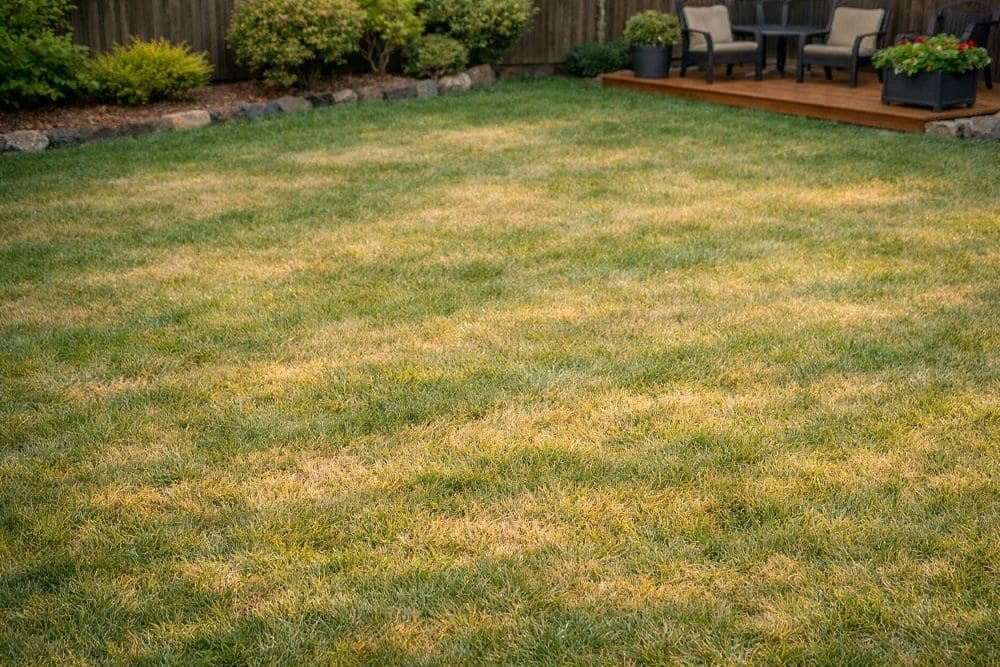
Sometimes, yellowing grass is simply nature doing what nature does! Certain grass types naturally slow down and lose their vibrant colour during specific seasons. Cool-season grasses like fescue and ryegrass can struggle during hot summer periods, while warm-season varieties might yellow as temperatures drop.
Autumn brings its own challenges. As daylight hours shorten and temperatures cool, grass growth slows dramatically. This natural dormancy often appears as gradual yellowing – perfectly normal and nothing to panic about!
Seasonal Considerations:
- Spring yellowing often indicates winter damage or early nutrient needs
- Summer stress typically results from heat and occasional drought
- Autumn yellowing may be natural dormancy preparation
- Winter damage becomes apparent as growth resumes in spring
Working with the Seasons:
- Adjust your expectations based on grass type and time of year
- Focus on preparation rather than fighting natural cycles
- Use seasonal transitions as opportunities for lawn improvements
- Plan major lawn work for optimal growing periods
Understanding your grass’s natural rhythm helps you provide care when it’s most beneficial.
Professional Help: When to Call in the Experts
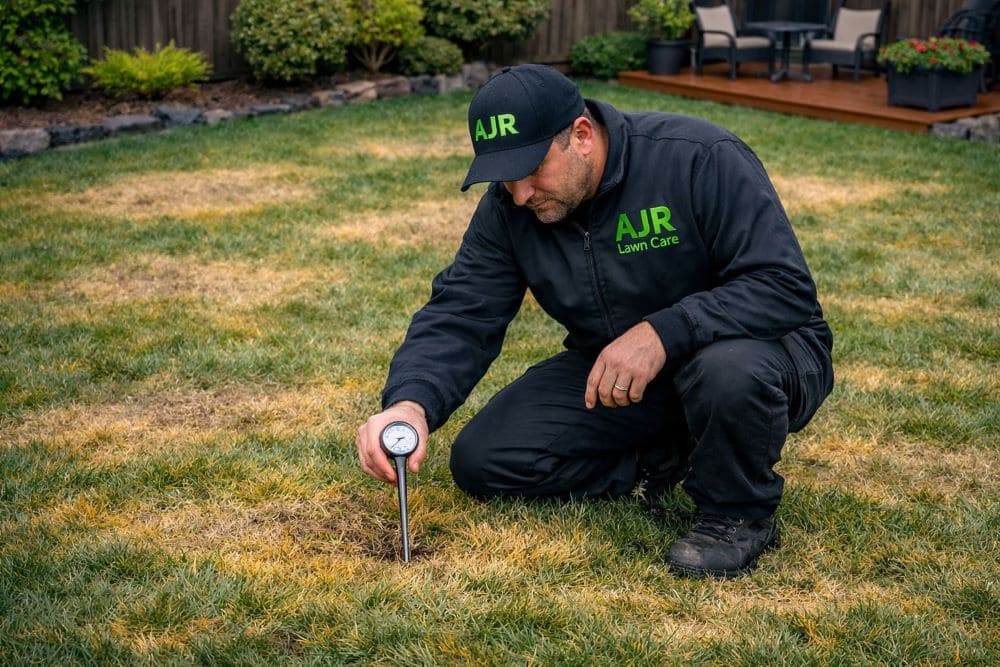
Sometimes, despite our best efforts, lawn problems persist or seem overwhelming. There’s absolutely no shame in seeking professional help – in fact, it often saves time, money, and frustration in the long run!
Consider professional assistance when you’re dealing with persistent yellowing despite trying multiple solutions, large areas of damage that seem beyond DIY repair, or complex drainage issues requiring specialised equipment. We’ve also found that soil testing and professional diagnosis can quickly identify problems that might take homeowners months to figure out.
What Professionals Bring:
- Accurate diagnosis using soil tests and expertise
- Access to commercial-grade treatments and equipment
- Tailored treatment plans for your specific lawn and soil type
- Ongoing maintenance programmes to prevent future issues
The investment in professional lawn care often pays for itself through reduced water bills, fewer product purchases, and the joy of having a consistently beautiful lawn.
Conclusion
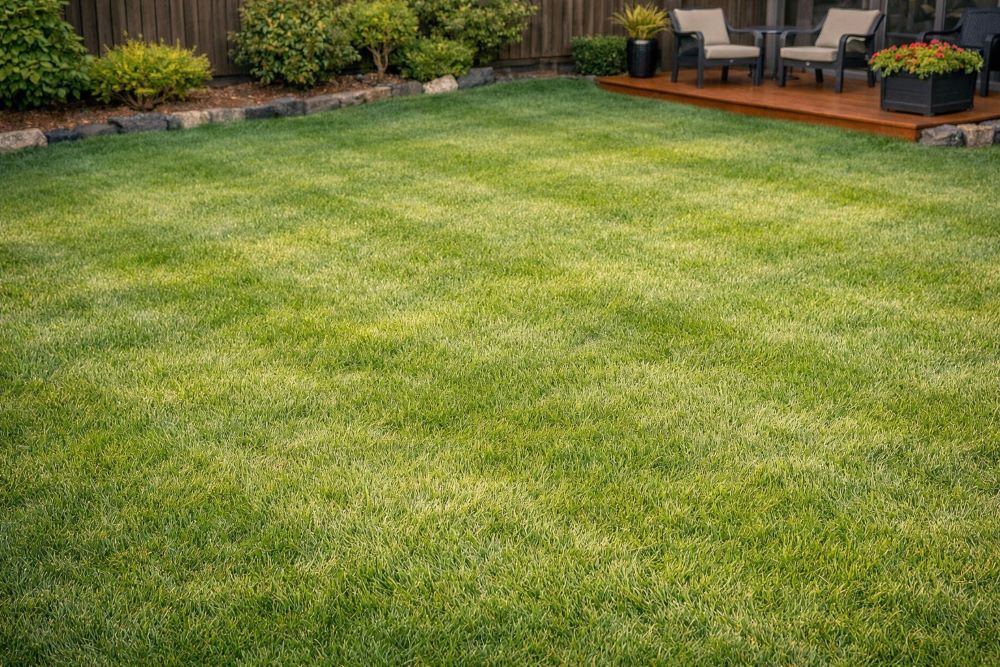
Yellow lawns can feel like a lawn care disaster, but armed with the right knowledge, you can tackle almost any yellowing problem your grass throws at you! Whether it’s adjusting your watering routine, improving soil nutrition, or simply understanding your lawn’s natural seasonal behaviour, most issues have straightforward solutions.
The most important thing is taking action early. Grass is remarkably resilient, and with prompt attention, even severely yellowed lawns can return to lush, green health. Don’t forget that every lawn is unique – what works perfectly for your neighbour might need tweaking for your specific conditions.
If you’re feeling overwhelmed or the problem seems beyond a DIY fix, don’t hesitate to reach out to local lawn care professionals. We’re passionate about helping homeowners achieve the beautiful lawns they deserve, and there’s nothing more satisfying than seeing a previously yellow lawn transformed into the envy of the neighbourhood. Your perfect lawn is absolutely achievable – sometimes it just needs a helping hand to get there!
Frequently Asked Questions
How long does it take for yellow grass to turn green again?
Recovery time depends on the cause, but most yellowing issues improve within 2-4 weeks with proper treatment. Nutrient deficiency typically shows improvement in 7-14 days, while drought-stressed grass may take 3-4 weeks to fully recover once watering resumes.
Should I water my lawn every day if it's turning yellow?
No! Daily watering often makes yellowing worse by creating waterlogged conditions. Instead, water deeply 2-3 times per week, allowing soil to dry slightly between sessions. Check soil moisture with the screwdriver test before watering.
Can I use lawn feed on yellow grass or will it make it worse?
You can safely feed yellow grass if the yellowing is due to nutrient deficiency. However, avoid fertilising waterlogged or drought-stressed lawns until the underlying issue is resolved. When in doubt, test soil moisture first.
Is it normal for grass to go yellow in autumn?
Yes, some autumn yellowing is completely natural as grass prepares for winter dormancy. Cool-season grasses like fescue naturally slow growth and may lose colour. However, sudden or patchy yellowing could indicate other issues requiring attention.
When should I call a professional about my yellow lawn?
Contact lawn care professionals if yellowing persists after 4-6 weeks of treatment, covers large areas (more than 30% of your lawn), or if you’re seeing signs of disease like unusual growths or spreading patterns. Professional soil testing can quickly identify complex issues.



