
The UK’s mild, damp climate creates perfect conditions for beautiful green lawns – but unfortunately, it also provides ideal conditions for various lawn diseases. Many homeowners mistake disease symptoms for other problems like pest damage, drought stress, or nutrient deficiencies, leading to ineffective treatments and worsening conditions.
Understanding the most common lawn diseases in Britain and how to prevent them can save you significant time, money, and frustration whilst keeping your lawn healthy year-round.
Red Thread Disease

What It Looks Like
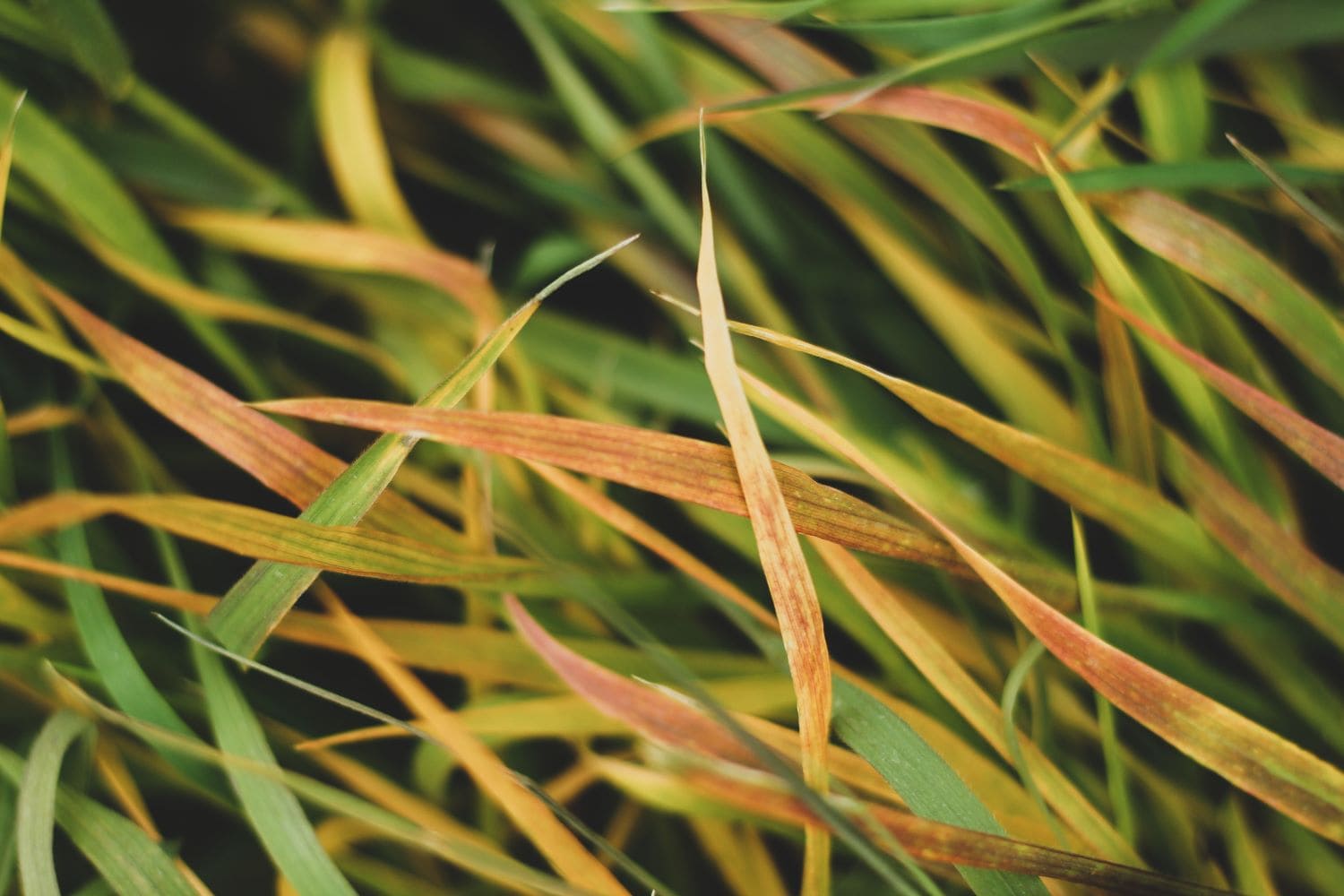
Red thread appears as irregular patches of pink or reddish-brown grass, typically 5-25cm in diameter. You’ll notice thin, red or pink thread-like growths extending from the grass blades, which give this disease its distinctive name. The affected grass often has a bleached, straw-like appearance.
When It Strikes
Most active during cool, wet conditions in spring and autumn, particularly when temperatures range between 15-20°C. Extended periods of high humidity and poor air circulation make it worse.
Why It Happens
Red thread thrives in nitrogen-deficient lawns with poor drainage. Overly wet conditions, combined with inadequate feeding, create perfect conditions for this fungal disease to spread.
Prevention and Treatment
- Maintain proper nitrogen levels through regular, balanced fertilisation
- Improve lawn drainage and reduce thatch buildup
- Ensure good air circulation by avoiding overwatering
- Remove affected clippings to prevent spread
Fusarium Patch (Microdochium)
What It Looks Like
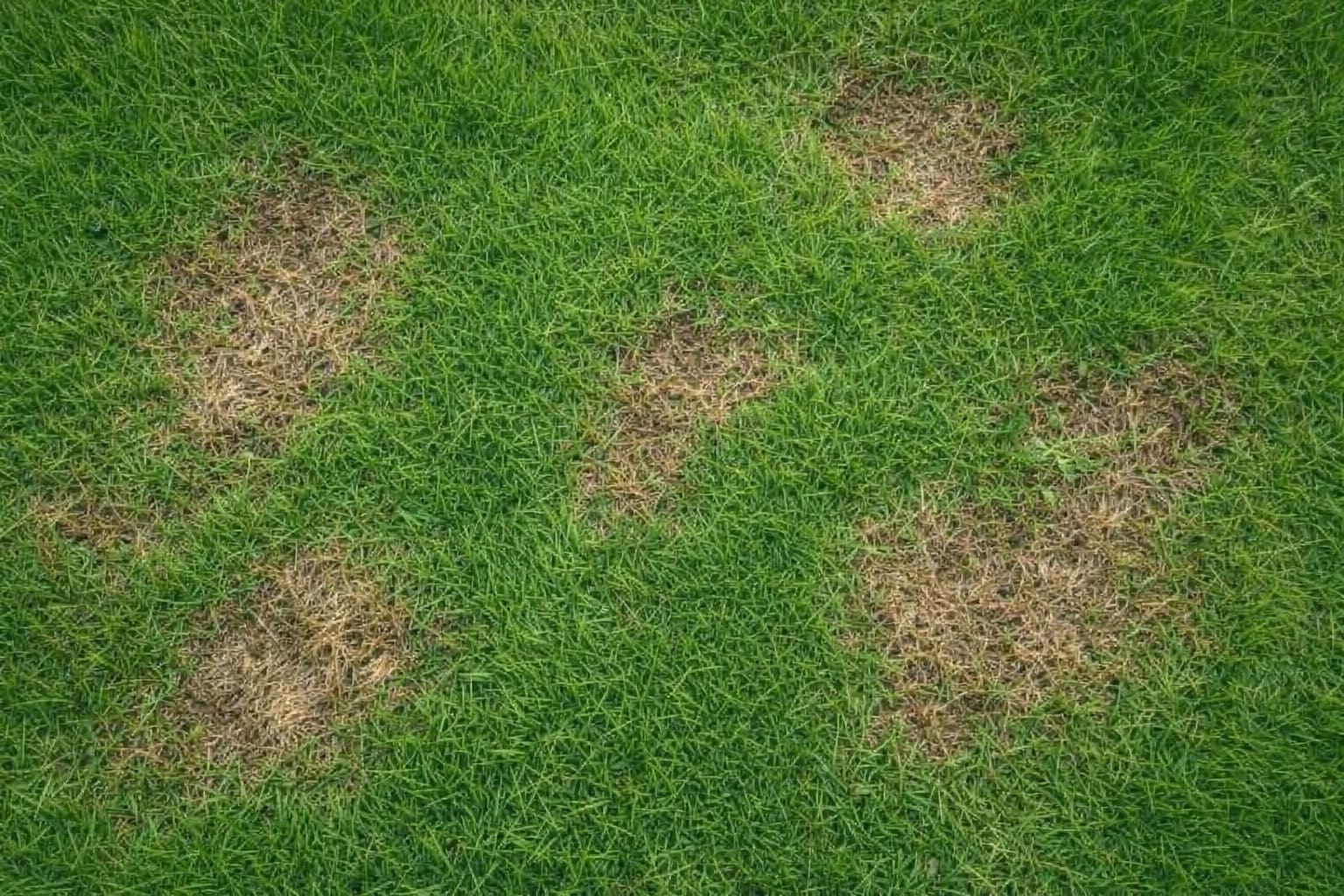
Fusarium patch creates circular brown or yellow patches ranging from 2-30cm across. In wet conditions, you might see a white or pink fluffy growth around the patch edges, particularly in the morning. The patches often have a darker border.
When It Strikes
Most problematic during cool, wet autumn and winter months when temperatures drop below 10°C. Snow cover can make the problem significantly worse.
Why It Happens
This disease loves waterlogged, poorly-drained soils combined with high nitrogen levels late in the season. Excessive thatch buildup and compacted soil create ideal conditions.
Prevention and Treatment
- Avoid high-nitrogen fertilisers in late summer and autumn
- Improve drainage through aeration and organic matter incorporation
- Reduce thatch buildup through regular scarification
- Ensure proper surface drainage to prevent standing water
Take-All Patch
What It Looks Like
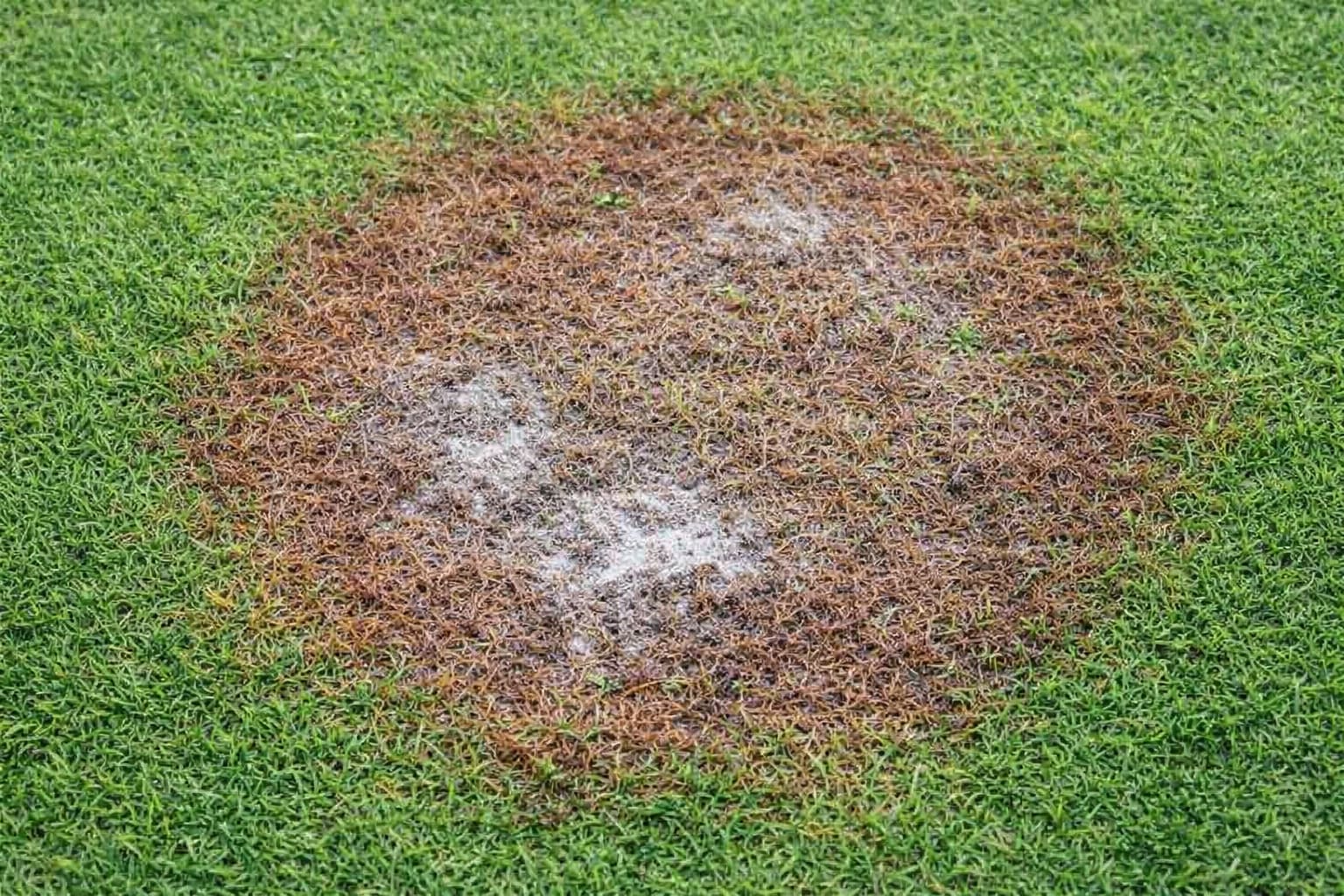
Take-all patch appears as circular dead areas that gradually expand outward, often creating a ring pattern. The affected grass turns yellow, then brown, and eventually dies. The patches can range from 30cm to several metres across.
When It Strikes
Most active during warm, wet conditions in late spring through early autumn. The disease progresses slowly, often taking months to develop fully.
Why It Happens
High soil pH (above 7.0) and excessive thatch buildup create ideal conditions. Overwatering and poor drainage compound the problem, particularly in newly laid turf or recently limed areas.
Prevention and Treatment
- Monitor and adjust soil pH to slightly acidic levels (6.0-6.5)
- Reduce thatch through regular aeration and scarification
- Improve drainage and avoid overwatering
- Professional fungicide applications may be necessary for severe cases
Anthracnose
What It Looks Like
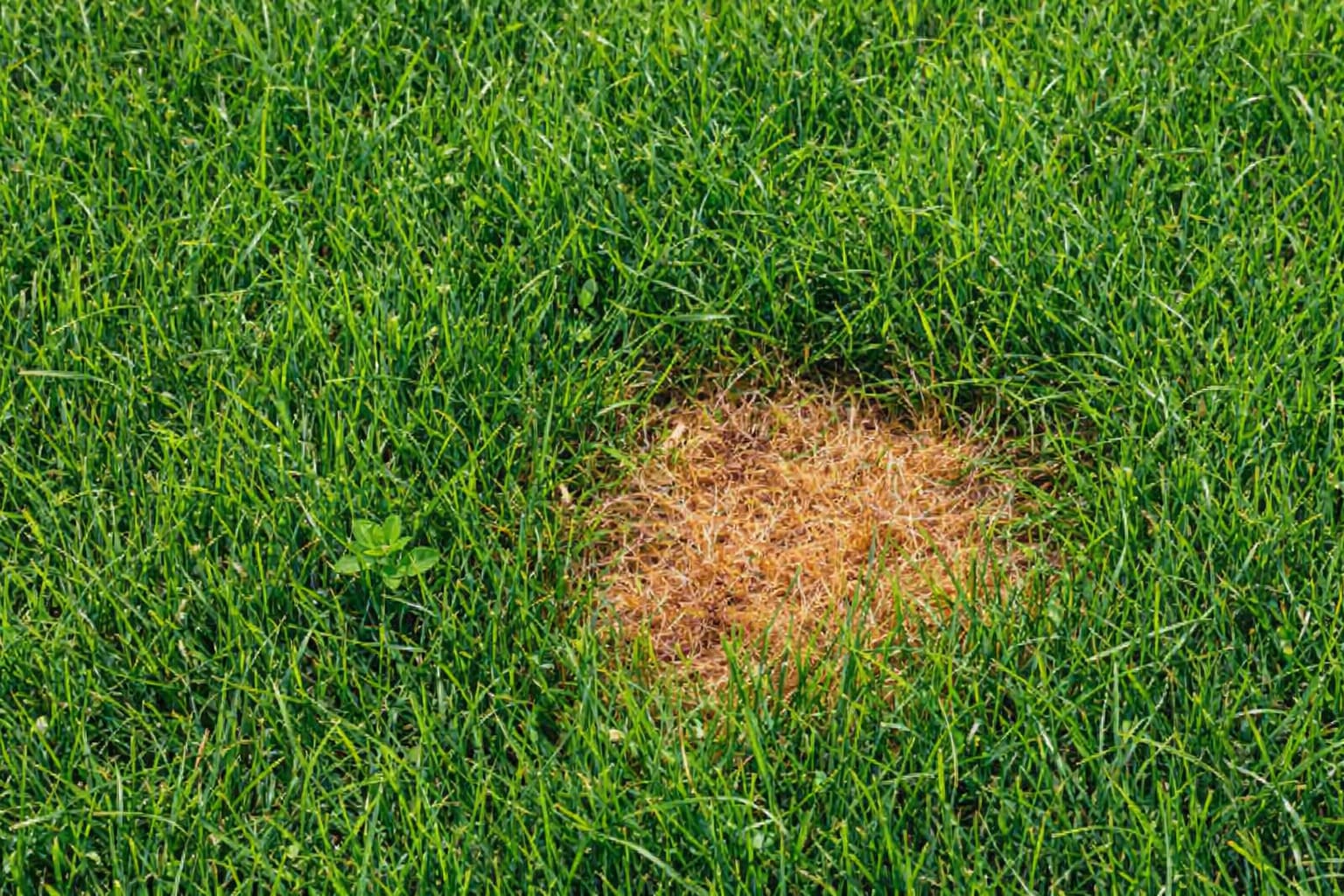
Anthracnose causes yellowing and thinning of grass, particularly in high-traffic areas. Individual grass blades develop small, dark spots that eventually turn the entire blade yellow or brown. The lawn appears thin and weak rather than showing distinct patches.
When It Strikes
Most problematic during hot, humid summer conditions, particularly when combined with drought stress or poor growing conditions.
Why It Happens
Stressed lawns are most susceptible – particularly those suffering from compaction, poor drainage, low fertility, or drought stress. High-traffic areas are especially vulnerable.
Prevention and Treatment
- Maintain consistent watering during dry periods
- Reduce soil compaction through regular aeration
- Ensure balanced nutrition throughout the growing season
- Limit foot traffic on stressed areas
Dollar Spot
What It Looks Like
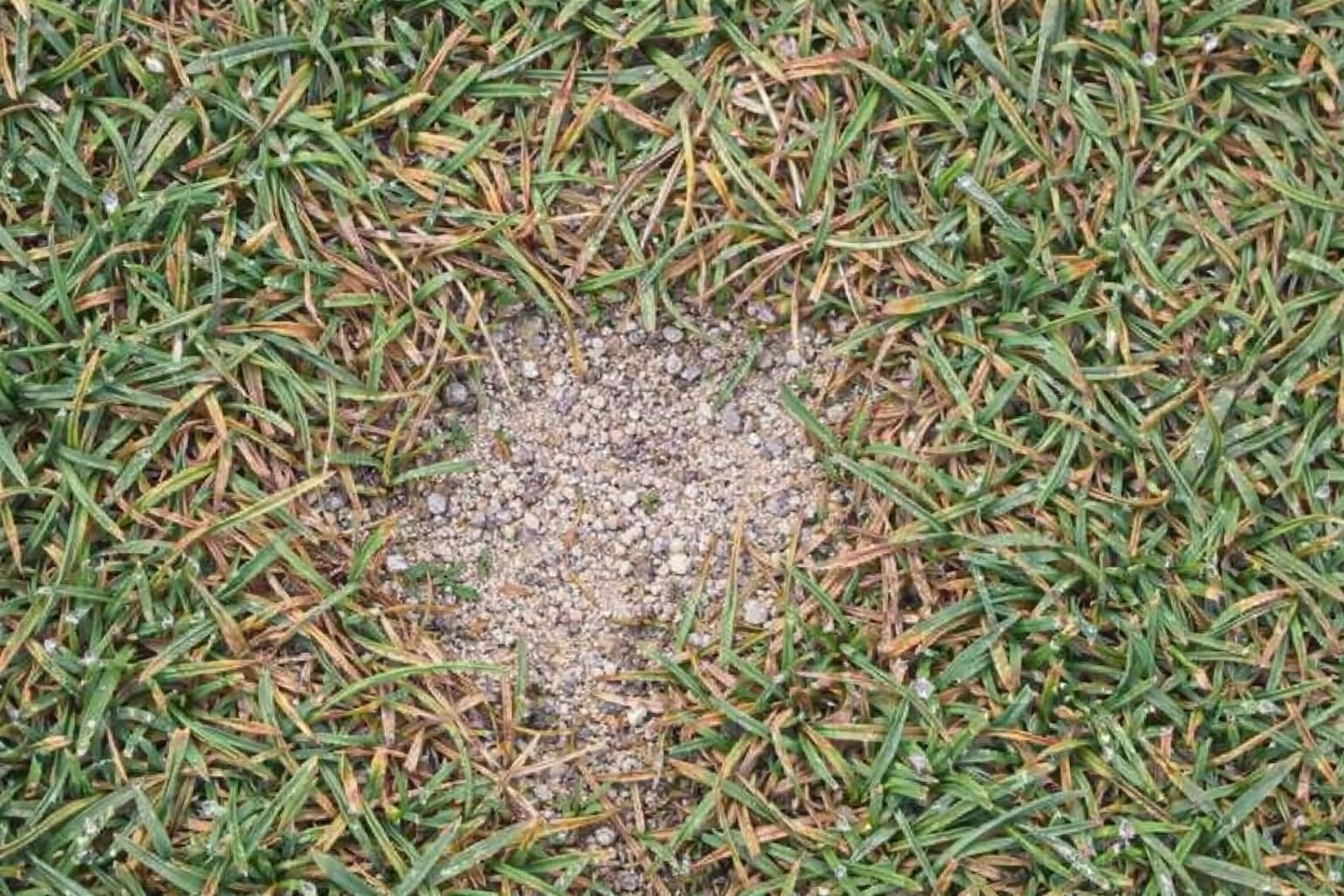
Dollar spot creates small, round, bleached patches about the size of a 50p coin (hence the name). Individual grass blades show distinctive hourglass-shaped tan lesions with reddish-brown borders.
When It Strikes
Most active during warm days and cool nights with heavy dew, typically in late spring through early autumn.
Why It Happens
Low nitrogen levels combined with drought stress make lawns particularly susceptible. Poor air circulation and excessive thatch worsen the problem.
Prevention and Treatment
- Maintain adequate nitrogen levels through regular feeding
- Water deeply but infrequently to encourage deep root growth
- Improve air circulation and reduce thatch buildup
- Remove morning dew through light brushing when possible
Fairy Ring
What It Looks Like
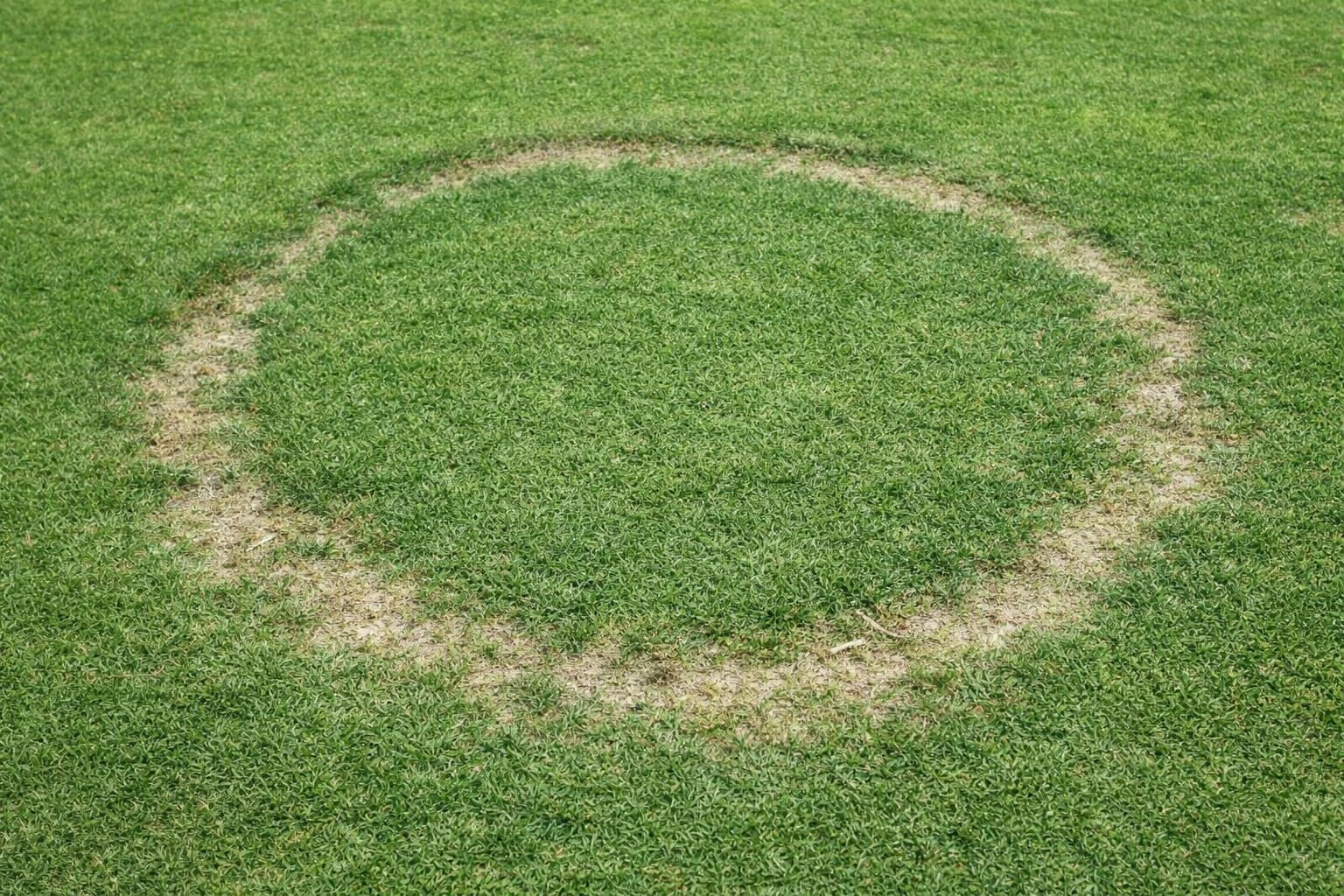
Fairy rings appear as circular patterns of dark green grass, often with mushrooms or toadstools along the ring edge. In severe cases, the grass within the ring may die, creating a bare circle with lush growth around the perimeter.
When It Strikes
Most noticeable during warm, moist conditions in summer and autumn when mushrooms are more likely to appear.
Why It Happens
Caused by soil-dwelling fungi that create water-repellent conditions in the soil. Organic matter buried in the lawn (tree roots, construction debris) often triggers initial development.
Prevention and Treatment
- Improve water penetration through deep aeration
- Apply wetting agents to help water reach affected areas
- Remove any buried organic debris if possible
- Professional treatment may be required for severe cases
Snow Mould
What It Looks Like
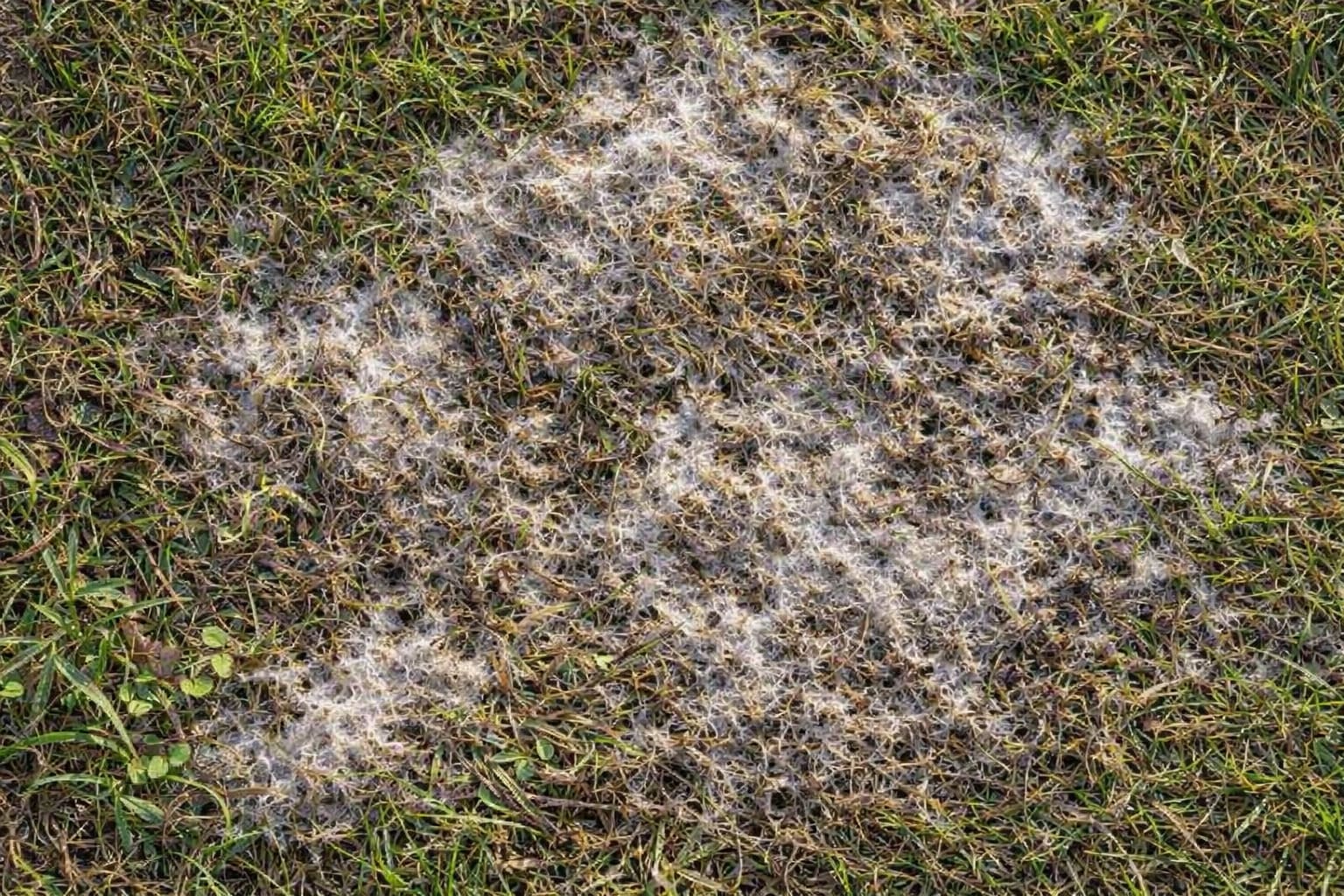
Snow mould appears as circular patches of matted, greyish-white grass after snow melts. The affected areas look bleached and may have a cotton-like fungal growth visible in damp conditions.
When It Strikes
Develops under snow cover or during prolonged periods of cool, wet weather in winter and early spring.
Why It Happens
Extended periods under snow or in constantly wet conditions create ideal fungal growing environments. Excessive autumn fertilisation and unraked leaves worsen the problem.
Prevention and Treatment
- Avoid late-season high-nitrogen fertilising
- Remove fallen leaves before winter
- Ensure good drainage to prevent waterlogging
- Rake affected areas gently in spring to improve air circulation
Prevention: Your Best Defence
Proper Lawn Care Practices
The most effective disease prevention comes from maintaining overall lawn health through proper care practices:
Regular Feeding Schedule Balanced nutrition throughout the growing season keeps grass strong enough to resist disease. However, avoid excessive nitrogen late in the season.
Appropriate Watering Water deeply but less frequently to encourage deep root growth. Early morning watering allows grass blades to dry quickly, reducing disease-promoting humidity.
Adequate Drainage Poor drainage is behind many disease problems. Regular aeration, organic matter incorporation, and proper grading prevent waterlogged conditions.
Thatch Management Excessive thatch creates humid conditions perfect for disease development. Annual scarification keeps thatch at healthy levels.
Professional Monitoring
Many disease problems develop slowly and can be prevented with early intervention. Professional lawn care specialists can identify potential issues before they become serious problems, saving you both money and the frustration of dealing with disease damage.
When to Seek Professional Help
While some minor disease issues can be managed with improved care practices, certain situations require professional intervention:
- Diseases covering large lawn areas
- Recurring problems despite improved care
- Multiple disease types affecting the same lawn
- Uncertainty about proper diagnosis and treatment
At AJR Lawn Care, we’re passionate about helping UK homeowners maintain disease-free lawns through proper prevention and targeted treatment when necessary. Our expertise in British lawn conditions means we can quickly identify problems and implement effective solutions.
Concerned about potential disease issues in your lawn? Contact us for a comprehensive lawn health assessment and personalised prevention plan.
Articles you may find helpful:



