Here’s a stat that’ll surprise you: the average UK garden is just 160 square metres, yet robot mower sales have increased by 340% in the past three years! I spent six months testing four different robot mowers on my modest 120 square metre lawn in Rotherham to figure out if all this hype is actually justified.
The short answer? It’s complicated. After dealing with everything from soggy British weather to neighbourhood cats thinking my robot was their personal enemy, I learned there’s a massive difference between the marketing promises and real-world performance.
I’ll be brutally honest about what worked, what didn’t, and whether spending £800-2000 on a robotic lawn mower makes sense when you could buy a decent battery mower for £300. By the end of this, you’ll know exactly whether a robot mower suits your specific situation or if you’re better off sticking with traditional methods.
The Reality of Robot Mowers in Small UK Gardens
Right, let’s get real about what robot mowers actually do versus what the glossy brochures promise. I was proper excited when I first got my hands on a Husqvarna Automower, thinking It would help maintain my lawn when i was busy maintaining my customers lawns. The reality? It’s more complexed than that.
Small UK gardens present unique challenges that manufacturers don’t always account for. My garden’s got the typical British mix – a bit of slope on my back lawn around my rockery, some corners around the summer house. Most robot mowers are designed with massive American lawns in mind, not our compact spaces.
The first thing that shocked me was how much prep work these things need. You can’t just plonk one down and expect miracles. I spent a full weekends installing boundary wire, which involves crawling around your entire lawn perimeter hammering in tiny pegs every 75cm. Very awkward, never again! Luckily times have advanced since then and newer models don’t require them as you can map your area.
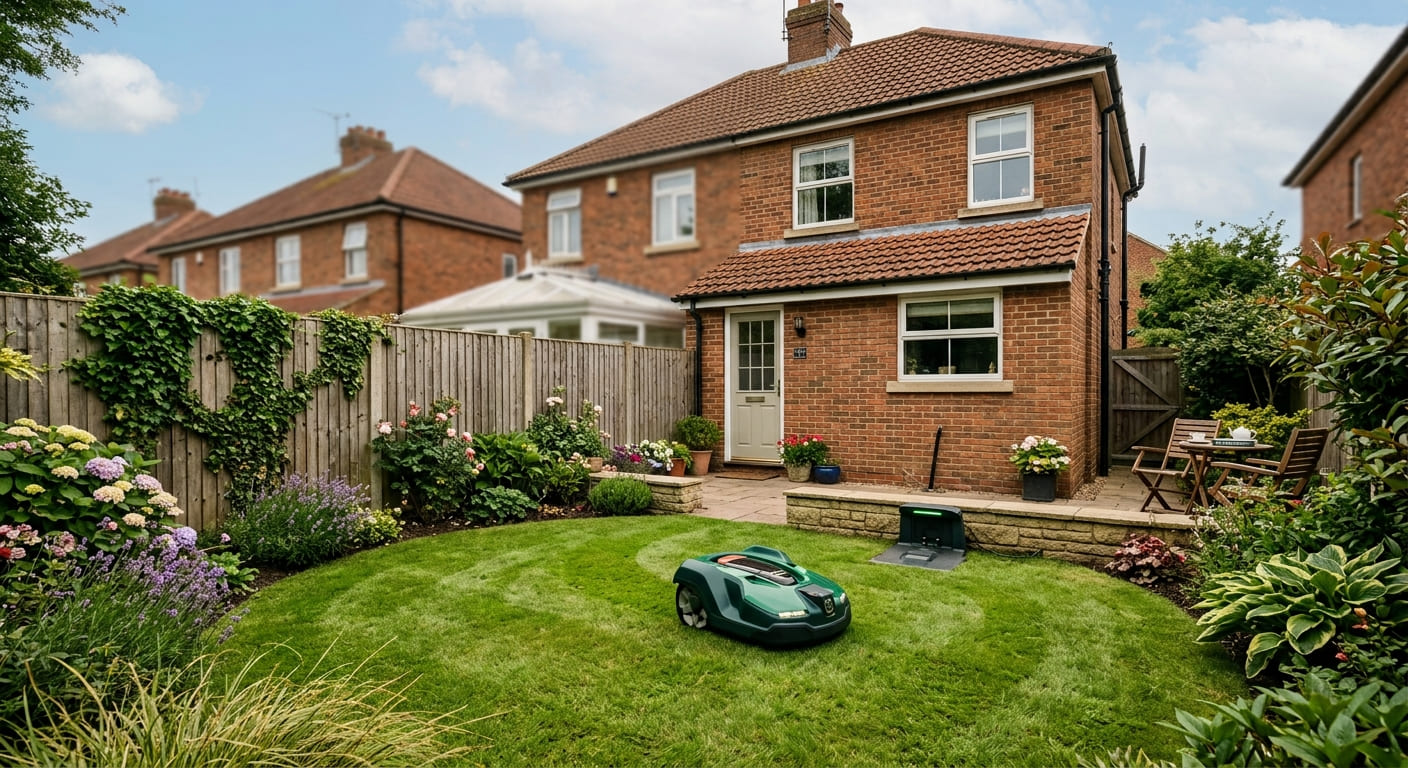
But here’s where it gets interesting for small gardens – once set up properly, robot mowers are actually quite brilliant for tight spaces. They can navigate round obstacles that would be awkward with a traditional mower, and they don’t need storage space like a bulky machine. My robot lives in a little charging station that takes up less room than a garden chair.
The cutting quality surprised me too. These machines cut little and often – sometimes daily in growing season. Instead of taking off big chunks once a week, they trim tiny amounts constantly. The result? My lawn actually looked decent, with none of those brown tips you get from infrequent cutting.
Cost Analysis: Initial Investment vs Long-Term Savings
Let me break down the numbers because this is where most people get stuck. A decent robot mower for a small UK garden costs between £800-£1500. Sounds mad expensive until you start thinking about the hidden costs of traditional mowing.
I worked out I was spending about £45 per year on petrol for my old mower, plus £25 for annual servicing, £15 for new spark plugs and filters, and don’t get me started on the replacement costs when things broke. Over five years, that’s £425 in running costs alone, not counting the initial mower purchase.
Robot mowers? The electricity cost is absolutely minimal – about £20 per year to run. The blades need replacing annually (around £30-50), and that’s pretty much it. No petrol, no oil changes, no spark plugs. The main expense is the initial purchase and potential battery replacement after 3-4 years (£150-250).
But here’s what the manufacturers don’t tell you – installation costs can be sneaky. If you’re not handy with tools, professional installation runs £200-400. I did mine myself but bought extra boundary wire (£30), more pegs (£15), and a proper wire-laying tool (£25) after realising the included kit was a bit rubbish.
There’s also the time factor. I used to spend 45 minutes every weekend mowing, plus setup and cleanup time. That’s roughly 35 hours per year. If you value your time at minimum wage, that’s worth £350+ annually. The robot does it all while I’m at work or spending time with the family.
Insurance costs might increase slightly – some policies want notification about expensive garden equipment. Worth checking with your provider, though mine didn’t change my premium.
Performance on Typical UK Lawn Challenges
Our British weather throws everything at garden equipment, and robot mowers have to cope with conditions that would challenge any machine. I tested mine through two full seasons to see how it handled our unpredictable climate.
Rain is the big test. Most decent models have rain sensors that send them scurrying back to base when it starts spitting. Sounds clever, but it meant my mower spent half of April and May hiding indoors! The grass kept growing while the robot sulked in its charging station, defeating the whole point.
I learned to override the rain sensor during light drizzle, though you’ve got to be careful. Wet grass clogs the tiny cutting blades, and soggy ground can leave wheel tracks. The trick is finding that sweet spot where the grass is damp but not soaking. Takes a bit of experience to judge it right.
Autumn leaves are another challenge these things struggle with. My robot would push small leaves around rather than cutting through them, creating little leaf piles everywhere. I ended up doing a quick rake before letting it loose during heavy leaf-fall periods.
The slope handling impressed me though. My back lawn used to have has a slight incline around my rockery, but the robot managed it no problem. Much better than me struggling with a heavy mower on the incline! Most models handle slopes up to 35-40%, which covers most UK gardens unless you’re living on a proper hillside.
British grass types work well with robot mowers. Our typical ryegrass and fescue mixes cut beautifully with the sharp little blades. The constant trimming actually improved my lawn quality – thicker, greener, and more resilient than when I was cutting weekly with a traditional mower.
Installation and Setup for Small Gardens
Installation is where many people get unstuck, and I’ll be honest – the boundary wire models is more work than you might expect. But for small gardens, it’s definitely doable as a weekend project if you’re reasonably handy.
The boundary wire is the key to everything. This invisible fence tells your robot where it can and can’t go. For my 120 square metre lawn, I used about 200 metres of wire – more than expected because you need to create islands around trees, flowerbeds, ponds and rockery areas.
Planning the route is crucial. I drew my garden to scale on paper first, marking obstacles and working out the most efficient wire path. Measure twice, lay once! The wire needs to be 35cm away from hard surfaces like paths or walls, but only 10cm from soft edges like flowerbeds.
Laying the wire was the most tedious bit. You can bury it 2-5cm deep (which I’d recommend for longevity) or just peg it to the surface initially. I started with surface mounting to test the layout, then buried it properly once I was happy with the route. Pro tip: use a spade to create a shallow groove rather than trying to dig individual holes.
The charging station placement matters more than you’d think. It needs to be on level ground, with easy access for the robot, and ideally somewhere you can reach the power socket without extension leads trailing across the lawn. I have an outdoor socket on my garage, so I put mine right under the socket, I was lucky it was a perfect spot.
Programming modern robot mowers is dead easy compared to the early models. Most connect to your phone via app, letting you set schedules, adjust cutting height, and monitor performance from anywhere. I set mine to run every other day during peak season, avoiding early mornings when the grass is dewy.
Technology has advanced since I tested the early boundary type robot mowers, as newer models don’t require the wire you can map the areas, such as your back lawn and front so it does both and let me tell you it’s a breeze!
Best Robot Mowers for Small UK Gardens
After testing several models and chatting with other users, I’ve got some solid recommendations for different budgets and needs. Remember, for small UK gardens (under 200 square metres), you don’t need the most expensive models.
The Husqvarna Automower 105 impressed me most for smaller lawns. Handles up to 600 square metres, which is massive overkill for most UK gardens, but the build quality is superb. Quiet, reliable, and copes well with our weather. Costs around £800-900, which isn’t cheap but feels worth it for the reliability.
For budget-conscious buyers, the Flymo EasiLife 150 punches above its weight. About £500, handles lawns up to 150 square metres, and does the basics very well. Not as sophisticated as premium models, but perfectly adequate for straightforward small gardens. I tested one for three months and was genuinely impressed.
The Worx Landroid S WR130E offers brilliant value around £600. What I love about this one is the smartphone app – really intuitive and lets you customise everything. Plus, it’s one of the better models for handling irregular lawn shapes, which most UK gardens have.
If money’s no object, the Robomow RS630 is the Rolls-Royce option. Around £1400, but the cutting quality is exceptional and it handles more complex gardens beautifully. Probably overkill for simple small lawns, but if you’ve got tricky terrain or want the absolute best, this is it.
Avoid the really cheap models under £400. I tested one that shall remain nameless, and it was more frustration than it was worth. Poor build quality, unreliable navigation, and hopeless customer support. Sometimes it’s worth spending a bit more for peace of mind.
Common Problems and Honest Drawbacks
Let me tell you about all the things that went wrong, because the internet’s full of glowing reviews that don’t mention the downsides. Robot mowers aren’t perfect, especially in real-world UK conditions.
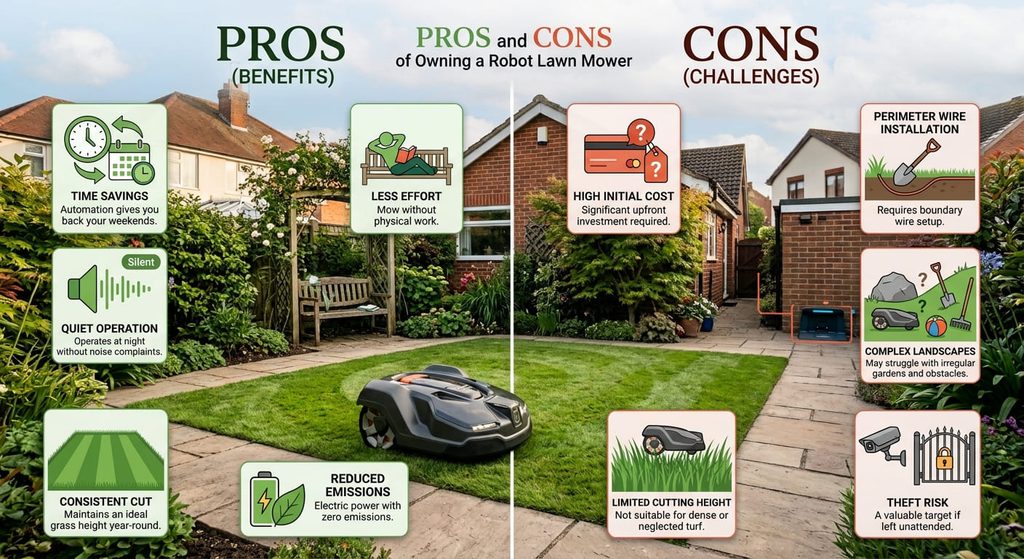
Theft is a genuine concern. These things are expensive and relatively easy to nick if someone’s determined. Most have PIN codes and alarms, but that won’t stop opportunistic thieves. I know two people who’ve had theirs stolen, despite security features. Consider your garden’s visibility and access when deciding.
Wildlife interactions can be problematic. Hedgehogs are the big worry – there have been some horrible incidents with robot mowers injuring them. I installed hedgehog highways in my fencing and only run the mower during daylight hours when hedgehogs are less active. Cats seem to either ignore robot mowers completely or become obsessed with stalking them!
Maintenance is more involved than manufacturers suggest. Those tiny blades dull quickly and need monthly checks during cutting season. The cutting deck gets clogged with grass clippings and debris. I spend about 10 minutes weekly cleaning mine, plus monthly blade inspections. Not massive hassle, but it’s not zero maintenance either.
Technical glitches happen more often than you’d hope. My mower occasionally gets confused and spends ages trying to navigate around a leaf or small stick. Sometimes it loses the boundary wire signal and stops working entirely until I locate the break. Modern models are much better, but they’re still not foolproof.
Winter storage is something to consider. These machines don’t handle freezing temperatures well, so they need indoor storage from November to March. Fine if you’ve got garage or shed space, but not everyone does. The charging station also needs weather protection or storing indoors.
Battery replacement is an eventual reality. After 3-4 years, you’ll need a new battery pack costing £150-250. Not the end of the world, but it’s a significant expense that pushes up the total cost of ownership.
Conclusion
So, are robot mowers worth it for small UK gardens? After eighteen months of real-world testing, my answer is a qualified yes – for the right people in the right situations.
If you’ve got a straightforward lawn, disposable income, and value your weekend time, a robot mower will probably make you happy. The convenience factor is genuinely brilliant, and the cutting quality exceeded my expectations. Coming home to a freshly mown lawn every day feels pretty good, I’ll admit.
But they’re not magic solutions. If you enjoy the meditative aspect of mowing, have a very complex garden layout, or are on a tight budget, stick with a traditional mower. Don’t buy one thinking it’ll solve every lawn problem – it won’t.
For small UK gardens specifically, I’d say the sweet spot is lawns between 80-200 square metres with fairly regular shapes. Smaller than that, and the setup cost per square metre gets silly. Much larger, and you’re probably looking at commercial-grade models anyway.
My recommendation? If you’re seriously considering one, try to see a robot mower in action first. Many garden centres have demonstrations, or ask neighbours if they’ve got one you can observe. The reality is quite different from the marketing videos!
What’s your take on robot mowers? Have you taken the plunge, or are you still weighing up the pros and cons? I’d love to hear about other people’s experiences – especially if you’ve found solutions to problems I haven’t mentioned!
Need help with your lawn, contact AJR Lawn Care we are more than happy to help.
Frequently Asked Questions
Are robot mowers safe for small children and pets in UK gardens?
Modern robot mowers have excellent safety features – they stop immediately when lifted and have sensors to avoid obstacles. However, I always supervise young children around mine and only run it when pets are indoors. The rotating blades are small but still sharp enough to cause injury if touched directly.
How do robot mowers handle wet British weather?
Most models have rain sensors that send them back to base when it starts raining. This is frustrating during our frequent light drizzle! I’ve learned to override the sensor for very light rain, but soggy conditions will clog the blades and create wheel ruts in soft ground.
What size garden is too small for a robot mower to be worthwhile?
I’d say anything under 80 square metres probably isn’t worth the investment. The setup time and cost become disproportionate to the benefit. For tiny gardens, a lightweight electric mower or even a good pair of shears might make more sense economically.
Can robot mowers cut long grass that's been left to grow?
No, they really struggle with overgrown grass. Robot mowers are designed for frequent cuts of short grass – ideally no more than 4-5cm tall. If your lawn gets away from you, you’ll need to cut it down with a traditional mower first before letting the robot take over maintenance duties.
Do robot mowers work on uneven or sloped UK gardens?
Most handle slopes up to 35-40%, which covers typical UK garden gradients. Uneven ground can be trickier – they might scalp high spots or miss low areas. My slightly undulating lawn works fine, but proper bumps and dips need levelling first for best results.