
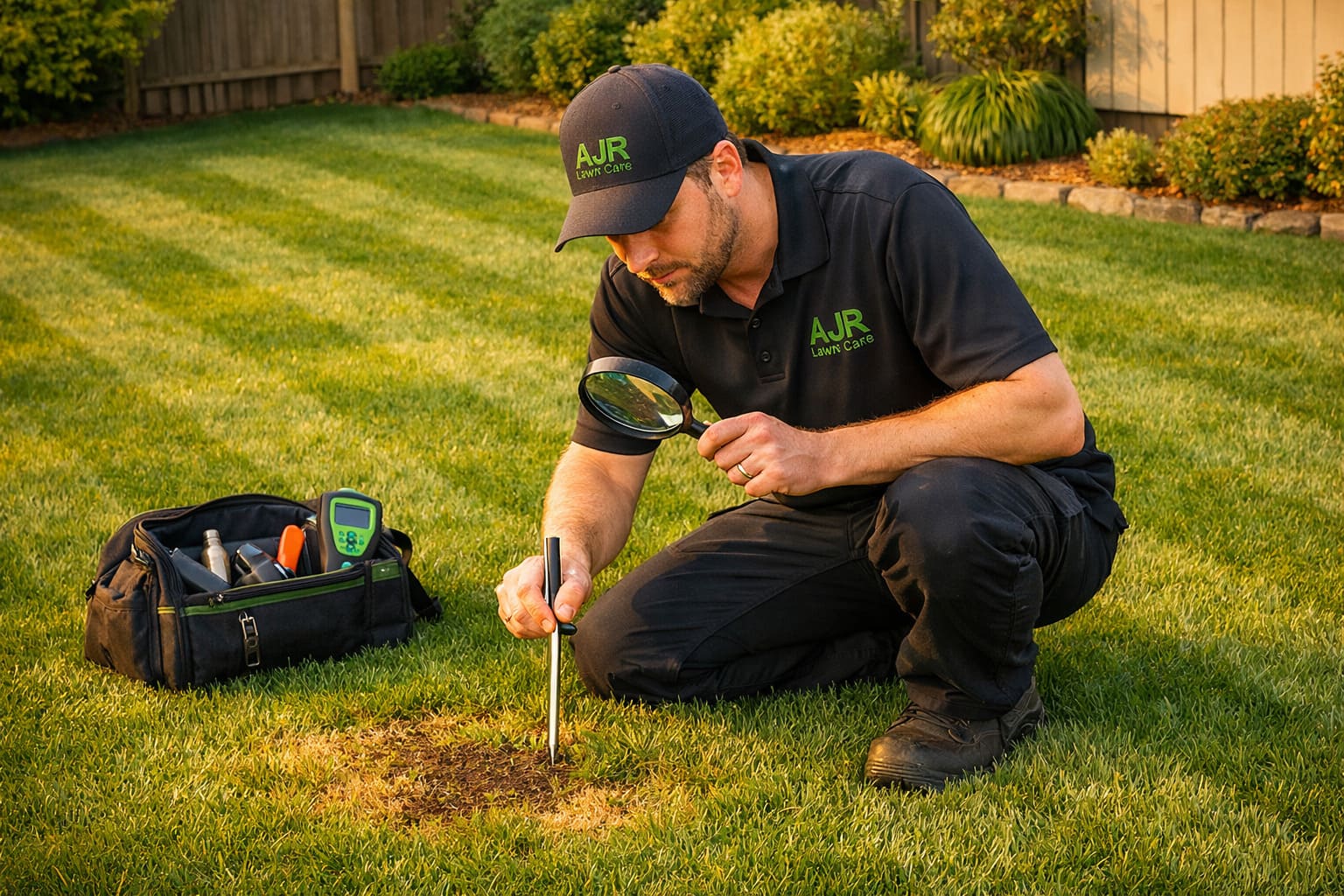
Your lawn is speaking to you in a language you might not understand – and those brown patches scattered across your once-pristine turf are practically shouting! But here’s what most homeowners don’t realise: not all brown patches on your lawn are created equal, and jumping to conclusions could cost you hundreds of pounds in wasted treatments.
After investigating thousands of brown patch mysteries across Rotherham and South Yorkshire, I can tell you that 9 out of 10 homeowners completely misdiagnose what’s causing their lawn damage. That innocent-looking brown spot by your garden path? It could be telling you about underground drainage problems. Those circular patches that appeared after last week’s thunderstorm? They might be warning you about a fungal infection that could spread across your entire lawn if left untreated.
Your lawn’s brown patches are like a medical symptom – they’re the visible sign of something deeper going on beneath the surface. Let me help you become fluent in this crucial lawn language, so you can give your grass exactly what it needs to recover!
The Brown Patch Detective Guide: Reading the Clues
Every brown patch tells a story, but you need to know how to read the evidence. Professional lawn diagnosticians look at specific characteristics that reveal the true cause behind the damage.
Shape and pattern provide the first major clues about what’s happening. Perfect circles usually indicate fungal diseases or fairy rings, irregular shapes often suggest environmental stress, straight lines point to equipment damage or chemical burns, and expanding patterns that spread outward typically signal active infections.
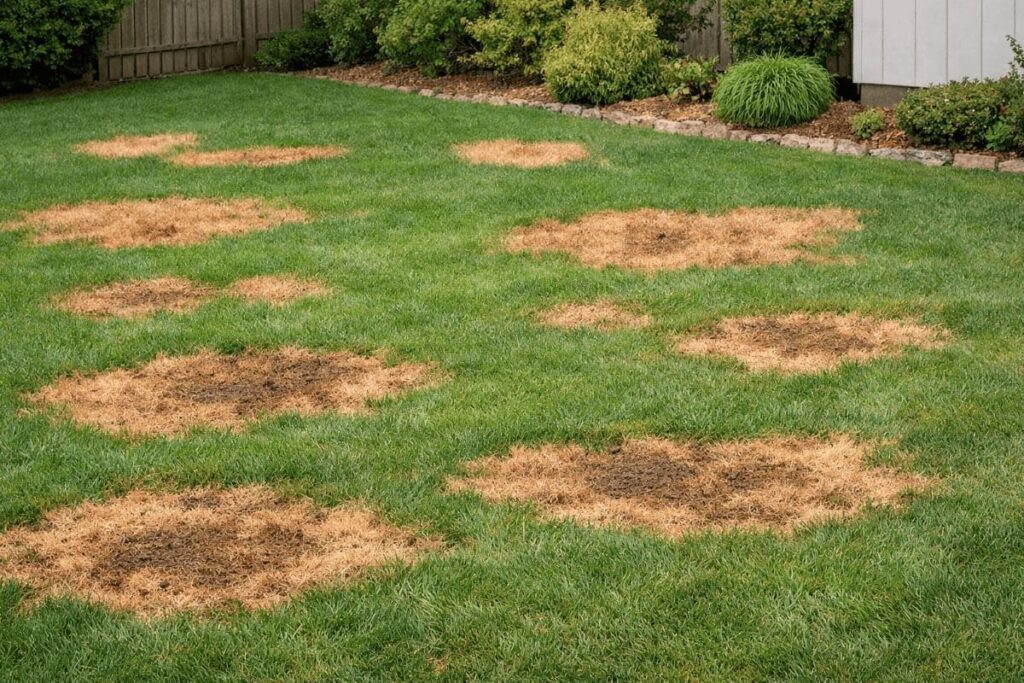
Size and distribution reveal whether you’re dealing with localised issues or systemic problems. Multiple small patches scattered randomly often indicate pest damage like chafer grubs or leatherjackets, large single patches suggest concentrated stress like pet urine or spilled chemicals, clusters of patches in specific areas point to localised soil problems, and progressive spreading indicates active disease processes.
Timing and seasonality are crucial diagnostic factors. Spring emergence problems often relate to winter damage or pre-emergent herbicide issues, summer patches during hot weather typically indicate drought stress or heat-related fungal diseases, autumn patches may signal seasonal diseases or grub damage becoming visible, and year-round problems suggest ongoing soil or drainage issues.
Edge characteristics tell you whether the problem is still active or stable. Sharp, defined edges usually indicate chemical damage or severe stress, gradual transitions suggest environmental stress, expanding edges with different colours signal active disease processes, and stable edges indicate resolved problems or one-time damage events.
Recovery patterns show whether your lawn can heal itself or needs intervention. Patches that show new growth around edges indicate the grass is recovering naturally, patches that continue expanding need immediate treatment, patches that remain static may need soil amendments or overseeding, and patches that darken or change texture over time often indicate root damage.
Decoding the Most Common Brown Patch Messages
“Help! I’m Drowning!” – Waterlogged Soil Damage
What it looks like: Soggy, spongy brown patches that squelch underfoot, often accompanied by a sour smell. The grass appears blackened at the base, and moss may be starting to establish around the edges.
The hidden message: Your lawn is telling you that drainage is severely compromised, oxygen can’t reach the roots, and anaerobic soil conditions are killing grass from the bottom up. This is particularly common in South Yorkshire’s clay soils during wet spells.
Why it happens: Compacted soil, poor drainage installation, broken drainage pipes, or naturally heavy clay that can’t shed excess water. Extended periods of rainfall without adequate drainage create waterlogged conditions that suffocate grass roots.
Immediate action needed: Stop all watering immediately, avoid walking on affected areas to prevent further compaction, and consider temporary drainage measures if water is pooling on the surface.
Long-term solution: Professional drainage assessment, possible installation of drainage systems, soil aeration, and soil amendments to improve structure. This isn’t a problem that resolves with time – it requires active intervention.
Are you watering your lawn to much? – Check out The Complete Guide to Lawn Watering
“I’m Burning Up!” – Heat and Drought Stress
What it looks like: Brown patches that start small and gradually expand, usually appearing first in the hottest, driest areas of your lawn. The grass looks crispy and brittle, and footprints remain visible long after walking across the area.
The hidden message: Your lawn is telling you that it’s not receiving adequate water, the soil is too compacted to retain moisture, or the grass variety isn’t suitable for your site’s conditions.
Why it happens: Insufficient watering, shallow root systems from frequent light watering, soil compaction preventing water penetration, or inappropriate grass species for your local climate and soil conditions.
Immediate action needed: Deep, thorough watering early in the morning, avoiding foot traffic on stressed areas, and raising mowing height to reduce stress on remaining grass.
Long-term solution: Irrigation system evaluation, soil aeration, overseeding with drought-tolerant varieties, and developing proper watering schedules that encourage deep root development.
“Something’s Eating Me Alive!” – Grub and Pest Damage
What it looks like: Brown patches that lift away from the soil like loose carpet, revealing white C-shaped grubs underneath. Often accompanied by increased bird, badger, or fox activity as wildlife digs for the grubs.
The hidden message: Your lawn is under attack from soil-dwelling pests that are severing grass roots. The damage you see above ground represents extensive root destruction happening below the surface.
Why it happens: Adult beetles laying eggs in your lawn during summer months, with grubs feeding on grass roots through autumn and winter. Sandy soils and warm, moist conditions encourage beetle egg-laying.
Immediate action needed: Confirm grub presence by lifting damaged turf, document the extent of damage, and avoid disturbing affected areas unnecessarily.
Long-term solution: Professional pest identification and treatment, soil treatment with appropriate insecticides or nematodes, lawn repair through overseeding or returfing, and preventive treatment programmes for future seasons.
“I Can’t Breathe!” – Soil Compaction Problems
What it looks like: Gradual browning and thinning in high-traffic areas, with grass becoming increasingly sparse over time. The soil feels rock-hard, and water runs off the surface rather than soaking in.
The hidden message: Your lawn is suffocating because compacted soil prevents air, water, and nutrients from reaching the root zone. This is your grass crying for help before it dies completely.
Why it happens: Heavy foot traffic, machinery use on wet soil, naturally heavy clay soils, or inadequate aeration programmes. Even light traffic can cause significant compaction in certain soil types.
Immediate action needed: Redirect foot traffic away from affected areas, avoid any machinery use until soil conditions improve, and consider temporary pathway solutions.
Long-term solution: Professional aeration programmes, soil amendments to improve structure, traffic management strategies, and possibly pathway installation in heavily used areas.
“I’m Being Poisoned!” – Chemical Burn and Contamination
What it looks like: Sharply defined brown patches with distinct edges, often following application patterns or accidental spills. The damage appears suddenly and may have unusual colours like blue-green or orange.
The hidden message: Your lawn has been damaged by chemical contamination – whether from over-application of fertilisers, herbicide drift, pet urine concentration, or accidental spills of household chemicals.
Why it happens: Fertiliser burn from over-application, herbicide damage from incorrect products or application rates, concentrated pet urine, fuel spills, or salt damage from winter road treatments.
Immediate action needed: Flush affected areas thoroughly with water to dilute remaining chemicals, identify and remove the contamination source, and document the damage with photos.
Long-term solution: Soil testing to determine contamination levels, possible soil replacement in severe cases, neutralising treatments for specific contaminants, and prevention strategies to avoid recurrence.
“I’m Under Fungal Attack!” – Disease-Related Brown Patches
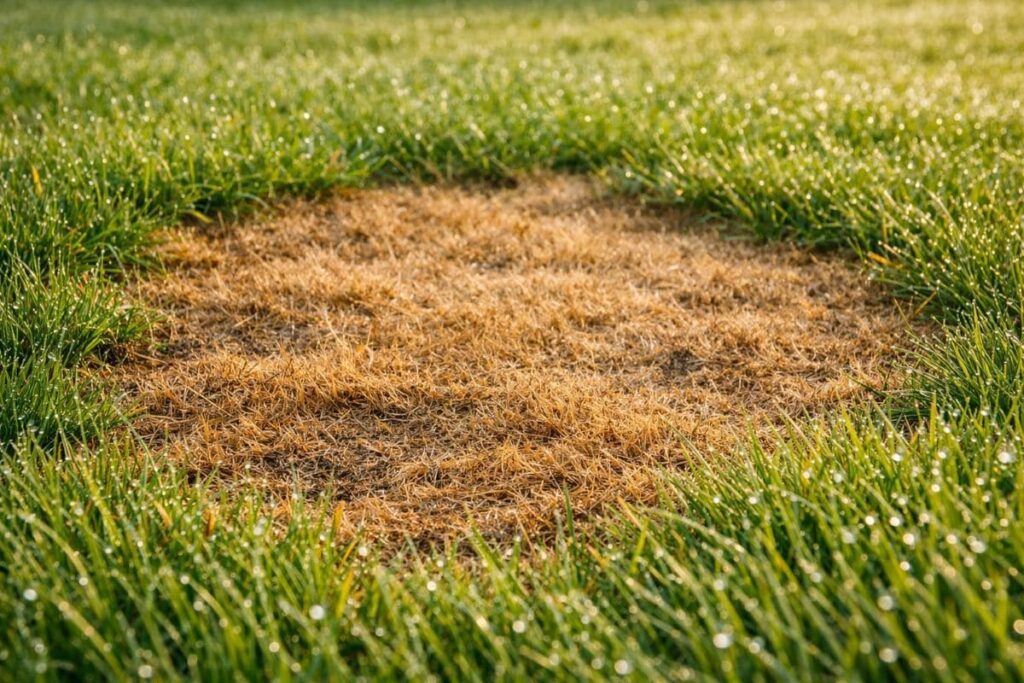
What it looks like: Circular brown patches with distinctive “smoke ring” edges of darker grass, often appearing overnight during humid conditions. May have visible fungal threads or spores during early morning dew.
The hidden message: Your lawn is fighting a losing battle against fungal pathogens that are exploiting stress conditions, excessive moisture, or nutrient imbalances.
Why it happens: Prolonged leaf wetness, high humidity combined with warm temperatures, excessive nitrogen fertilisation, poor air circulation, or thick thatch layers that harbour disease organisms.
Immediate action needed: Stop watering affected areas, improve air circulation where possible, avoid walking through infected areas to prevent spread, and document symptoms for professional diagnosis.
Long-term solution: Professional disease identification, targeted fungicide treatments, cultural practice modifications, and ongoing prevention programmes to reduce disease pressure.
The Hidden Factors Behind Brown Patch Development
Understanding why brown patches develop helps prevent future problems and guides effective treatment decisions. Several underlying factors contribute to brown patch formation that aren’t immediately obvious to homeowners.
Soil pH imbalances create conditions that favour certain problems over others. Acidic soils promote moss growth and certain fungal diseases, whilst alkaline soils can cause nutrient lockup and specific deficiencies that manifest as brown patches.
Thatch layer accumulation creates a barrier between grass roots and soil, holding excess moisture whilst preventing proper air circulation. Thick thatch also provides ideal conditions for disease development and pest establishment.
Nutrient imbalances don’t just cause general yellowing – they can create specific brown patch patterns. Potassium deficiency makes grass susceptible to disease and environmental stress, whilst excess nitrogen promotes succulent growth that’s vulnerable to fungal infections.
Microclimatic variations within your lawn create hot spots where problems develop first. Areas with poor air circulation, excessive shade, or unusual moisture patterns become focal points for brown patch development.
Seasonal stress cycles make grass vulnerable at predictable times. Spring emergence, summer heat stress, and autumn dormancy preparation all create windows when brown patches are more likely to develop.
Technology and Tools for Brown Patch Diagnosis
Modern diagnostic techniques help professionals identify brown patch causes with remarkable accuracy, leading to more effective treatments and better long-term outcomes.
Soil testing technology reveals pH levels, nutrient profiles, organic matter content, and soil structure issues that contribute to brown patch development. Advanced testing can identify specific deficiencies or imbalances that aren’t visible to the naked eye.
Moisture monitoring using specialised meters helps identify drainage problems, irrigation issues, and soil moisture patterns that contribute to brown patch formation. This technology prevents guesswork in treatment planning.
Disease identification techniques including microscopic analysis and laboratory testing can distinguish between similar-looking problems that require completely different treatment approaches.
Digital documentation through systematic photography and GPS mapping helps track brown patch development over time, identify patterns, and evaluate treatment effectiveness.
Weather monitoring correlates environmental conditions with brown patch development, helping predict future problems and optimize treatment timing.
Prevention Strategies That Actually Work
Preventing brown patches is more effective and less expensive than treating them after they develop. Understanding the conditions that promote brown patch formation helps you create an environment where problems are less likely to occur.
Cultural practice optimization including proper mowing height, appropriate watering schedules, and seasonal maintenance routines maintains grass health and reduces stress that leads to brown patch development.
Soil health programmes that maintain proper pH, adequate drainage, and balanced nutrition create environments where grass naturally resists the stresses that cause brown patches.
Environmental modifications such as improving air circulation, managing shade, and addressing drainage issues eliminate conditions that favour brown patch development.
Variety selection using grass types that are naturally resistant to common brown patch causes in your area significantly reduces problem occurrence.
Early detection systems through regular monitoring and professional assessment help identify potential problems before they become established brown patches.
Treatment Approaches: Matching Solutions to Causes
Effective brown patch treatment requires matching the solution to the specific cause. Generic approaches often fail because they don’t address the underlying problem.
Immediate stabilisation focuses on stopping further damage while you determine the exact cause and develop a comprehensive treatment plan.
Cause-specific treatments target the underlying problem whether it’s drainage, disease, pests, or soil issues. This approach is more effective than symptom-based treatments.
Recovery support includes creating optimal conditions for grass regrowth through appropriate fertilisation, overseeding, and maintenance practices.
Long-term prevention involves modifying conditions that led to the original problem, ensuring brown patches don’t simply reoccur next season.
Professional coordination may be necessary for complex problems that involve multiple causes or require specialised treatments not available to homeowners.
Recovery and Restoration After Brown Patch Treatment
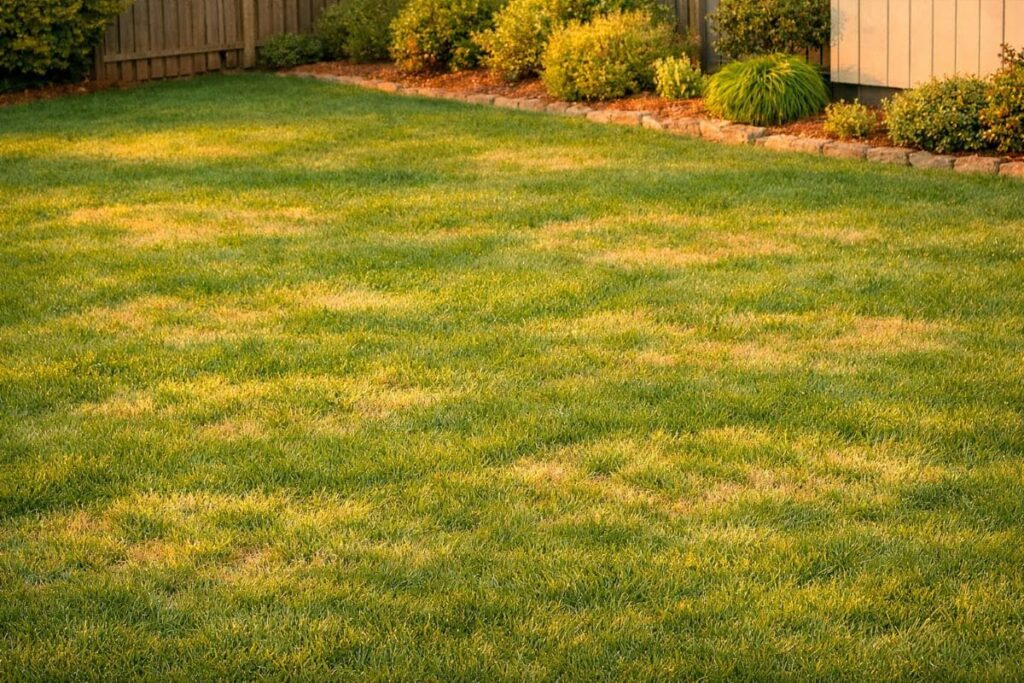
Successfully treating brown patches is only the beginning – proper recovery support determines whether your lawn returns to full health or remains vulnerable to future problems.
Patience during healing is essential because grass recovery takes time, particularly after severe damage. Visible improvement may take several weeks, and complete recovery can require months.
Supporting regrowth through appropriate fertilisation, overseeding, and consistent care helps grass fill in damaged areas and reduces susceptibility to future problems.
Monitoring progress ensures treatments are working and helps identify any recurring issues before they become serious problems again.
Preventing reoccurrence includes maintaining the cultural practices and environmental conditions that led to successful recovery.
When Professional Intervention Becomes Necessary

While some minor brown patches can be addressed through improved maintenance practices, certain situations require professional expertise to achieve successful outcomes.
Complex diagnosis requirements occur when brown patches have multiple potential causes, symptoms don’t match common patterns, or problems persist despite appropriate DIY treatments.
Severe or widespread damage that affects large lawn areas, continues spreading, or involves valuable landscape areas justifies professional assessment and treatment.
Recurring problems that return annually despite preventive efforts indicate underlying issues that require professional soil testing, site evaluation, and systematic correction.
Time-sensitive situations like active disease outbreaks or pest infestations require immediate professional intervention to prevent extensive damage.
Integrated solutions combining multiple treatment approaches, timing coordination, and ongoing monitoring typically require professional expertise and resources.
The Cost of Misdiagnosis: Why Getting It Right Matters
Misidentifying the cause of brown patches leads to ineffective treatments, wasted money, and often makes problems worse. Understanding the true cost of misdiagnosis helps justify proper professional assessment when needed.
Financial waste from incorrect treatments can easily exceed the cost of professional diagnosis, particularly when multiple failed attempts delay effective solutions.
Time loss from pursuing wrong treatments means problems continue developing while you’re applying ineffective solutions, often requiring more extensive intervention later.
Damage progression occurs when underlying causes aren’t addressed, allowing problems to worsen and potentially affect healthy lawn areas.
Secondary problems can develop when misdiagnosed brown patches are treated incorrectly, creating additional issues that complicate recovery efforts.
Opportunity costs include the value of time, effort, and resources that could have been used more effectively with proper initial diagnosis.
Conclusion
Your lawn’s brown patches are trying to tell you something important, but the message isn’t always obvious. Learning to read these signals correctly can mean the difference between a simple fix and a costly lawn renovation project.
The key is understanding that brown patches are symptoms, not diseases themselves. Successful treatment requires identifying and addressing the underlying cause, not just masking the visible damage. Whether it’s drainage problems, pest damage, disease pressure, or soil issues, each cause requires a specific approach for effective resolution.
Remember that some brown patch problems are complex enough to require professional diagnosis and treatment. Don’t let pride or budget concerns prevent you from seeking expert help when your DIY efforts aren’t achieving results. Early professional intervention almost always costs less than delayed action and produces dramatically better outcomes.
If you’re puzzled by brown patches in your Rotherham lawn, or if your DIY treatments aren’t producing the results you expected, don’t continue guessing. Professional diagnosis can quickly identify the real cause and guide you toward effective solutions that restore your lawn’s health and beauty.
At AJR Lawn Care, we’ve resolved thousands of brown patch mysteries across South Yorkshire. Our systematic diagnostic approach identifies the true causes behind lawn damage and develops targeted treatment plans that address root causes rather than just symptoms.
Ready to discover what your brown patches are really trying to tell you? Contact AJR Lawn Care today for professional lawn diagnosis and effective treatment solutions. Let’s work together to give your lawn the help it’s been asking for!
Frequently Asked Questions
How can I tell if my brown patches are from disease or environmental stress?
Disease-related brown patches typically have distinct characteristics: circular or ring patterns, rapid appearance (often overnight), sharp borders between healthy and damaged grass, and visible fungal growth during humid conditions. Environmental stress creates more gradual, irregular patterns that follow logical stress patterns like foot traffic routes or irrigation coverage. Disease patches often worsen quickly, whilst stress patches remain relatively stable unless conditions deteriorate further.
Why do my brown patches keep returning in the same spots every year?
Recurring brown patches in identical locations indicate underlying site conditions that haven’t been corrected. This could include drainage problems, soil compaction, pH imbalances, buried debris, underground utility lines affecting soil, or microclimatic conditions that create stress. Simply treating the symptoms without addressing these underlying causes ensures the problem will return. Professional soil testing and site evaluation can identify and correct these persistent issues.
Should I water brown patches more or less while they're recovering?
This depends entirely on the cause of the brown patches. Drought-stressed areas need deep, thorough watering, whilst disease-affected or waterlogged areas should have watering reduced or stopped completely. Chemical burn areas benefit from thorough flushing with water, whilst grub-damaged areas need moderate moisture to support new grass growth. Incorrect watering can worsen problems significantly, making proper diagnosis essential before adjusting irrigation practices.
How long should I wait before overseeding brown patch areas?
Timing depends on the cause and treatment status. Environmental stress patches can often be overseeded immediately after correcting the underlying problem. Disease-affected areas should be treated and symptom-free for 2-4 weeks before overseeding to prevent infecting new grass. Chemical burn areas may need soil testing to ensure contamination has been neutralised. Pest-damaged areas should be treated for the pest problem and allowed to stabilise before overseeding attempts.
Can brown patches spread to other areas of my lawn or neighbouring properties?
Disease-related brown patches can definitely spread through spore dispersal, contaminated equipment, foot traffic, or water movement. Pest problems like grubs typically reflect site-wide conditions rather than spreading from specific patches. Environmental stress patterns may expand if underlying conditions worsen but don’t “spread” in the infectious sense. To prevent spread, avoid walking through diseased areas, clean equipment between lawn sections, and address problems promptly rather than waiting to see if they resolve naturally.