Your lawn should be your pride and joy, not a source of endless frustration! Yet across Britain, millions of homeowners are unknowingly sabotaging their grass with three critical mistakes that turn beautiful lawns into patchy, weed-infested disasters. Here’s the shocking truth: 85% of lawn failures we see at AJR Lawn Care stem from just three fundamental errors that most homeowners don’t even realise they’re making.
These aren’t obscure technical lawn care mistakes that require a degree in horticulture to understand. They’re surprisingly common practices that seem logical but are actually destroying your lawn from the ground up. The worst part? Many homeowners spend years fighting symptoms whilst unknowingly perpetuating the very problems they’re trying to solve!
As professional lawn care specialists serving Rotherham and South Yorkshire, we’ve rescued countless lawns from the brink of destruction by correcting these three devastating mistakes. Today, we’re sharing this knowledge with you because every British homeowner deserves a lawn they can be proud of. Ready to discover what’s really killing your grass? Let’s dive into The 3 Biggest Mistakes Killing Your British Lawn and learn how to fix them once and for all.
Why These 3 Biggest Mistakes Killing Your British Lawn Are So Destructive
Before we reveal these lawn-killing mistakes, it’s important to understand why they’re so particularly damaging in the British climate. Our unpredictable weather patterns, from sudden droughts to weeks of persistent rain, create unique challenges that these mistakes amplify dramatically.
Unlike gardeners in more stable climates, British homeowners must contend with rapid weather changes that can stress grass in multiple ways within a single growing season. When fundamental lawn care practices are wrong, grass becomes increasingly vulnerable to these environmental pressures, creating a downward spiral that’s difficult to reverse.
These lawn care mistakes are especially insidious because they often show delayed effects. Your lawn might look acceptable initially, but the cumulative damage builds over months and years, eventually reaching a tipping point where recovery becomes much more difficult and expensive.
Understanding these lawn care mistakes isn’t just about fixing current problems – it’s about preventing future disasters and building long-term resilience into your lawn care routine.
Mistake #1: The Scalping Disaster – Cutting Your Grass Too Short
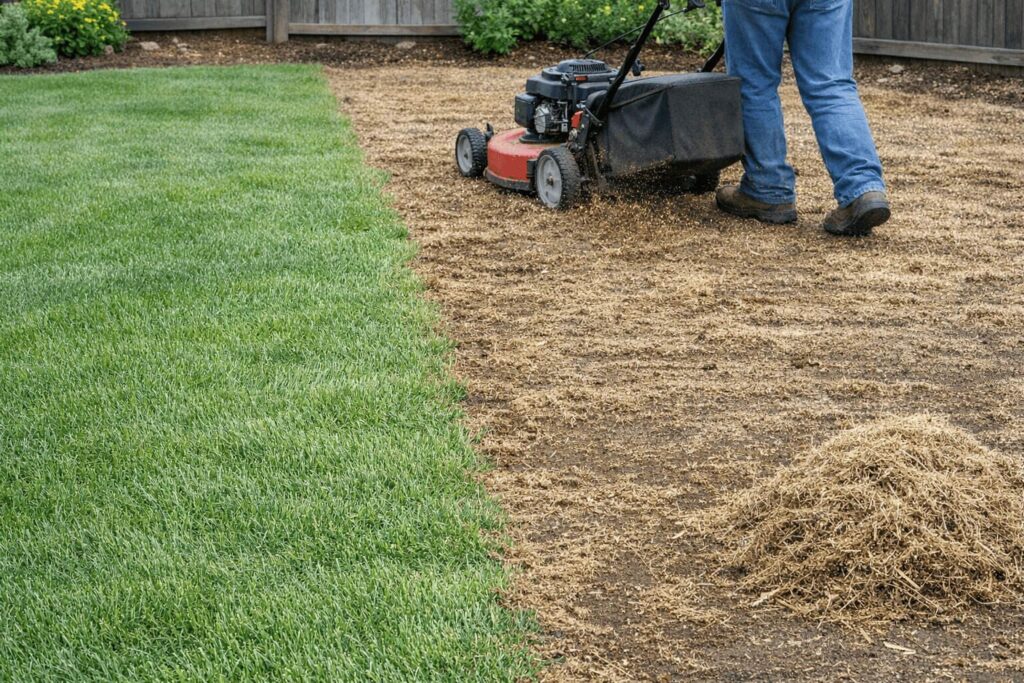
This is the single most destructive mistake we encounter, yet it’s practised by an estimated 60% of British homeowners. The logic seems sound: cut grass shorter so you don’t have to mow as often. Unfortunately, this approach is systematically destroying lawns across the country.
The Science Behind the Damage
Grass blades are essentially solar panels for the plant. When you scalp your lawn down to 1-2cm, you’re removing the grass’s ability to photosynthesise effectively, starving the entire plant. Short grass develops shallow root systems because it lacks the energy to grow deep, extensive roots that access water and nutrients in lower soil layers.
This shallow root development creates a cascade of problems that worsen over time. During dry periods, scalped grass quickly browns and dies because it cannot access deeper soil moisture. In wet conditions, shallow roots are more susceptible to fungal diseases that thrive in waterlogged surface soil.
The Weed Invasion Connection
Here’s something most homeowners don’t realise: scalping your lawn is essentially rolling out the red carpet for weeds. When grass is cut too short, it cannot shade the soil surface effectively, allowing weed seeds to germinate in the gaps between weak grass plants.
Weeds like dandelions, plantain, and clover have deep taproots that give them a competitive advantage over your scalped grass. They can access water and nutrients that your shallow-rooted grass cannot reach, gradually outcompeting and replacing your lawn.
The Correct Cutting Height Strategy
The optimal cutting height for most British lawns is 3-5cm, depending on grass type. This might seem long initially, but longer grass creates numerous benefits that become apparent within weeks of changing your cutting routine.
Taller grass shades the soil, retaining moisture and preventing weed seed germination. It develops deeper root systems that access water and nutrients more effectively. The increased leaf surface area provides more energy for root development and overall plant health.
Professional Tip: Follow the one-third rule religiously – never remove more than one-third of the grass blade in a single cut. If your lawn has grown tall, reduce the height gradually over several mowing sessions rather than shocking it with severe cutting.
Recovery from Scalping Damage
If you’ve been scalping your lawn, don’t despair! Grass is remarkably resilient and can recover with the correct care. Start by raising your cutting height immediately and mowing more frequently to maintain the proper length without removing too much at once.
Expect an adjustment period of 4-6 weeks as your grass develops stronger root systems and denser growth. During this time, you might need to mow more frequently, but the long-term benefits far outweigh this temporary inconvenience.
Consider professional overseeding/ Lawn Rennovation if scalping has created thin, sparse areas that struggle to recover naturally. Dense grass coverage is essential for crowding out weeds and creating the lush lawn you desire.
Mistake #2: The Feast or Famine Feeding Cycle
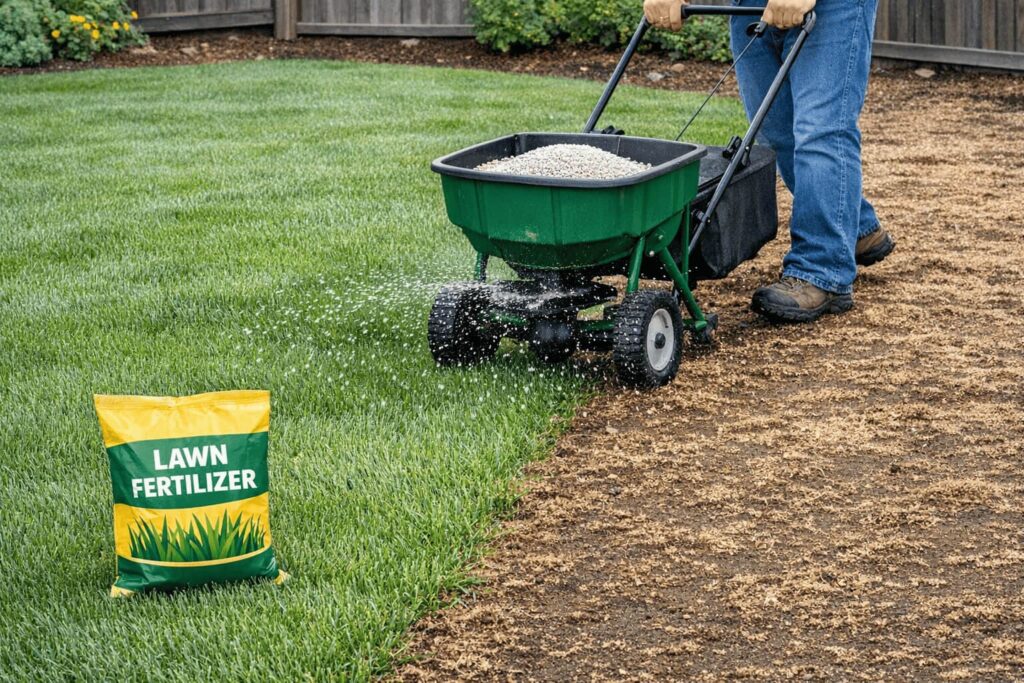
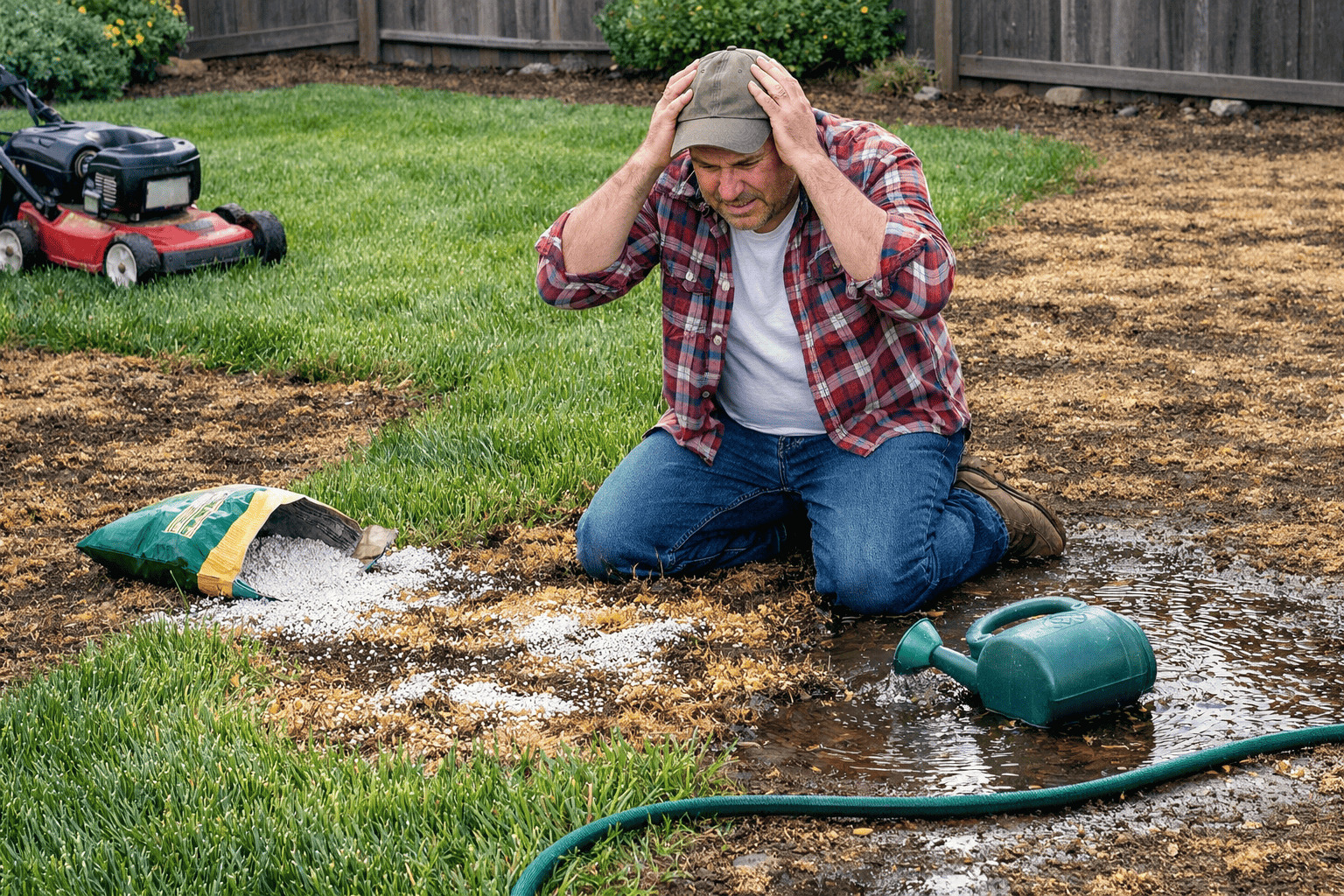
The second lawn-killing mistake involves erratic fertilisation patterns that swing between neglect and overdose. Many homeowners either forget to feed their lawns entirely or panic-apply excessive fertiliser when problems appear, creating a destructive cycle that weakens grass over time.
Understanding Grass Nutrition Needs
Grass requires consistent, balanced nutrition throughout the growing season, much like athletes need the correct diet for peak performance. The “feast or famine” approach creates stress that makes grass susceptible to disease, drought, and pest problems.
When grass is underfed, it develops slowly, becomes thin and sparse, and loses its natural green colour. Hungry grass cannot compete effectively with weeds and struggles to recover from environmental stress or foot traffic damage.
Conversely, over-fertilisation creates rapid, weak growth that’s actually more problematic than slow growth. Excessive nitrogen produces lush, soft growth that diseases love and creates grass that’s dependent on constant feeding to maintain appearance.
The Over-Fertilisation Trap
Over-fertilised grass might look impressively green initially, but this cosmetic improvement masks serious underlying problems. Rapid growth from excessive nitrogen creates weak cell walls that are easily penetrated by fungal diseases, especially during Britain’s damp conditions.
Grass receiving too much fertiliser develops shallow root systems because nutrients are readily available at the surface. When fertiliser applications stop or weather conditions change, this shallow-rooted grass quickly struggles because it cannot access deeper resources.
Over-fertilisation also disrupts soil biology, reducing beneficial microorganisms that naturally support grass health. This creates dependence on chemical inputs and reduces the lawn’s natural resilience.
The Neglect Problem
At the opposite extreme, many homeowners never feed their lawns, expecting grass to thrive on whatever nutrients are naturally present in soil. While this might work temporarily, British soils are often naturally low in key nutrients, particularly nitrogen and phosphorus.
Unfed grass gradually becomes thin, weak, and susceptible to weed invasion. The natural green colour fades, and the lawn’s ability to recover from stress diminishes over time. Eventually, neglected lawns become dominated by weeds and moss that can tolerate poor soil conditions better than grass.
The Professional Feeding Strategy
Effective lawn feeding involves consistent, moderate applications timed to match grass growth patterns. Spring feeding supports new growth and recovery from winter stress. Summer feeding maintains colour and density during peak growing conditions. Autumn feeding prepares grass for winter and supports root development.
Slow-release fertilisers are far superior to quick-release products because they provide steady nutrition over months rather than a brief surge followed by decline. This approach creates steady, healthy growth that’s more disease-resistant and environmentally sustainable.
Soil Testing Revolution: Professional soil testing reveals exactly which nutrients your lawn needs, preventing wasteful over-application whilst ensuring deficiencies are corrected. This targeted approach is more effective and economical than generic fertiliser programmes.
Breaking the Feast or Famine Cycle
If you recognise this pattern in your lawn care routine, the solution involves establishing a consistent feeding schedule based on your grass’s actual needs rather than panic responses to problems.
Start with professional soil testing to understand your baseline nutrient situation. Develop a seasonal feeding programme using quality slow-release products applied at appropriate rates. Monitor results and adjust the programme based on grass response rather than calendar dates alone.
Remember that consistent moderate feeding always produces better results than sporadic heavy applications, even if the total amount of fertiliser used is similar.
If you would like a professional to deal with this for you conact AJR Lawn Care regarding our lawn care treatments.
Mistake #3: The Watering Disaster – Creating Drought-Susceptible Grass
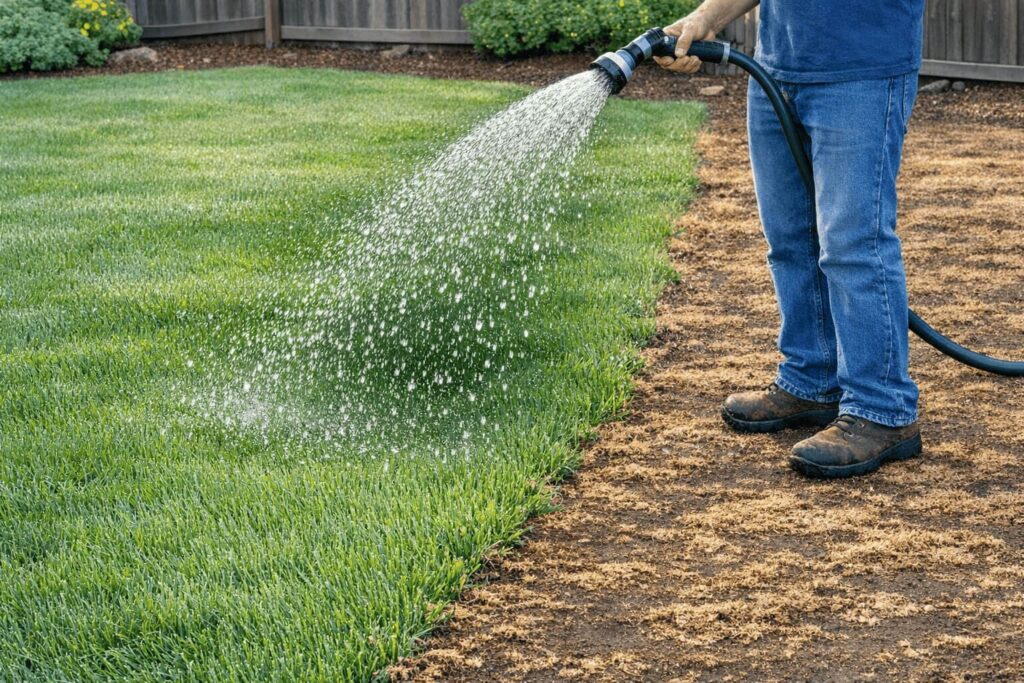
The third major mistake involves watering practices that seem helpful but actually create grass that’s completely dependent on constant irrigation. This mistake is particularly devastating during British summers when hosepipe bans and drought conditions expose the weakness of improperly watered lawns.
The Daily Sprinkle Trap
Many homeowners believe that light, frequent watering keeps grass healthy and happy. This practice is so common that automatic sprinkler systems are often programmed to water daily for short periods, creating exactly the wrong conditions for healthy grass development.
Light, frequent watering encourages roots to develop only in the top few centimetres of soil where water is readily available. When hot weather arrives or watering restrictions are imposed, this shallow-rooted grass has no survival strategy and quickly dies.
Understanding Root Development
Grass roots grow towards water sources. When water is consistently available at the surface through frequent light watering, roots have no incentive to grow deep into the soil profile where moisture remains available during dry periods.
Deep-rooted grass can access water from 20-30cm below the surface, providing natural drought resistance that shallow-rooted grass cannot match. This deep root system also accesses nutrients that have leached below the surface layer, creating more efficient nutrient uptake.
The British Climate Challenge
Britain’s unpredictable weather patterns make proper watering practices even more critical. Wet periods can last for weeks, followed by sudden dry spells that stress unprepared grass. Grass with shallow root systems cannot adapt to these rapid changes.
During wet periods, shallow-rooted grass is more susceptible to fungal diseases because roots remain in waterlogged surface soil. When dry conditions arrive, the same grass cannot access deeper moisture and quickly becomes stressed.
Disease and Shallow Root Connection
Shallow-rooted grass faces increased disease pressure for several reasons. Surface soil stays wet longer after rain or irrigation, creating ideal conditions for fungal development. Weak root systems cannot support strong, disease-resistant growth above ground.
Additionally, frequent watering often means watering in the evening when it’s convenient for homeowners. Evening watering leaves grass wet overnight, providing extended periods of moisture that diseases require for infection and spread.
The Professional Watering Strategy
Effective watering involves deep, infrequent sessions that encourage deep root development. Water 2-3 times per week maximum, applying enough water to penetrate 15-20cm into the soil profile.
Early morning watering is ideal because it gives grass time to dry before evening whilst taking advantage of low evaporation rates. This timing reduces disease risk whilst maximising water efficiency.
The Screwdriver Test: Push a long screwdriver into your lawn after watering. It should penetrate easily to 15-20cm depth if you’ve watered adequately. If it stops after a few centimetres, you’re watering too lightly.
Transitioning from Frequent to Deep Watering
If you’ve been watering frequently, transition gradually to avoid shocking your grass. Slowly extend the time between watering sessions whilst increasing the amount of water applied each time.
Expect some initial stress as your grass adapts to the new routine, but within 4-6 weeks, you should notice improved drought tolerance and overall resilience. The investment in proper watering practices pays dividends during challenging weather conditions.
During the transition period, monitor soil moisture levels and grass appearance closely. Some temporary browning is normal as roots develop and adjust to the new water availability pattern.
How These Mistakes Compound Each Other
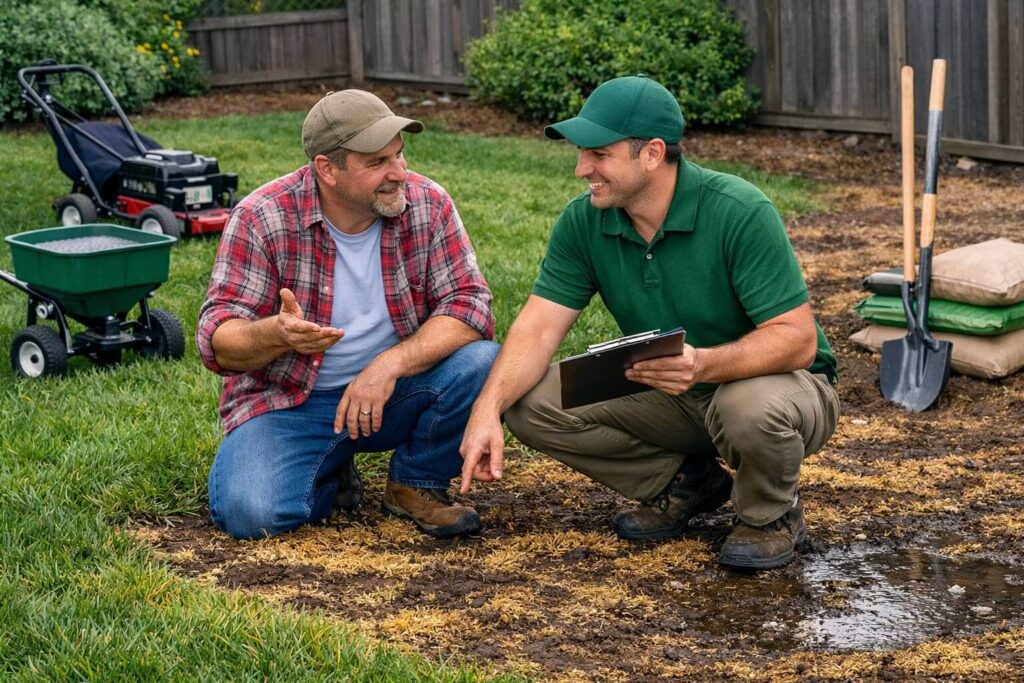
The truly devastating aspect of these three mistakes is how they interact to create compound problems that are much worse than any single error alone. Scalped grass with shallow roots from frequent watering becomes extremely vulnerable to stress, disease, and weed invasion.
When feeding is erratic, the stress from improper cutting and watering becomes magnified because grass lacks the nutrition needed to recover from environmental challenges. Over-fertilised grass with shallow roots from frequent watering creates the perfect conditions for disease outbreaks.
This compound effect explains why some lawns seem to decline rapidly while others remain resilient despite imperfect care. Lawns suffering from multiple mistakes simultaneously face overwhelming stress that makes recovery increasingly difficult without professional intervention.
The Cost of These Mistakes
These three mistakes cost British homeowners millions of pounds annually in unnecessary treatments, lawn renovations, and replacement grass. More importantly, they create ongoing frustration and disappointment that turns lawn care from an enjoyable activity into a constant struggle.
We regularly meet homeowners who’ve spent hundreds of pounds on disease treatments, weed control, and overseeding, never realising that their basic care practices were creating the problems they were trying to solve. Correcting these fundamental mistakes often eliminates the need for expensive corrective treatments.
The environmental cost is also significant. Over-fertilisation contributes to water pollution through nutrient runoff. Excessive watering wastes precious water resources. Frequent lawn renovations require resources and energy that could be avoided through proper basic care.
Professional Lawn Care Solutions That Work
At AJR Lawn Care, we’ve developed systematic approaches to correct these devastating mistakes and restore lawn health. Our programmes begin with comprehensive assessment to determine which mistakes are affecting your specific lawn and to what degree.
For scalping damage, we implement gradual height adjustment programmes combined with overseeding where necessary to restore grass density. Our cutting height recommendations are tailored to your specific grass type and growing conditions.
Nutrition programmes are based on soil testing and seasonal grass needs rather than calendar-based applications. We use slow-release products that provide consistent nutrition without creating the feast-or-famine cycle that weakens grass over time.
Watering guidance includes site-specific recommendations based on soil type, sun exposure, and grass variety. We help homeowners transition from destructive frequent watering to beneficial deep watering practices that build drought resilience.
Prevention: Building Long-Term Lawn Care Health
Preventing these mistakes is far easier and less expensive than correcting their damage. Understanding proper cutting heights, consistent feeding practices, and appropriate watering techniques forms the foundation of successful lawn care.
Regular monitoring helps identify problems before they become serious. Monthly lawn assessments can catch the early signs of scalping damage, nutrition imbalances, or watering problems when they’re still easily correctable.
Seasonal adjustments to your care routine prevent problems that arise from changing weather conditions. What works in spring might need modification for summer conditions, and autumn care prepares your lawn for winter challenges.
The Recovery Timeline
Correcting these mistakes requires patience because recovery involves fundamental changes in grass growth patterns and root development. Initial improvements often appear within 2-4 weeks, but full recovery typically takes a complete growing season.
Scalping recovery begins immediately when cutting height is corrected, but developing strong root systems takes several months. Nutrition corrections show results quickly in grass colour and growth rate, but building soil health is a longer process.
Watering practice changes create the most dramatic long-term improvements but require the most patience initially. Root development into deeper soil layers takes months, but the drought resistance created is permanent once established.
Conclusion
These three devastating mistakes – scalping, erratic feeding, and frequent shallow watering – are silently destroying lawns across Britain. The good news is that they’re completely preventable and largely reversible with the correct techniques and patience.
Your lawn has tremendous potential that’s currently being suppressed by these fundamental errors. Imagine grass that stays green during dry spells, resists disease naturally, and crowds out weeds through healthy density. This isn’t wishful thinking – it’s the natural result of avoiding these critical mistakes.
At AJR Lawn Care, we’ve helped hundreds of homeowners across Rotherham and South Yorkshire transform their struggling lawns by correcting these basic errors and implementing proper care practices. The transformation is often dramatic and always rewarding.
Don’t let another growing season pass while these mistakes continue damaging your lawn. Professional assessment can identify which errors are affecting your grass and create a recovery plan tailored to your specific conditions.
Your lawn deserves better than these common lawn care mistakes, and you deserve the pride and satisfaction of a healthy, beautiful grass area that enhances your property and provides enjoyment for your family.
Ready to stop killing your lawn and start nurturing it properly? Contact AJR Lawn Care today for a comprehensive assessment that identifies these deadly mistakes and creates a recovery plan that works. Visit www.ajrlawncare.co.uk or call us to schedule your lawn-saving consultation. Your grass is waiting for the care it deserves!
Frequently Asked Questions
How quickly will I see improvements if I stop making these three mistakes?
You’ll notice initial improvements within 2-4 weeks of correcting these mistakes, particularly with proper cutting height and consistent watering practices. Grass colour and growth rate respond quickly to better nutrition timing. However, the most significant improvements – like increased drought tolerance and disease resistance – develop over 3-6 months as root systems strengthen and overall plant health improves. Full transformation typically takes one complete growing season, but the improvements are permanent once established.
Can these mistakes permanently damage my lawn, or is recovery always possible?
Most lawns can recover from these mistakes with proper care and patience, though severely damaged areas might need professional renovation including overseeding or even complete renovation. The key is early intervention – the longer these mistakes continue, the more difficult and expensive recovery becomes. At AJR Lawn Care, we’ve successfully restored lawns that homeowners thought were beyond saving. Even lawns dominated by weeds and moss can often be brought back to health by correcting these fundamental errors and implementing proper care practices.
How much money could I save by avoiding these three critical mistakes?
Homeowners typically spend £200-500 annually on unnecessary treatments, overseeding, and lawn renovation caused by these mistakes. Proper cutting height alone can eliminate most weed control costs by creating grass dense enough to naturally suppress weed growth. Correct watering practices reduce disease problems that require expensive fungicide treatments. Consistent feeding prevents the boom-bust cycle that leads to costly emergency treatments. Most importantly, avoiding these mistakes prevents the need for complete lawn renovation, which can cost £1000+ for average-sized gardens.
What's the single most important mistake to fix first if I'm making all three?
Start with cutting height correction – it’s the quickest to implement and shows the fastest results. Raise your mower to 3-5cm immediately and follow the one-third rule for all future cuts. This single change begins improving your lawn within weeks and makes the other corrections more effective. Once cutting height is corrected, focus on establishing deep watering practices, then implement consistent feeding schedules. However, for fastest overall recovery, we recommend addressing all three mistakes simultaneously with professional guidance to ensure they work together rather than against each other.
How do I know if professional help is needed, or can I fix these mistakes myself?
You can successfully correct these mistakes yourself if damage is limited and you’re confident about proper techniques. However, professional help becomes valuable when lawns are severely damaged, when you’re unsure about proper practices for your specific conditions, or when you want guaranteed results without risking further damage. At AJR Lawn Care, we often help homeowners who started DIY recovery but want expert guidance to ensure success. Professional assessment can also identify additional factors like soil compaction or pH problems that might prevent recovery even when these three mistakes are corrected.