
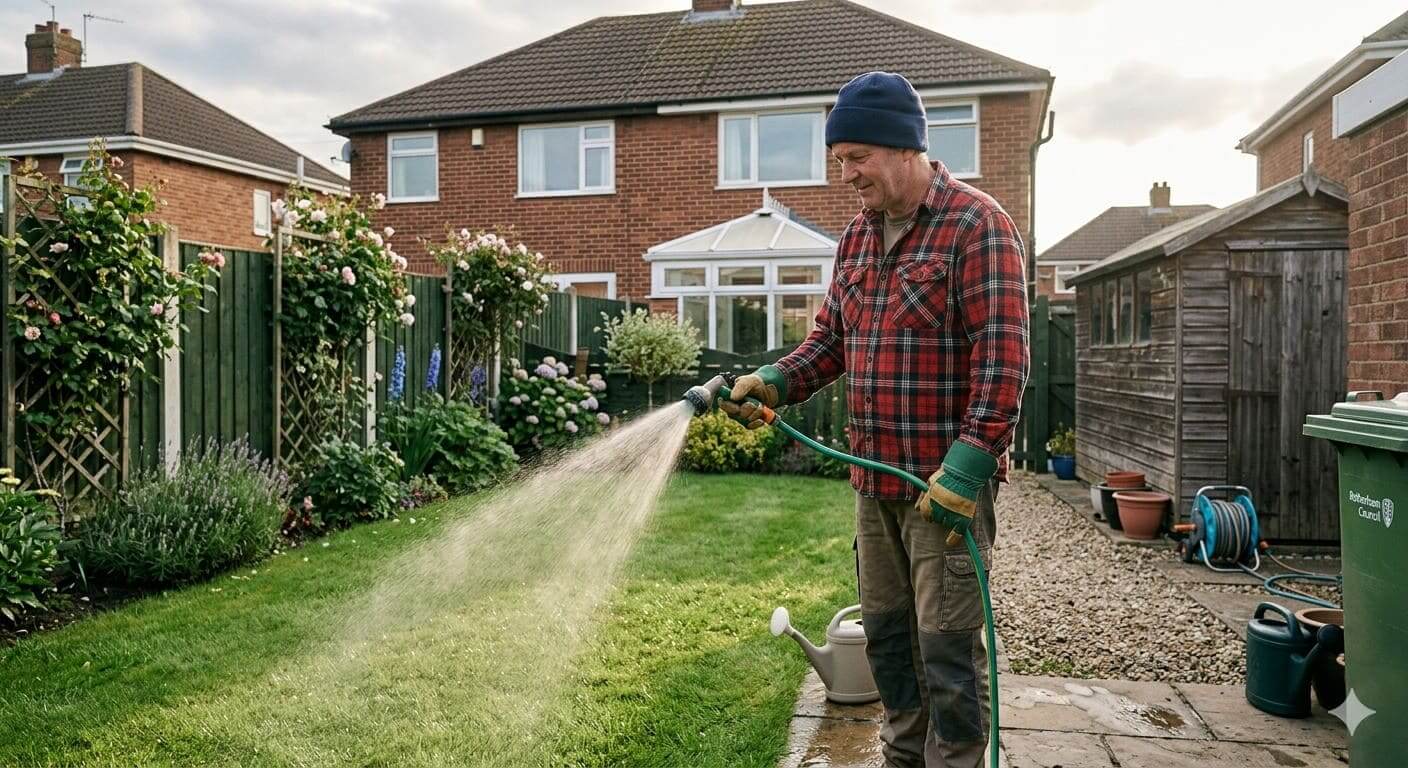
You’d think watering a lawn would be simple, right? Just turn on the hosepipe and Bob’s your uncle! Well, I learned the hard way all those years ago when i first got into lawn care, and it’s not quite that straightforward.
A few summers ago, one of my customers nearly killed his beautiful ryegrass lawn by being too enthusiastic with the sprinkler. The irony wasn’t lost on me – here he was, living in one of the world’s rainiest countries, and he’d managed to overwater his garden to the point where it looked like a swamp.
That disaster taught my customer everything he needed to know about lawn watering in British conditions. And trust me, watering a lawn in the UK is completely different from what you’ll read in American gardening guides. We’ve got our own unique challenges here!
Know Your Grass Type (Because British Grass is Different)
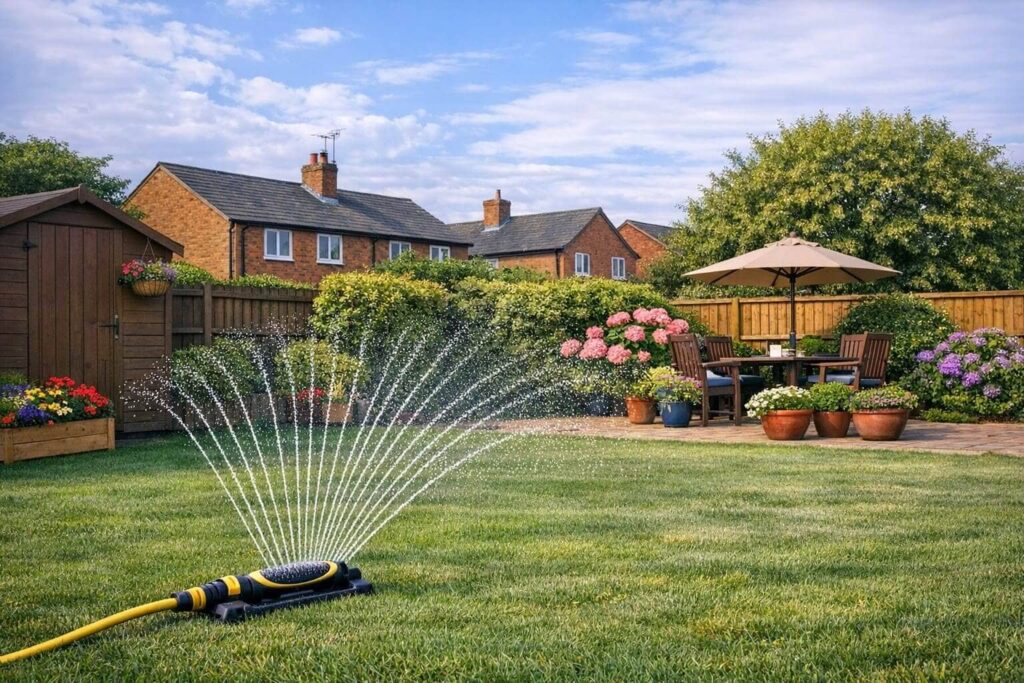
Here’s something I wish I’d understood earlier – not all grass is created equal, especially when it comes to water needs. When i was younger living in South Yorkshire, and knowing nothing about grass, I assumed grass was just grass. Big mistake!
Ryegrass, which dominates most British lawns, is actually quite thirsty compared to Mediterranean varieties. But here’s the thing – it’s also incredibly hardy once established. I learned this when my uncles perfectly green lawn survived a three-week holiday with no watering, while mine started to look patchy in areas because I’d been babying it with daily sprinkles.
The secret with ryegrass is deep, infrequent watering rather than little and often. It encourages those roots to dig deep, which makes your lawn much more resilient during those unpredictable British summers.
Fine fescue is another common UK grass that I’ve grown to love. It’s brilliant for our climate because it actually prefers cooler, damper conditions. My buddy’s garden (which i grew for him), which gets less sun, is predominantly fescue, and it rarely needs additional watering even during dry spells.
If you’ve got new seed or fresh turf, the rules change completely. Another one of my Rotherham, South Yoekshire customers made the mistake of treating new sod like established grass and watched £300 worth of beautiful turf turn brown in a week. New grass needs consistent moisture – not soggy, but never completely dry – until those roots get established.
The key lesson I’ve learned? Your established British lawn is probably tougher than you think, but new grass is more fragile than you’d expect.
British Weather: Our Secret Weapon (and Occasional Enemy)
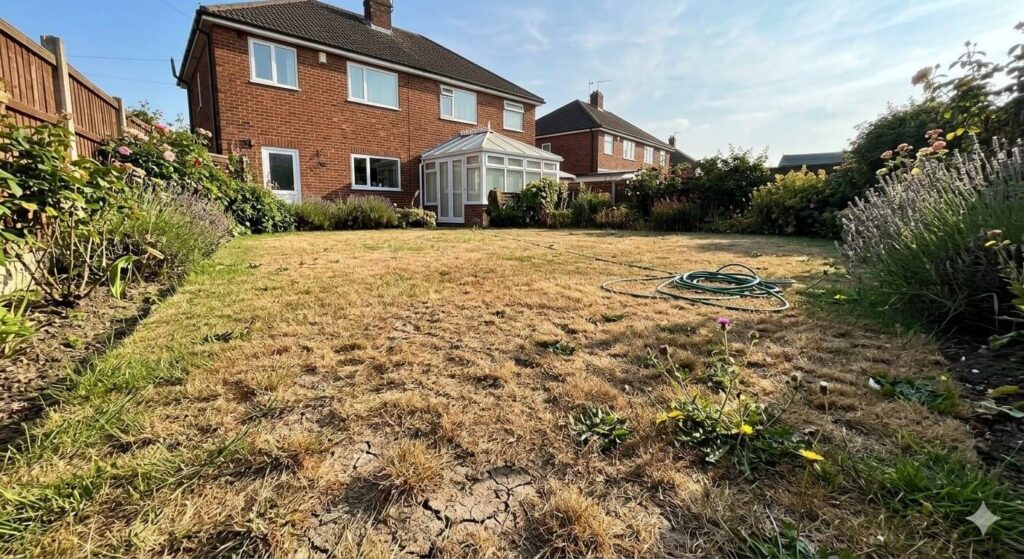
Living in Britain means we’ve got a massive advantage when it comes to lawn care – free irrigation from the sky! But our weather patterns also create some unique challenges that caught me completely off guard.
Most UK lawns need about 25mm (1 inch) of water per week during growing season. But here’s where it gets tricky – we rarely get consistent rainfall. Instead, we get deluges followed by dry spells, which can stress grass more than consistent dry weather.
I started keeping a simple rain gauge in my garden (You can use an old jam jar, nothing fancy) to track actual rainfall. You’d be amazed how often what feels like a proper downpour only delivers 5mm of water. Not nearly enough for the lawn!
Spring Watering in Britain
Spring in the UK is absolutely perfect for lawn establishment. All that natural moisture means I can focus on other garden tasks while Mother Nature handles the watering schedule. This is when I do any overseeding or repair work.
But here’s something most guides don’t mention – British spring weather can be deceptively dry. Those lovely sunny April days can catch you out if there hasn’t been rain for a week or two. I learned to pay attention to soil moisture, not just how green everything looks.
Summer Watering During British Heat Waves
When we get those glorious (and increasingly common) summer heat waves, everything changes. During the 2022 heat wave, I watched neighbours’ lawns turn to straw because they weren’t prepared for genuinely hot, dry conditions.
The trick during British heat waves is early morning watering – and I mean early, like 5am early. By 7am, the sun’s already too strong and you’ll lose most of your water to evaporation. Evening watering works too, but there’s more risk of fungal problems in our humid conditions.
During really hot spells (anything over 25°C for several days), I water twice a week rather than the usual once. But I water deeply – at least 30 minutes in each area to really saturate the soil.
How to Tell When Your British Lawn Actually Needs Water
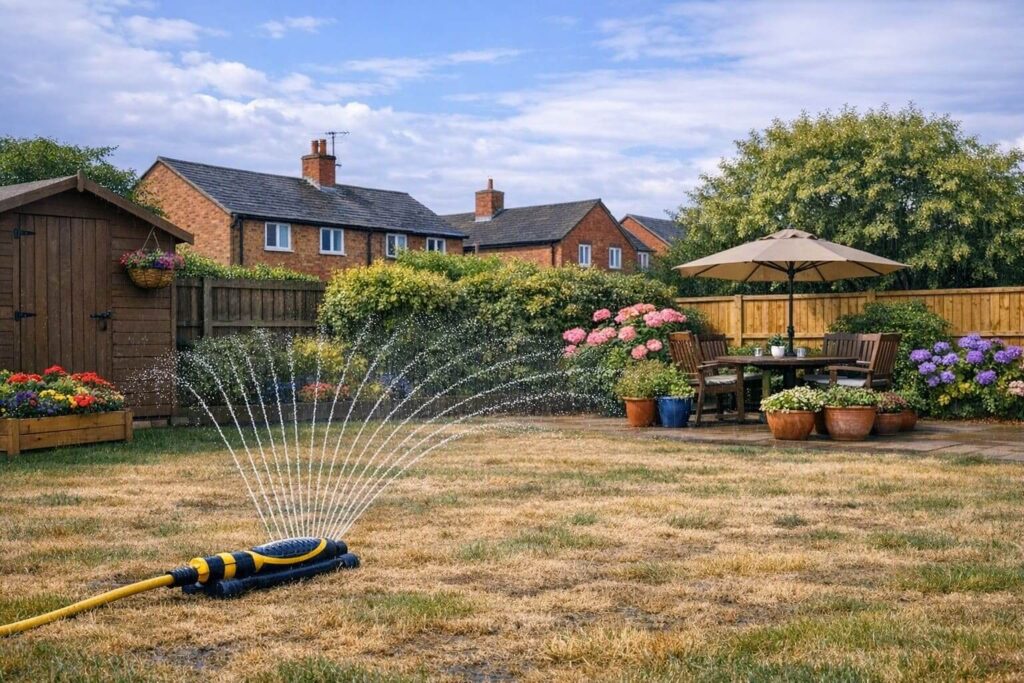
This is where I had to unlearn everything I thought I knew about lawn care. British grass doesn’t behave like the grass you see in American movies!
The classic “step test” works brilliantly here – walk across your lawn, and if your footprints stay visible for more than a few seconds, it’s time to water. Healthy, well-hydrated grass bounces back immediately.
I also learned to recognise the early warning signs. Before grass turns brown, it often takes on a slightly blue-green tinge and loses that glossy look. Catching it at this stage means a single deep watering will sort it out.
The screwdriver test mentioned in most guides works, but I prefer using a long kitchen knife. Push it into the soil – if it goes in easily to about 15cm depth, there’s adequate moisture. If you’re meeting resistance, it’s watering time.
Here’s a British-specific tip: check your soil moisture on Monday mornings. Weekend lawn traffic compacts the soil and can make grass look stressed even when there’s adequate moisture underneath.
Do You Need an Irrigation System in the UK?
Honestly? Probably not, unless you’ve got a massive garden or you’re frequently away during summer.
I spent ages researching automatic sprinkler systems before realising that our climate makes them unnecessary for most suburban gardens. A decent oscillating sprinkler and a timer attachment for your hosepipe will handle 90% of British watering needs.
For measuring water depth, I use the old tuna can trick – place an empty can in your sprinkler’s coverage area and water until it’s full. That’s your 25mm right there. Simple and accurate.
The biggest game-changer for me was investing in a water butt system. Rainwater is better for grass than treated tap water, and it means I’m also helping the environment bu conserving water during dry spells.
The Dangers of Overwatering (My Expensive Lesson)
Remember that swamp I mentioned earlier? That taught my customer more about overwatering than any manual ever could.
In British conditions, overwatering is actually more dangerous than underwatering. Our naturally damp climate means soil takes longer to dry out, creating perfect conditions for fungal diseases and root rot.
I learned to recognise the signs of overwatering – moss appearing in the lawn, soft squelchy areas, and grass that looks lush but feels weak when you walk on it. Once you see these signs, you need to stop watering immediately and improve drainage if necessary.
British weeds absolutely love overwatered lawns. Plantains, dandelions, and clover all thrive in consistently moist conditions. If your weed problem suddenly gets worse, overwatering might be the culprit.
Less is Usually More
After years of trial and error, I’ve learned that British grass is incredibly resilient. It’s evolved to handle our climate, which means it can survive longer dry periods than you’d expect.
Your lawn will definitely tell you when it needs water – the colour change is unmistakable. And the recovery after proper watering is remarkably quick, usually within 24-48 hours.
The key is patience and observation rather than following a rigid schedule. Let your lawn (and our famously unpredictable weather) guide your watering decisions rather than the calendar.
If you’re looking for a professional lawn care company to take care of your lawn, then contact AJR Lawn Care we are more than happy to help.
FAQ’s For How Often Should You Water Your Lawn
How often should you water your lawn in the UK?
During dry spells in summer, watering your lawn once or twice a week is generally sufficient. UK lawns typically need around 2.5cm (1 inch) of water per week. In cooler or wetter months, rainfall usually provides enough moisture and supplemental watering is rarely needed.
What is the best time of day to water your lawn in the UK?
Early morning, between 6am and 10am, is the best time to water your lawn in the UK. This allows moisture to soak into the soil before the heat of the day causes evaporation, while also ensuring the grass blades dry out before evening, which helps prevent fungal disease.
How long should I water my lawn for?
Most lawns need around 20–30 minutes of watering per session to achieve the recommended 2.5cm of water penetration. If you’re using a sprinkler, place a shallow container on the lawn to measure how much water is being delivered and adjust your watering time accordingly.
Should I water my lawn during a hosepipe ban in the UK?
During a hosepipe ban, using a garden hose or sprinkler on your lawn is prohibited and can result in a fine. However, you can still water your lawn using a watering can filled from a water butt. Most UK lawns recover well after dry periods once rain returns, so letting your grass go dormant is often a practical option.
How do I know if my lawn needs watering?
A simple test is to press a screwdriver or garden cane into the soil — if it doesn’t penetrate easily, the ground is too dry and your lawn needs water. You can also look for visual signs such as grass that appears dull, bluish-green in colour, or footprints that remain visible rather than springing back, all of which indicate drought stress.



