Picture this: you’re having your morning cuppa, looking out at what you thought was your perfect lawn, and BAM! There they are – ugly brown spots scattered across your once-pristine grass like someone’s spilled tea all over a green carpet. I’ve been there, trust me.
After 20 years of battling every lawn problem imaginable, I can tell you that brown spots on your lawn are like a mystery novel – you’ve got to play detective to solve the case. The good news? I’ve cracked the code on the 7 most common culprits behind those frustrating dead patches, and I’m about to share every trick I’ve learned along the way.
Here’s something that might surprise you: according to recent lawn care industry data, nearly 78% of homeowners will deal with brown lawn spots at some point. You’re definitely not alone in this fight! The even better news is that most brown spot problems are totally fixable once you identify what’s causing them.
What Causes Brown Spots on Your Lawn? (7 Main Culprits)
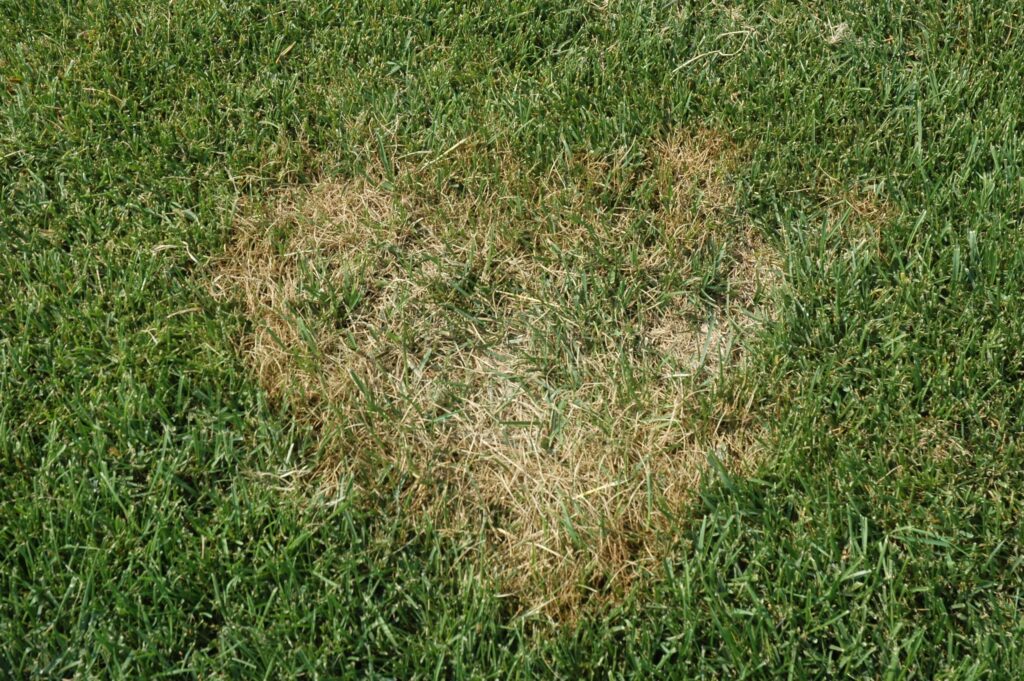
Let me start by saying this – not all brown spots are created equal. I learned this the hard way after spending way too much money on the wrong treatments because I didn’t properly diagnose the problem first.
The key is becoming a lawn detective. When I spot new brown areas, I always start with the same inspection routine I developed after years of trial and error. First, I look at the shape and pattern of the damage. Circular spots usually mean one thing, while irregular patches often point to something completely different.
Here’s my quick visual checklist that’s saved me countless headaches:
- Are the spots circular or irregular shaped?
- Is the grass completely dead or just dormant and brown?
- Can I easily pull up the affected grass, or is it still rooted?
- Are there any visible insects, grubs, or fungal growth?
- What’s the surrounding area look like?
The seven main causes I see over and over are dog urine burns, overwatering issues, fungal diseases, insect damage, chemical burns, heat stress, and soil compaction. Each one has its own “fingerprint” once you know what to look for.
Timing matters too. Brown spots that appear overnight usually indicate chemical burns or pet damage. Spots that develop slowly over weeks often point to fungal issues or pest problems. I always take photos when I first notice brown areas so I can track how they change over time.
1. Dog Urine Burns – The #1 Cause of Lawn Brown Spots
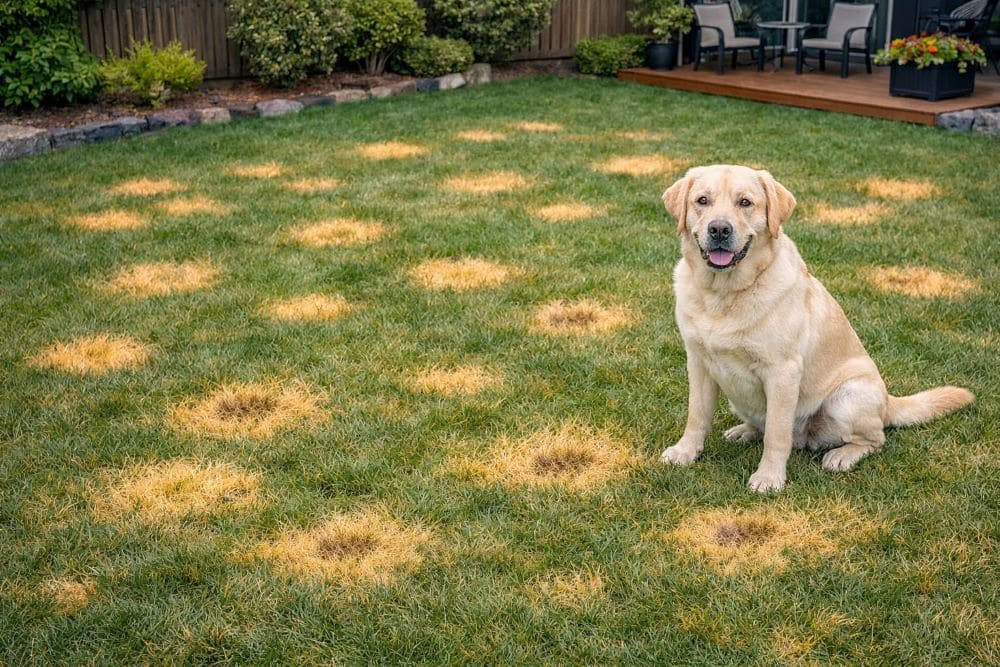
Oh boy, where do I even start with this one? If you have dogs, chances are you’ve dealt with those telltale circular brown spots with bright green rings around them. I call them “crop circles of death” because that’s exactly what they look like when you spot them in your lawn.
My neighbor’s labrador taught me everything I never wanted to know about urine burns. The high nitrogen content in dog pee basically over-fertilizes that spot, burning the grass to death while creating that weird green halo effect around the edges. It’s like nature’s way of being extra dramatic about the whole thing.
Here’s what I’ve learned about identifying dog urine spots versus other causes: they’re almost always perfectly circular, they show up within 24-48 hours of the “incident,” and they’re usually located along walking paths or near favorite sniffing spots. Female dogs tend to create worse damage because they squat and concentrate their urine in one spot, while males spread it around more.
For immediate treatment of fresh urine burns, I grab my garden hose and flood the area with water within a few hours if possible. The goal is diluting that concentrated nitrogen before it can do maximum damage. I’ve found that soaking the spot for about 5 minutes works better than just a quick rinse.
Prevention is where I’ve seen the most success though. One of my customers has trained his dog to use a designated area in the back corner of his garden where he don’t mind the brown spots. Some people use Dog Rocks in their pet’s water bowl – they’re supposed to reduce the nitrogen levels in urine, though honestly, I’ve heard of mixed results with those.
For repairing existing urine burns, I scrape out the dead grass, add some fresh topsoil, and overseed with a grass type that matches the rest of the lawn. The key is being patient – it usually takes 2-3 weeks to see new grass sprouting.
2. Overwatering and Poor Drainage Issues
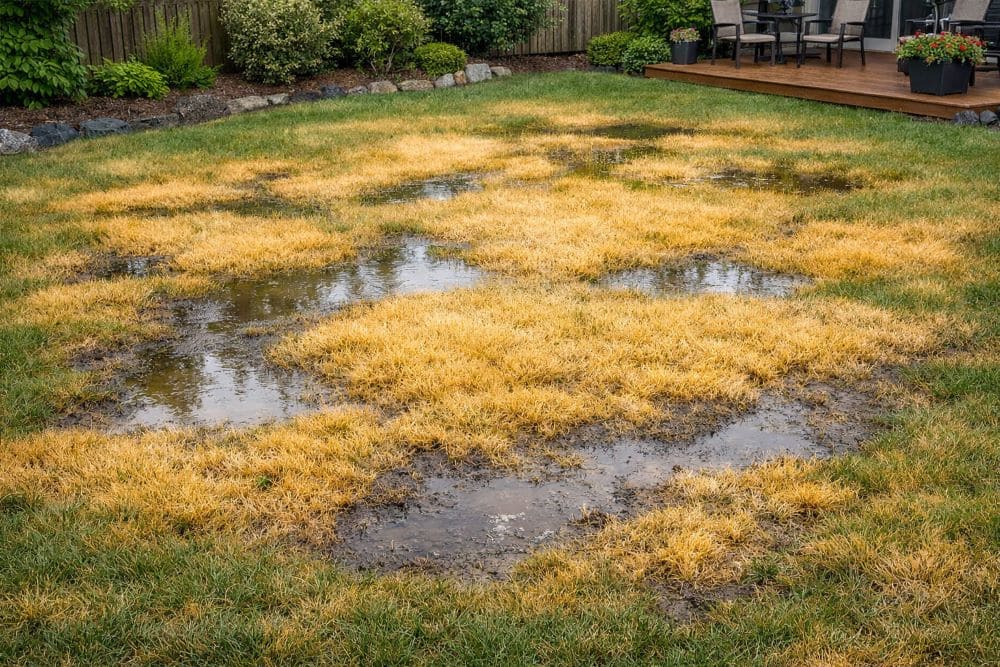
I used to be one of those people who thought more water always meant greener grass. Blimey, was I wrong about that! Overwatering created some of the worst brown spot disasters I’ve ever had to deal with in my garden.
The thing about overwatered grass is that it doesn’t just turn brown – it gets this soggy, mushy feel to it that’s pretty unmistakeable once you’ve experienced it. I remember stepping on what I thought was just dormant grass and having my foot sink into this gross, spongy mess. That’s when I knew I had a drainage problem on my hands.
Waterlogged soil creates the perfect environment for root rot and fungal diseases. Your grass roots literally start drowning because they can’t get the oxygen they need. It’s like the plant equivalent of holding your breath underwater for too long.
Here’s my simple drainage test that anyone can do: dig a hole about 30cm deep and fill it with water. If the water doesn’t drain within 24 hours, you’ve got drainage issues. I learned this trick from an old-timer at my local garden centre, and it’s been a game-changer for diagnosing problems.
For improving drainage naturally, I’ve had great success with core aeration and adding organic matter to compacted areas. I hire one of those plug aerators every autumn and go over the problem spots multiple times. Then I spread a thin layer of compost or sand to help improve soil structure.
The sprinkler system adjustment was probably the biggest change I made though. I switched from watering every day for short periods to watering less frequently but for longer periods. This encourages deeper root growth and prevents that surface saturation that causes so many problems.
3. Fungal Diseases That Create Brown Lawn Patches
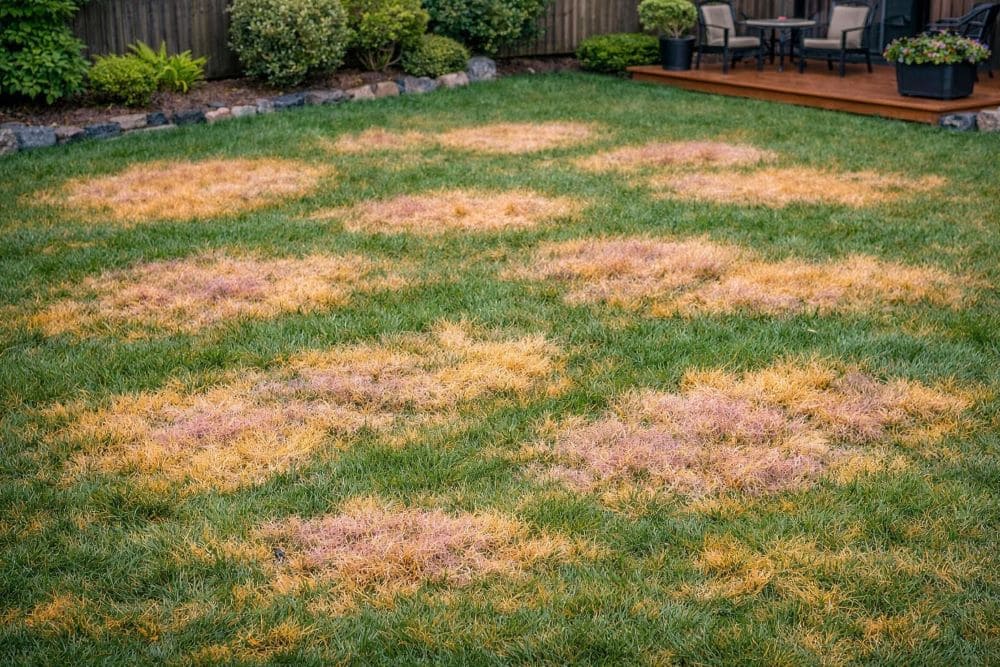
Fungal diseases are like the sneaky villains of the lawn care world – they creep up on you when you’re not paying attention and can take over huge areas before you even realize what’s happening.
I got my first real education in lawn fungi during a particularly humid summer a few years back. I noticed these irregular brown patches that seemed to appear overnight and spread like wildfire across my front lawn. The grass had this weird, almost greasy look to it that I’d never seen before.
The most common lawn fungus I deal with is brown patch disease, which thrives in hot, humid conditions with poor air circulation. Dollar spot is another frequent troublemaker – it creates small, silver dollar-sized brown spots that can merge into larger damaged areas if left untreated.
Environmental conditions are crucial for fungal development. High humidity, poor drainage, over-fertilization, and watering at night all create the perfect storm for these diseases. I made the mistake of running my sprinklers late in the evening for years before I learned that leaving grass wet overnight is basically rolling out the red carpet for fungi.
For treatment, I’ve found that improving air circulation is often just as important as applying fungicides. I trim back overgrown shrubs and thin out dense areas to help air flow better across the lawn surface. For severe infections, I’ll use a copper-based fungicide, but I always try cultural controls first.
Prevention has become my main focus though. I water early in the morning so the grass has time to dry before evening, I maintain proper fertility levels without over-feeding, and I keep my mower blades sharp to avoid creating wounds that fungi can attack.
4. Grub Damage and Insect Infestations
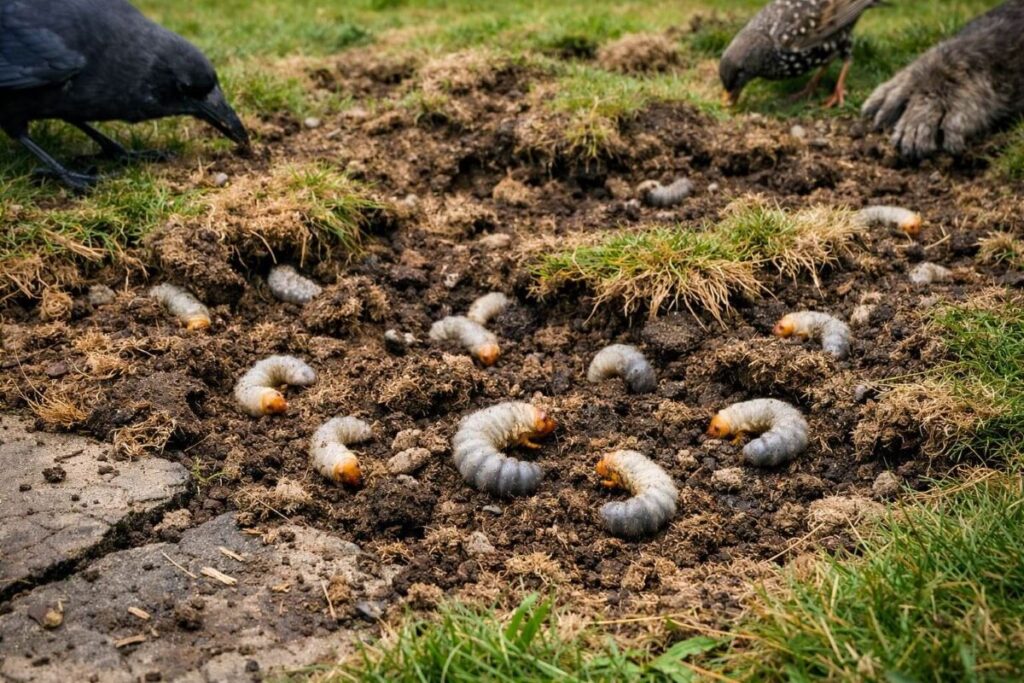
Nothing quite prepared me for the horror of discovering that my beautiful lawn was basically a grub buffet. The first time I pulled up a section of brown, dying grass and found dozens of white, C-shaped larvae wiggling around, I nearly threw up right there in my garden.
Grub damage has its own unique signature that’s different from other brown spot causes. The affected grass feels spongy underfoot, and you can literally peel it back like carpet because the roots have been eaten away. I call it the “rug test” – if you can roll up sections of your lawn like a throw rug, you’ve probably got grubs.
Chinch bugs are another major culprit that I’ve battled over the years. These tiny insects suck the juice out of grass blades and inject a toxin that kills the plant. The damage typically starts in sunny areas and spreads outward in irregular patterns. Unlike grub damage, chinch bug areas stay firmly rooted – the grass is just dead and brown.
My go-to grub test involves digging up a square foot section of damaged lawn and counting the larvae. More than 10 grubs per square foot usually means treatment is necessary. The best time to check is late summer when grubs are actively feeding near the surface.
For treatment, timing is everything. Grubs are most vulnerable when they’re young and close to the surface, typically in late summer or early fall. I’ve had good success with beneficial nematodes for organic control – these microscopic worms actually hunt down and eat grubs naturally.
Chemical treatments work faster, but I always read the labels carefully since some products can harm beneficial insects too. The key is applying treatments when grubs are actively feeding, not when they’re deep in the soil during winter months.
5. Chemical Burns from Fertilizer and Pesticides
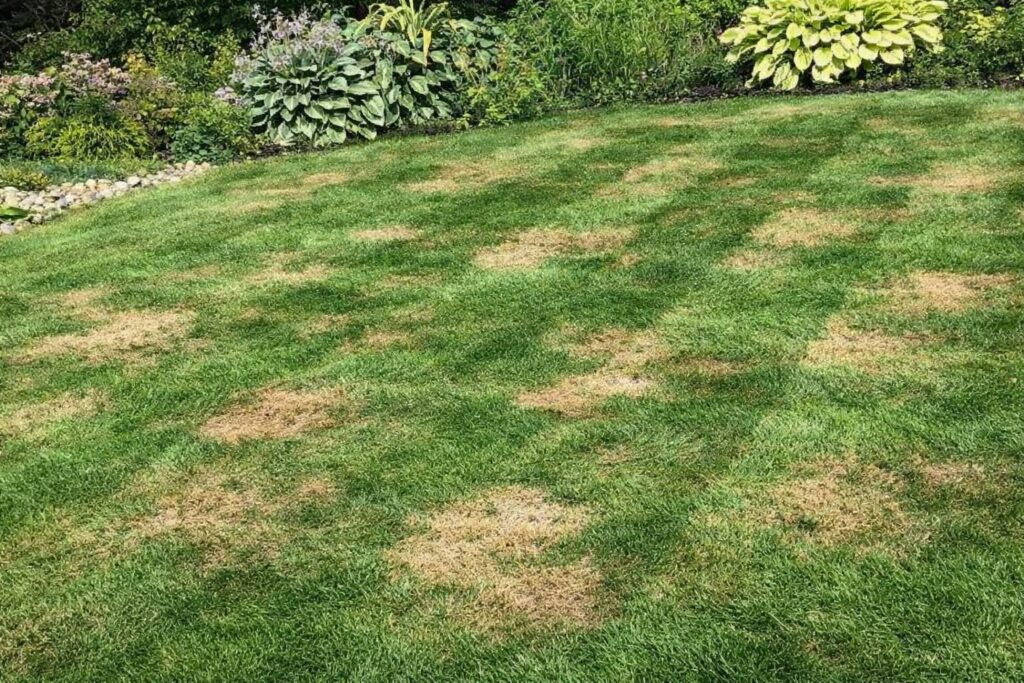
Let me tell you about the time my customer turned his entire front lawn into what looked like a patchwork quilt of brown and green squares. He sais he was feeling pretty confident with his new drop spreader, walking in neat little rows and applying fertiliser like he knew what I was doing. Three days later, his lawn looked like someone had painted racing stripes across it with bleach.
Fertiliser burn is surprisingly easy to create and frustratingly hard to fix. The high salt content in synthetic fertilisers literally dehydrates grass blades when applied too heavily or when the lawn is already drought-stressed. It’s like putting salt on a slug – not pretty to watch.
Chemical burns have some telltale signs that help distinguish them from other brown spot causes. The damage usually follows application patterns – stripes from spreaders, circles from spill spots, or geometric shapes where products were mixed or stored. The grass typically turns brown within 24-48 hours of application, and the damage often has very defined edges.
I learned the hard way that “more is not better” when it comes to lawn chemicals. Now I always calibrate my spreader before each use, and I never apply fertiliser to wet grass or when rain isn’t expected for at least 24 hours. Watering lightly after application helps dissolve the fertiliser and prevents burning.
For treating existing chemical burns, the first step is flushing the area with lots of water to dilute and wash away excess chemicals. I’ll run a sprinkler on affected areas for 15-20 minutes to really saturate the soil. Then it’s a waiting game – lightly burned grass might recover in a few weeks, but severe burns usually require reseeding.
The recovery timeline depends on how deep the damage goes. Surface burns that only affect grass blades often bounce back naturally. But when the chemical burn damages roots or soil chemistry, you’re looking at a complete renovation of those areas.
6. Heat Stress and Drought Damage
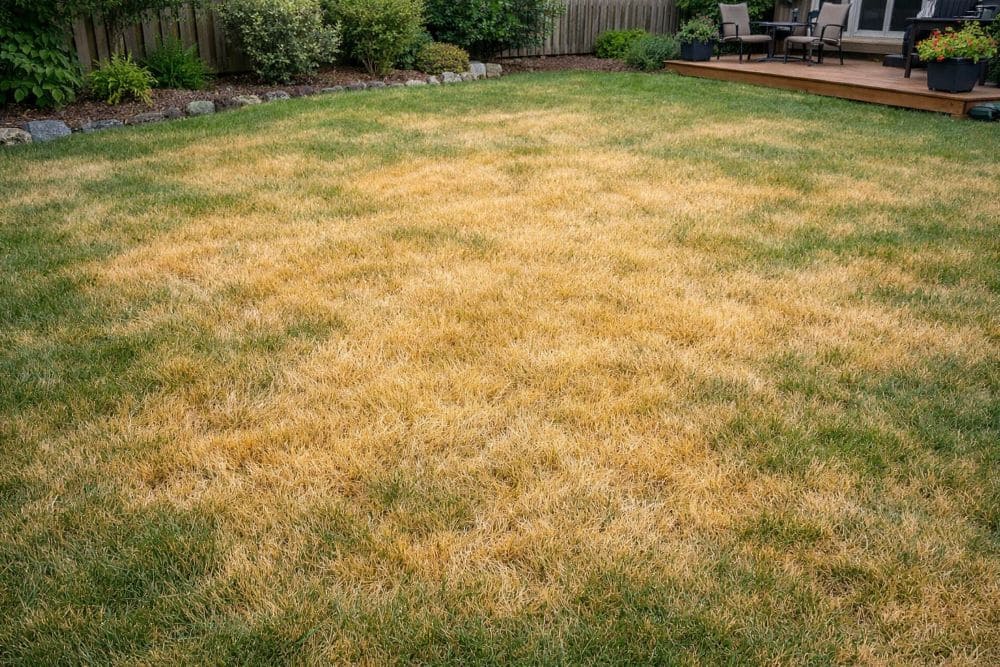
Summer heat stress taught me the difference between dead grass and dormant grass the hard way. During my first serious drought, I panicked and ripped out entire sections of brown lawn that I thought were goners. Turns out, most of it was just sleeping and would have come back with the autumn rains.
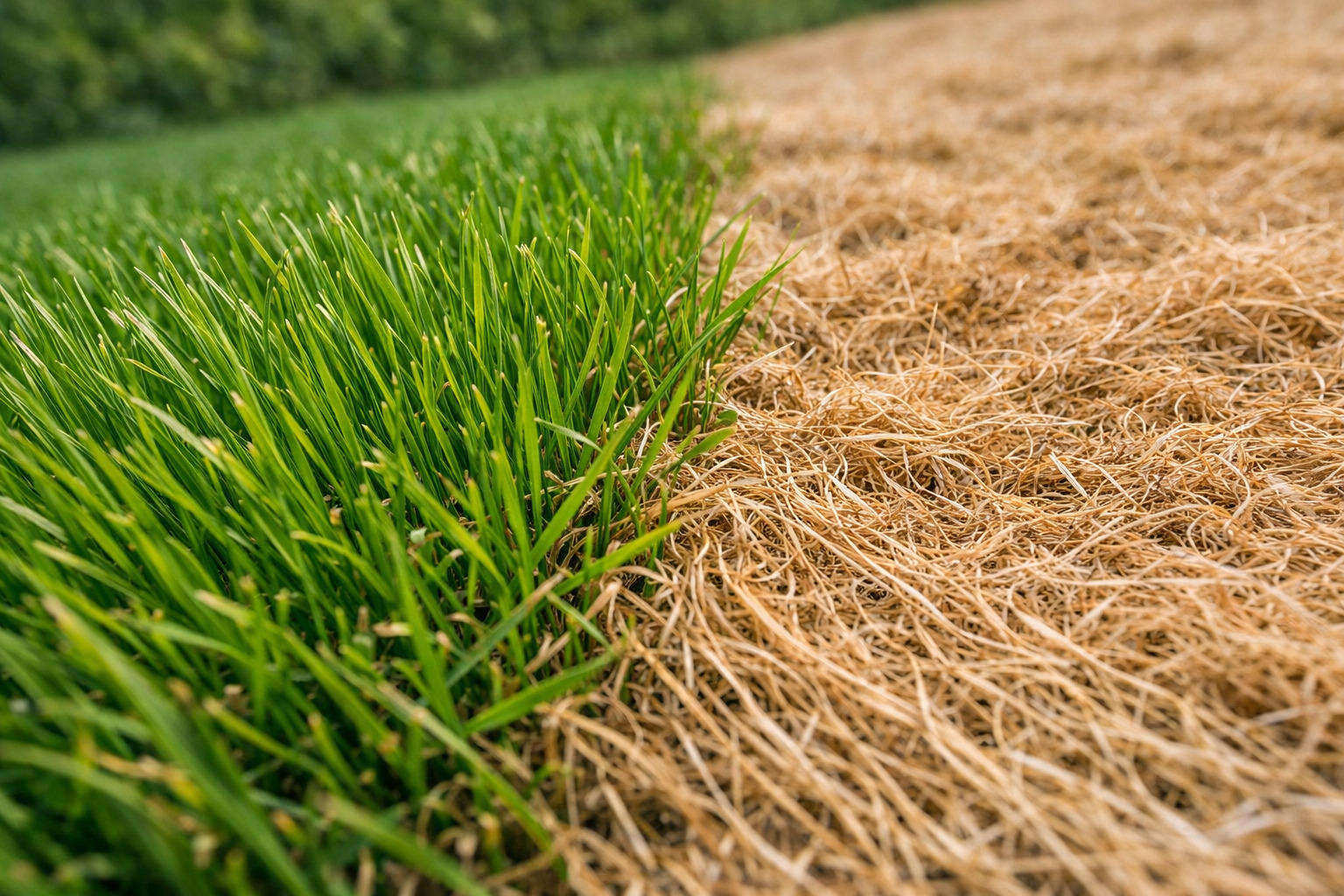
Drought-stressed grass goes into survival mode by shutting down top growth and preserving energy in its root system. The grass blades turn brown and crispy, but if you dig down, you’ll often find that the crown and roots are still alive and white or cream-coloured. Dead grass, on the other hand, has black, mushy roots and crowns.
Heat stress patterns are pretty predictable once you know what to look for. South-facing slopes and areas near pavement or buildings always get hit first. Thin or newly established grass shows stress before mature, deep-rooted lawns. Sandy soils dry out faster than clay soils, creating their own heat stress patterns.
My watering strategy during heat waves has evolved a lot over the years. I used to think frequent light watering was best, but that actually encourages shallow root growth that makes heat stress worse. Now I water deeply but less frequently, usually early in the morning when evaporation rates are lowest.
Choosing the right grass type for your climate makes a huge difference too. I switched from cool-season grass to a heat-tolerant variety in my sunny areas, and the difference in summer performance is like night and day. Some grasses are just better built to handle extreme temperatures.
The good news about heat stress brown spots is that they often recover naturally when temperatures moderate and moisture returns. I’ve learned to be patient and wait until autumn before making major renovation decisions about heat-damaged areas.
7. Compacted Soil and Traffic Damage
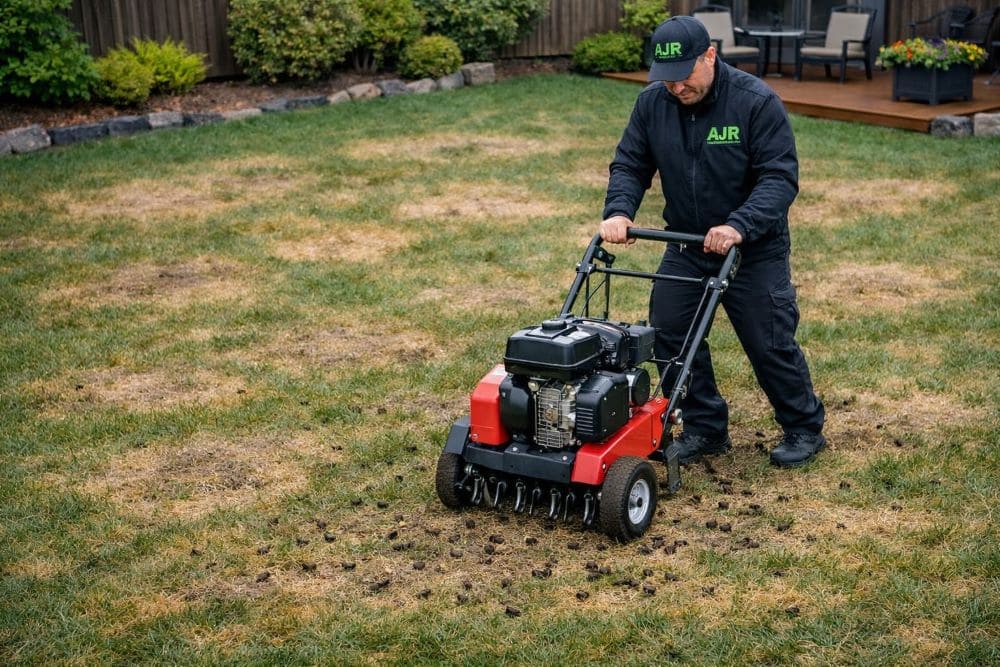
My neighbours kids’ playing football on the lawn taught me everything I never wanted to know about soil compaction and traffic damage. What started as a few worn spots where they practiced penalty kicks turned into a brown, hardpan disaster that wouldn’t grow grass no matter what I threw at it.
Compacted soil creates brown spots because grass roots literally can’t penetrate the hard-packed earth to get water and nutrients. It’s like trying to drink through a straw that’s been pinched shut. The grass slowly starves and dies, usually in high-traffic areas where people or pets walk regularly.
Traffic damage has its own distinct pattern – it follows pathways and heavily used areas. I can literally map my family’s walking patterns by looking at the worn spots in my lawn. The areas between the driveway and front door, around the mailbox, and where kids cut through to reach the neighbour’s yard all show classic traffic wear.
My simple compaction test involves trying to push a screwdriver into the soil. If I can’t easily push it 15cm deep, the soil is compacted enough to cause grass problems. Hard, compacted areas also tend to shed water rather than absorb it, creating their own little drought conditions even when you’re watering regularly.
Core aeration has been my most effective solution for compacted soil problems. I use a plug aerator every autumn and go over problem areas multiple times, pulling up those finger-sized plugs of soil. The holes allow water, air, and nutrients to reach grass roots again.
Reseeding traffic-damaged areas requires some strategy though. I’ve learned to choose wear-tolerant grass varieties like tall fescue or perennial ryegrass for high-traffic zones. Regular grass seed just can’t handle the abuse in these areas.
Creating designated pathways has been my best long-term solution. I’ve installed concrete paths and stepping stones in the most heavily trafficked areas and established stone paths where people naturally want to walk. It’s easier to work with human nature than fight against it.
How to Fix Brown Spots: Step-by-Step Repair Guide
After dealing with every type of brown spot imaginable, I’ve developed a foolproof repair system that works regardless of what caused the damage in the first place. The key is being systematic and patient – lawn repair is more like a marathon than a sprint.
My first step is always identifying and addressing the root cause. There’s no point in reseeding an area if the underlying problem is still there. If it’s dog urine, I flush the soil. If it’s compaction, I aerate first. If it’s fungal disease, I improve drainage and air circulation before doing anything else.
For the actual repair work, I gather my essential tools: a garden rake, hand cultivator, grass seed, starter fertilizer, topsoil or compost, and a good sprinkler or hose. I’ve learned that having everything ready before I start makes the whole process go much smoother.
The detailed repair process starts with removing all dead grass and debris from the affected area. I rake aggressively to get down to bare soil, even if it means expanding the repair area slightly. Half-dead grass just creates competition for new seedlings and rarely recovers fully.
Next, I rough up the soil surface with my hand cultivator and add a thin layer of topsoil or compost if the area is low or the soil looks poor. The new soil gives seeds a good growing medium and helps level any depressions that might collect water.
Seeding technique matters more than most people realize. I spread the seed evenly at the recommended rate – too thick and the seedlings compete with each other, too thin and you get a patchy result. I always choose seed that matches my existing lawn type for the best blend.
My watering schedule for new grass is pretty specific: light, frequent watering to keep the soil surface moist until germination, then gradually deeper and less frequent watering as the grass establishes. I usually see sprouts within 7-14 days, depending on grass type and weather conditions.
The timeline for seeing green grass return varies, but I tell people to expect about 3-4 weeks for noticeable coverage and 6-8 weeks for the area to really blend with the surrounding lawn. Patience is crucial during this phase – new grass is fragile and needs time to establish strong roots.
Conclusion
Brown spots on your lawn don’t have to be permanent eyesores that make you want to hide indoors every time the neighbors walk by. After years of battling every type of lawn damage imaginable, I can confidently say that most brown spot problems are totally solvable once you play detective and identify the real culprit.
The key takeaway here is that successful brown spot treatment starts with accurate diagnosis. Whether you’re dealing with dog urine burns, overwatering issues, fungal diseases, grub damage, chemical burns, heat stress, or compacted soil, each problem has its own signature and requires a specific approach.
Remember, your lawn’s specific needs might be different from mine based on your grass type, climate, and soil conditions. Don’t be afraid to experiment with different solutions and adapt these techniques to work for your particular situation. What works in my heavy clay soil might need tweaking for your sandy soil or chalky ground.
I’d love to hear about your own brown spot battles and what solutions have worked best in your yard. et in contact and share your lawn repair success stories – or disasters that taught you valuable lessons! Sometimes the best learning comes from hearing what didn’t work just as much as what did.
Frequently Asked Questions
How long does it take for brown spots to recover naturally
It depends on the cause. Heat stress and drought damage often recover within 2-4 weeks of normal weather returning. Dog urine burns and fertiliser damage typically need reseeding and take 6-8 weeks for full recovery. Fungal issues can recover in 2-3 weeks with proper treatment.
Can I use household items to treat brown lawn spots?
Yes! For dog urine burns, flush immediately with water from your garden hose. Baking soda can help neutralise acidic soil. Dish soap mixed with water works as a natural fungicide for minor fungal issues. However, severe problems usually need proper lawn treatments.
Should I remove dead grass before reseeding brown spots
Absolutely. Dead grass competes with new seedlings and prevents proper seed-to-soil contact. Rake out all brown, dead material until you reach healthy grass or bare soil. This gives new grass the best chance to establish properly.
What's the difference between dormant grass and dead grass?
Dormant grass has brown blades but white or cream-coloured roots and crowns when you dig down. Dead grass has black, mushy roots and pulls up easily. Dormant grass will recover with water and cooler temperatures, whilst dead grass needs replacing.
When is the best time to repair brown spots in the UK?
Early autumn (September-October) and spring (March-April) are ideal for lawn repairs. The soil is still warm but temperatures are cooler, with more consistent rainfall. Avoid summer repairs during hot, dry periods as new grass struggles to establish.