

Picture this: you’re eagerly waiting for spring to arrive, dreaming of that perfect emerald lawn where your family can enjoy BBQs and garden parties. But when the warmer weather finally comes, you’re met with a patchy, weed-infested mess that looks more like a battlefield than a beautiful garden!
Here’s a shocking statistic that might surprise you: 73% of lawn problems that appear in spring actually stem from poor autumn preparation. That’s right – the decisions you make (or don’t make) in the coming weeks will determine whether you’ll be the envy of your neighbours or desperately searching for emergency lawn rescue services come March.
As lawn care specialists here in South Yorkshire, we’ve seen this heart-breaking scenario play out countless times across Rotherham and the surrounding areas. The good news? It’s completely preventable! Let’s explore the critical autumn mistakes that could sabotage your spring lawn dreams – and more importantly, how to avoid them.
The Single Biggest Autumn Lawn Care Mistake Most Homeowners Make

The most devastating mistake we encounter time and time again? Complete autumn abandonment. Once the summer BBQs are packed away and the kids head back to school, most homeowners simply forget about their lawns entirely.
“I’ll sort it out in spring,” they think. But here’s what they don’t realise: autumn is actually the most crucial time for lawn care preparation. Your grass doesn’t simply switch off when the temperatures drop – it’s working hard beneath the surface, developing the root systems that will determine its strength and resilience for the entire following year.
In our years serving homeowners across Rotherham, we’ve witnessed the same pattern repeatedly. Families who neglect their autumn lawn care invariably face the same spring disasters: bare patches where grass has died off, aggressive weeds that have taken hold during winter, and soil so compacted that new growth struggles to break through.
The consequences extend far beyond aesthetics. A weakened lawn becomes a breeding ground for moss, lawn diseases, and pests. What could have been prevented with a few hours of autumn care often requires months of expensive restoration work and professional intervention come spring.
Why Autumn Lawn Care is Critical for Spring Success

Understanding your lawn’s natural cycle is key to appreciating why autumn lawn care matters so much. As temperatures begin to drop, your grass enters a crucial preparation phase. While the visible growth above ground slows down, the real action happens below the surface.
During autumn, grass plants focus their energy on developing robust root systems. These roots act like underground storage units, banking nutrients and energy reserves that will fuel explosive spring growth. Think of it as your lawn’s natural savings account – the more you invest now, the richer the returns next year.
The cooler, wetter conditions typical of UK autumns create perfect growing conditions for grass roots. Soil temperatures remain warm while air temperatures cool, encouraging root development without the stress of scorching summer heat or freezing winter conditions.
Here in South Yorkshire, our climate provides a particularly valuable window of opportunity. Our typically mild autumns, combined with increased rainfall, create ideal conditions for lawn treatments to take hold and establish before winter dormancy sets in.
Professional lawn care during this period isn’t just maintenance – it’s an investment in your lawn’s future. The treatments and care you provide now will determine whether your grass emerges from winter as a champion or casualty.
The Essential Autumn Lawn Care Checklist Every Homeowner Needs
Final Mowing Guidelines
Continue mowing your lawn until growth stops completely, but adjust your approach. Gradually reduce the cutting height with each mow, aiming for a final height of about 2.5cm. This prevents the grass from matting down under winter weather while avoiding scalping that could damage the crown.
Never cut more than one-third of the grass height in a single session. If your lawn has grown significantly, spread the reduction over several mowing sessions to avoid shocking the grass.
Strategic Leaf Management
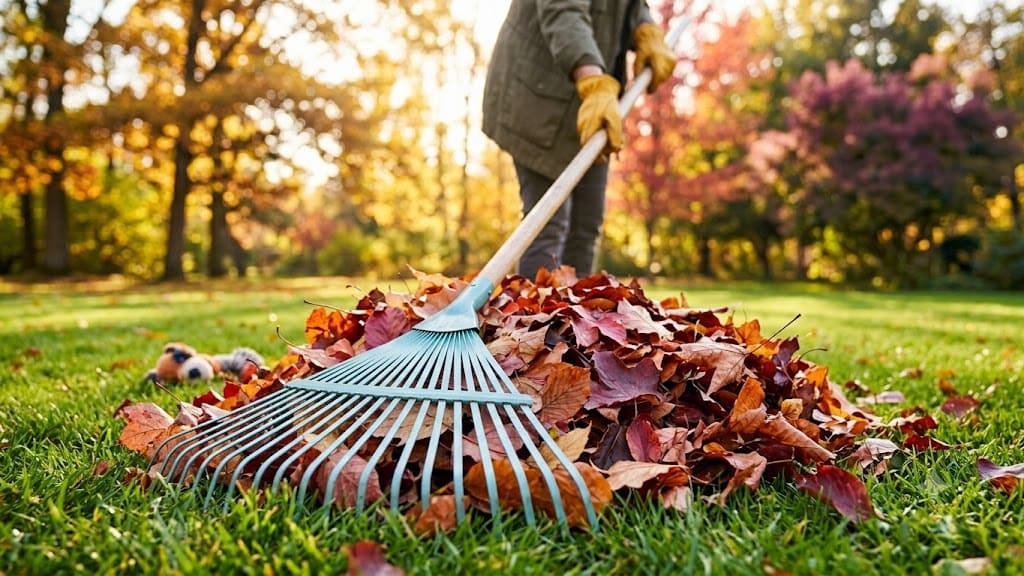
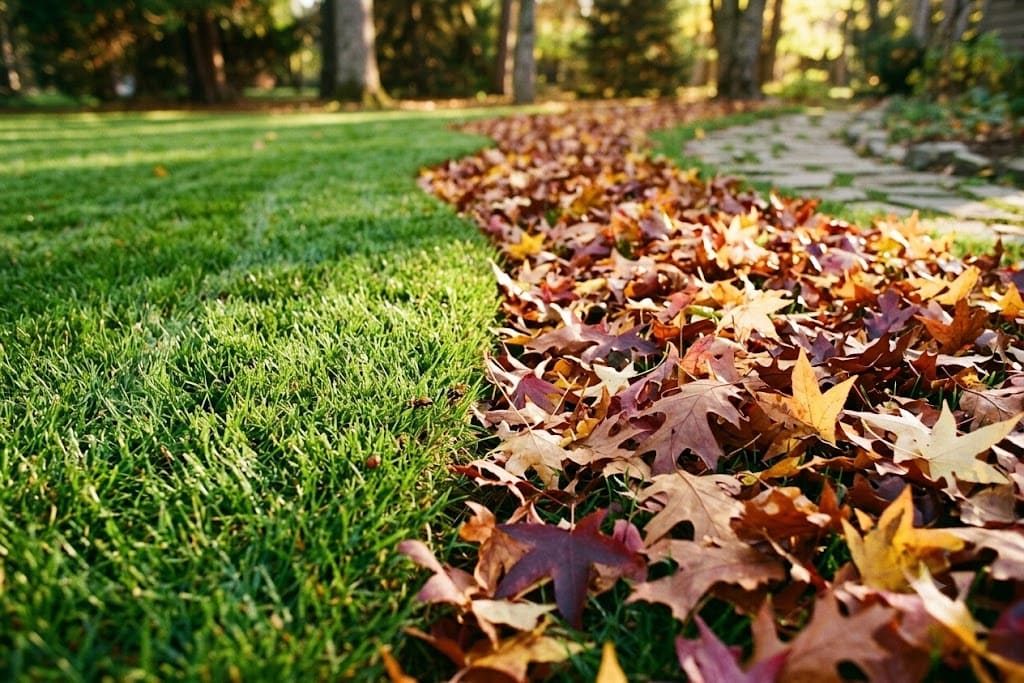
While autumn leaves create a beautiful carpet, they’re your lawn’s worst enemy if left in place. Thick layers of leaves block sunlight and trap moisture, creating perfect conditions for lawn fungal diseases and grass suffocation.
Remove leaves regularly – weekly during peak leaf-fall is ideal. Rather than bagging them for disposal, consider composting or using them as mulch in flower beds. Your lawn gets the protection it needs, and your garden benefits from natural organic matter.
Aeration: Your Lawn’s Breathing Space
Autumn aeration addresses one of the biggest threats to lawn health: soil compaction. After months of summer foot traffic, garden parties, and general use, your soil becomes compressed, preventing air, water, and nutrients from reaching grass roots.
Professional aeration involves creating thousands of small holes throughout your lawn, either through spike aeration or the more effective hollow-tine method. This process should ideally be completed by early October to allow recovery time before winter.
Autumn Fertilisation Strategy
Your lawn needs specific nutrients to prepare for winter and fuel spring growth. An autumn fertiliser should be high in potassium and phosphorus while being lower in nitrogen compared to summer feeds.
Potassium strengthens cell walls, improving disease resistance and cold tolerance. Phosphorus supports root development – crucial for that underground energy storage we discussed. Apply fertiliser when grass is still actively growing but before the first frost.
Overseeding Opportunities
Autumn presents an excellent window for overseeding thin or bare areas. The combination of warm soil, cooler air, and increased moisture creates ideal germination conditions.
Choose grass seed varieties suited to UK conditions and your specific lawn usage. For high-traffic family gardens, hard-wearing ryegrass blends work well. For ornamental lawns, fine fescue mixes provide a luxury finish.
Targeted Weed Control
Many perennial weeds are actually more vulnerable to treatment in autumn as they transport nutrients down to their roots for winter storage. This makes it an ideal time for targeted herbicide applications that will be carried directly to the weed’s energy reserves.
Focus on persistent broadleaf lawn weeds like dandelions, plantain, and clover. Spot treatments are often more effective and environmentally friendly than blanket applications.
Common Autumn Lawn Care Myths That Could Ruin Your Spring
Myth 1: “Nature Will Sort Itself Out”
While nature is indeed remarkable, your garden lawn isn’t a natural ecosystem. It’s a managed environment that requires human intervention to maintain the dense, uniform appearance we expect from our lawns.
Wild grasses have evolved to compete with other plants, deal with varying conditions, and survive without intervention. Your lawn grass varieties have been bred for appearance and density, often at the expense of natural resilience.
Myth 2: “Autumn Fertiliser is Unnecessary”
Some homeowners believe that feeding grass before winter is wasteful since growth appears to stop. This couldn’t be further from the truth. Autumn fertilisation provides the nutrients your grass needs for root development and energy storage.
Think of it as providing your lawn with a hearty meal before a long fast. The nutrients you provide now will sustain your grass through winter and fuel the first flush of spring growth.
Myth 3: “Leaves Provide Natural Protection”
While a light scattering of leaves can provide some protection, thick layers are detrimental. They block light, trap excessive moisture, and can harbour fungal diseases that will devastate your lawn over winter.
The key is moderation. Remove the bulk of leaves but don’t obsess over every single one. A few scattered leaves won’t harm your lawn and can provide some organic matter as they decompose.
Myth 4: “Stop All Maintenance Once Growth Slows”
Visible growth may slow, but your lawn’s needs don’t disappear. Continued light maintenance, appropriate watering, and monitoring for issues remain important throughout autumn.
The goal is to gradually reduce maintenance intensity rather than stopping abruptly. This allows your lawn to transition naturally into dormancy rather than suffering shock from sudden neglect.
How Professional Autumn Treatments Guarantee Spring Success
Professional lawn care brings expertise, specialised equipment, and commercial-grade products that simply aren’t available to homeowners. The difference in results can be dramatic.
Our professional-grade aerators, for example, create deeper, more effective holes than rental equipment. We use hollow-tine aerators that actually remove soil plugs, providing far better results than spike aerators that can actually increase compaction.
Commercial fertilisers offer controlled-release formulations that provide steady nutrition over extended periods. This eliminates the feast-or-famine cycles common with basic retail fertilisers and reduces the risk of nutrient burn or waste.
Professional application also ensures even coverage and appropriate rates. Over-fertilisation can be just as damaging as under-fertilisation, and getting the balance right requires experience and proper equipment.
The timing of professional treatments is crucial. We monitor weather patterns, soil conditions, and grass growth patterns to schedule treatments for maximum effectiveness. This attention to timing can mean the difference between treatments that transform your lawn and those that provide minimal benefit.
Cost-wise, professional autumn treatments typically cost far less than spring lawn restoration. Prevention really is better than cure, and the investment you make in autumn care will save money, time, and frustration come spring.
Warning Signs Your Lawn is Heading for Spring Disaster
Visual Red Flags
Patchy growth patterns, excessive moss development, and areas where grass appears thin or discoloured all indicate underlying problems that will worsen over winter without intervention.
Waterlogging after rain suggests compaction issues that need addressing through aeration. If water sits on your lawn surface rather than soaking in, your soil structure needs professional attention.
Soil Condition Indicators
Hard, compacted soil that’s difficult to penetrate with a garden fork indicates severe compaction. This prevents root development and nutrient uptake, leading to weak grass that won’t survive winter stress.
Poor drainage, indicated by waterlogged areas or moss growth, suggests soil structure problems that will only worsen through winter freeze-thaw cycles.
Pest and Disease Pressure
Fungal diseases often become established in autumn when conditions are damp and temperatures moderate. Look for circular patches of discoloured or dead grass, which may indicate diseases like fairy ring or red thread.
Grub activity, evidenced by birds pecking at your lawn or areas that feel spongy underfoot, needs addressing before these pests cause more extensive damage over winter.
The Professional Assessment Advantage
Sometimes problems aren’t obvious to untrained eyes. Professional lawn assessments can identify issues in their early stages when treatment is most effective and least costly.
We look beyond surface symptoms to identify root causes, whether that’s soil pH imbalances, nutrient deficiencies, or underlying structural issues that need addressing.
Your Spring Lawn Recovery Plan: Damage Control Strategies
If you’re reading this and recognising that your lawn has already fallen victim to autumn neglect, don’t despair. While prevention is always better than cure, spring recovery is possible with the right approach and realistic expectations.
Emergency Restoration Timeline
Spring recovery typically requires a full growing season to achieve optimal results. The process begins with a thorough assessment of damage extent and underlying causes.
Early spring renovation work focuses on addressing structural issues like compaction and drainage problems. This provides the foundation for successful grass establishment and long-term health.
Mid-spring activities include overseeding, targeted weed control, and establishment of proper fertilisation schedules. This phase requires careful timing to coordinate with weather patterns and grass growth cycles.
Late spring and summer maintenance focuses on supporting new grass establishment while preventing setbacks from heat stress, drought, or pest pressure.
Budget Considerations
Spring lawn renovation typically costs 3-5 times more than preventive autumn care. The extensive work required – multiple overseedings, soil amendments, pest control, and intensive maintenance – adds up quickly.
Factor in the value of your time as well. DIY spring renovation requires significant time investment over several months, with no guarantee of professional-quality results.
Setting Realistic Expectations
Complete lawn transformation doesn’t happen overnight. Even with professional intervention, expect a full growing season to achieve the results you’re hoping for.
Some damage may require multiple seasons to fully correct, particularly if soil structure or drainage issues are involved. Patience and consistent care are essential for long-term success.
Conclusion

Don’t let autumn’s deceptive calm fool you – the decisions you make for your lawn right now will echo through to next spring and beyond. The “autumn mistake” we’ve discussed isn’t just about one season; it’s about breaking a cycle that could keep your lawn struggling year after year.
Remember, investing in proper autumn lawn care isn’t just about avoiding problems – it’s about setting the stage for the lush, healthy lawn you’ve always wanted. Every hour you invest now in proper preparation will save you days of frustration and expense next spring.
The science is clear: lawns that receive proper autumn care emerge from winter stronger, healthier, and more resilient. They green up faster, resist diseases better, and maintain their appearance with less intervention throughout the growing season.
Your future self (and your spring garden parties!) will thank you for taking action now. The choice is yours: invest a little time and effort this autumn, or face the heartbreak of spring lawn disasters that could take months and significant expense to resolve.
At AJR Lawn Care, we’ve helped hundreds of homeowners across Rotherham and South Yorkshire transform their autumn lawn care routine and achieve the spring results they deserve. We understand the local conditions, soil types, and climate challenges that affect lawns in our area.
Our professional autumn treatments are designed specifically for South Yorkshire conditions, using products and techniques proven effective in our climate. We don’t just follow generic advice – we provide targeted solutions based on years of local experience and expertise.
Ready to give your lawn the autumn care it needs? Don’t wait until it’s too late. Contact our friendly team today for a free autumn lawn assessment, and let us help you avoid the heartbreak of spring lawn disasters.
Your perfect lawn starts with the decisions you make this autumn. Make the right choice – contact AJR Lawn Care today!
Frequently Asked Questions
When is the latest I can start autumn lawn care?
The ideal window for autumn lawn care is September through October, but treatments can still be effective into November if weather permits. The key is ensuring grass has time to recover and establish before winter dormancy. Contact us for advice specific to current conditions – we monitor local weather patterns to advise on optimal timing for autumn treatments.
How much does professional autumn lawn care cost compared to spring restoration?
Professional autumn care typically costs £15-£150 for an average lawn, depending on treatments needed. Spring restoration, however, often costs £150-£1,500 or more due to extensive renovation work required. Autumn prevention is always more cost-effective than spring correction, making it a wise investment for budget-conscious homeowners.
Can I do autumn lawn care myself, or do I need professional help?
Basic maintenance like mowing and leaf removal can be done yourself, but professional treatments often provide superior results. We have access to commercial-grade equipment, professional products, and expertise in timing and application rates. For best results, consider professional aeration, fertilisation, and weed control while handling routine maintenance yourself.
What happens if I miss autumn lawn care this year?
Missing autumn care doesn’t mean your lawn is doomed, but it will likely require more intensive spring intervention. Expect to see more bare patches, weed problems, and slower green-up next spring. Early spring assessment and renovation can address most issues, though it requires more time, effort, and expense than autumn prevention.
How do I know if my lawn needs professional autumn treatment?
Signs your lawn needs professional attention include: waterlogging after rain, excessive moss growth, thin or patchy grass, hard compacted soil, or persistent weed problems. If you’re unsure, we offer free lawn assessments to identify issues and recommend appropriate treatments. It’s always better to address problems early when solutions are simpler and less costly.



