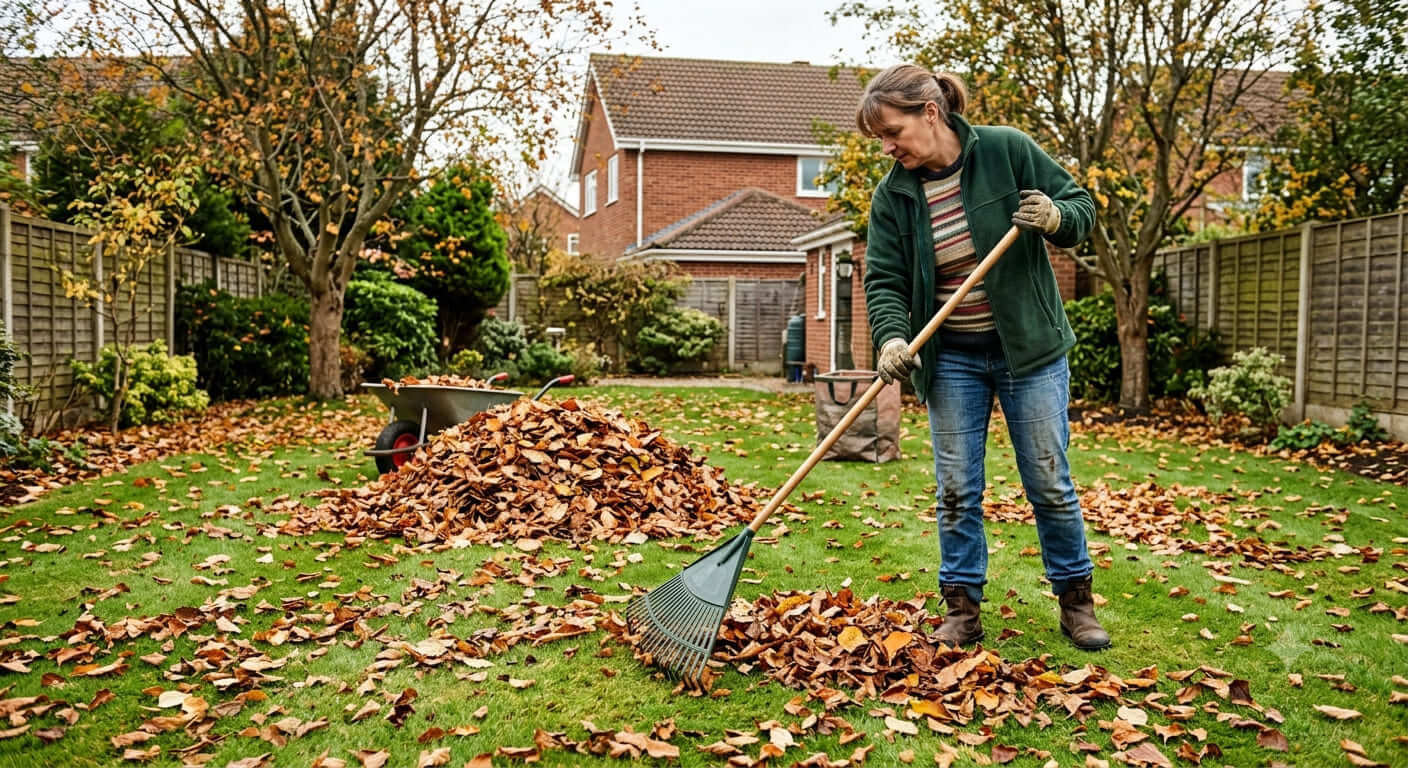
Did you know that leaving just a 5cm layer of autumn leaves on your lawn can kill grass in as little as one week? It’s true! As we watch the beautiful colours of autumn paint our gardens across South Yorkshire, many homeowners face the age-old question: should I rake these leaves or let nature take its course?
Here at AJR Lawn Care in Rotherham, we’ve seen firsthand how this simple decision can make or break your lawn’s health through winter and into spring. After 15 years of treating lawns across the region, I can tell you that autumn leaf management is one of the most overlooked aspects of lawn care – yet it’s absolutely crucial for maintaining a healthy, vibrant lawn.
The battle between convenience and lawn care is real, but the science is clear. Let’s explore why those picturesque leaf piles might be silently damaging your precious grass and what you can do about it.
The Hidden Dangers of Leaving Leaves on Your Lawn
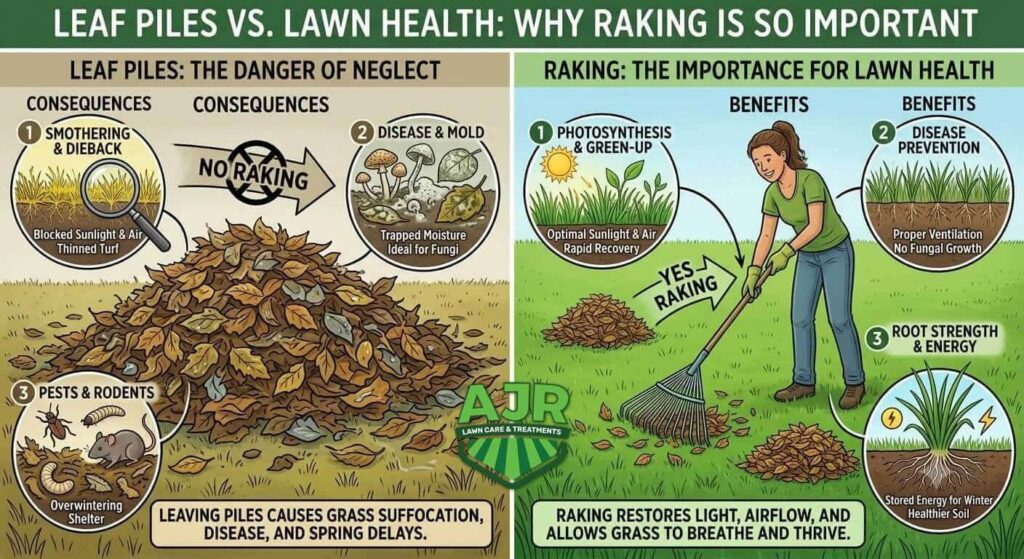
When autumn arrives in Rotherham and the surrounding areas, our gardens transform into stunning displays of gold, amber, and crimson. However, beneath this beautiful blanket lies a potential threat to your lawn’s wellbeing.
Blocked Sunlight: The Silent Grass Killer
Even during autumn months, your grass continues photosynthesis – the vital process that keeps it alive and healthy. When leaves accumulate on your lawn, they create an impenetrable barrier that blocks essential sunlight. Without adequate light, grass cannot produce the energy it needs to survive, leading to yellowing, weakening, and eventual death.
In South Yorkshire’s often overcast autumn weather, every ray of sunlight becomes precious. A thick layer of leaves compounds this problem, essentially starving your grass of its primary energy source.
The Suffocation Effect
Grass, like all living plants, needs to “breathe.” It requires proper air circulation for gas exchange – taking in carbon dioxide and releasing oxygen. When leaves pile up on your lawn, they create an airtight seal that prevents this crucial process.
This suffocation effect is particularly problematic during our damp UK winters. The combination of moisture and poor air circulation creates the perfect breeding ground for harmful bacteria and fungi that can devastate your lawn.
Moisture Retention Problems
Whilst grass needs water to survive, too much moisture trapped beneath leaf layers spells disaster. Leaves act like a wet blanket, holding moisture against the grass surface for extended periods. This constant dampness weakens grass roots, making them vulnerable to rot and disease.
The UK’s notoriously wet winters make this issue even more severe. What might be manageable in drier climates becomes a serious threat in our climate, where moisture levels remain high for months.
Why UK Climate Conditions Demand Action
Our British weather patterns create unique challenges for lawn care. The combination of:
- Extended periods of dampness
- Limited winter sunlight
- Fluctuating temperatures
- High humidity levels
All contribute to making leaf accumulation far more damaging than in other climates. This is why proactive leaf management isn’t just recommended – it’s essential for UK homeowners.
Common Lawn Diseases Caused by Leaf Accumulation
Over the years, we’ve treated countless lawns across Rotherham that have suffered from diseases directly linked to poor autumn leaf management. Here are the most common culprits:
Snow Mould: The Winter Destroyer
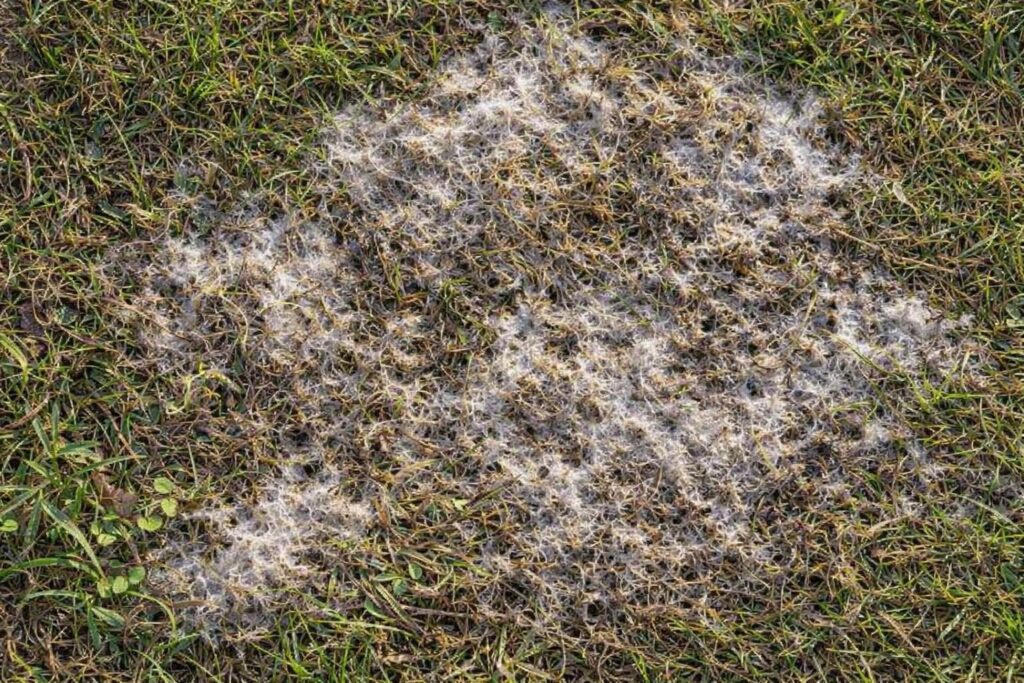
Snow mould is perhaps the most devastating disease we encounter. It thrives in the exact conditions created by leaf accumulation: cool temperatures, high moisture, and poor air circulation. This fungal disease appears as circular patches of dead, matted grass that become apparent when leaves are finally removed in spring.
Prevention is far easier than treatment, and proper leaf removal is your first line of defence.
Brown Patch and Dollar Spot Infections
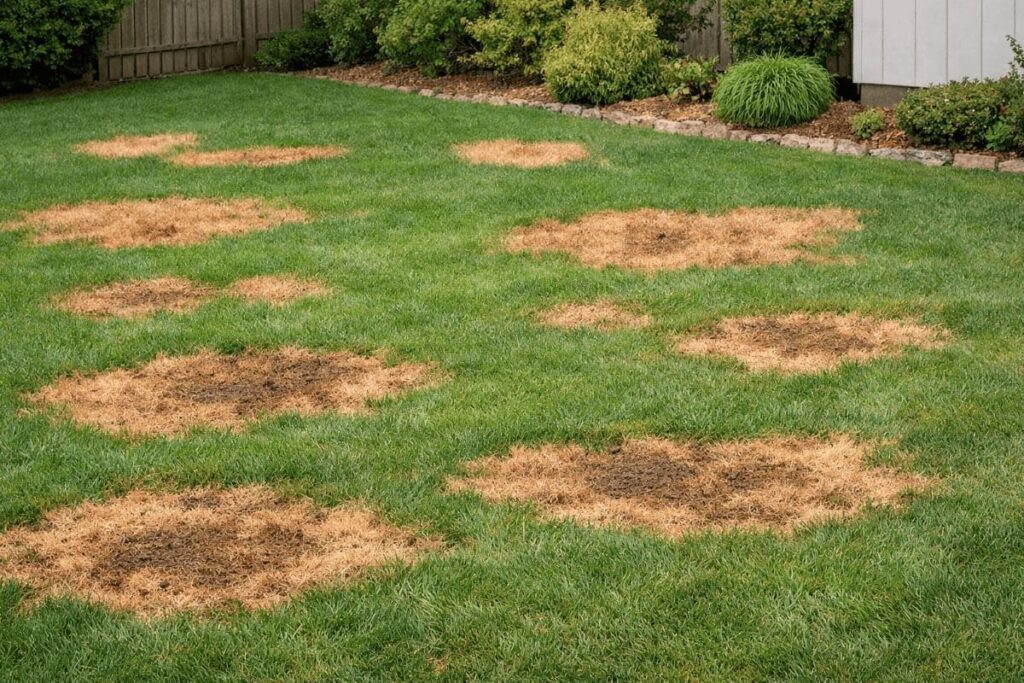
These fungal diseases love the humid, stagnant conditions created beneath leaf piles. Brown patch creates large, irregular areas of dead grass, whilst dollar spot forms smaller, circular patches. Both can spread rapidly under leaves, often going unnoticed until significant damage occurs.
Crown Rot: Attacking the Foundation
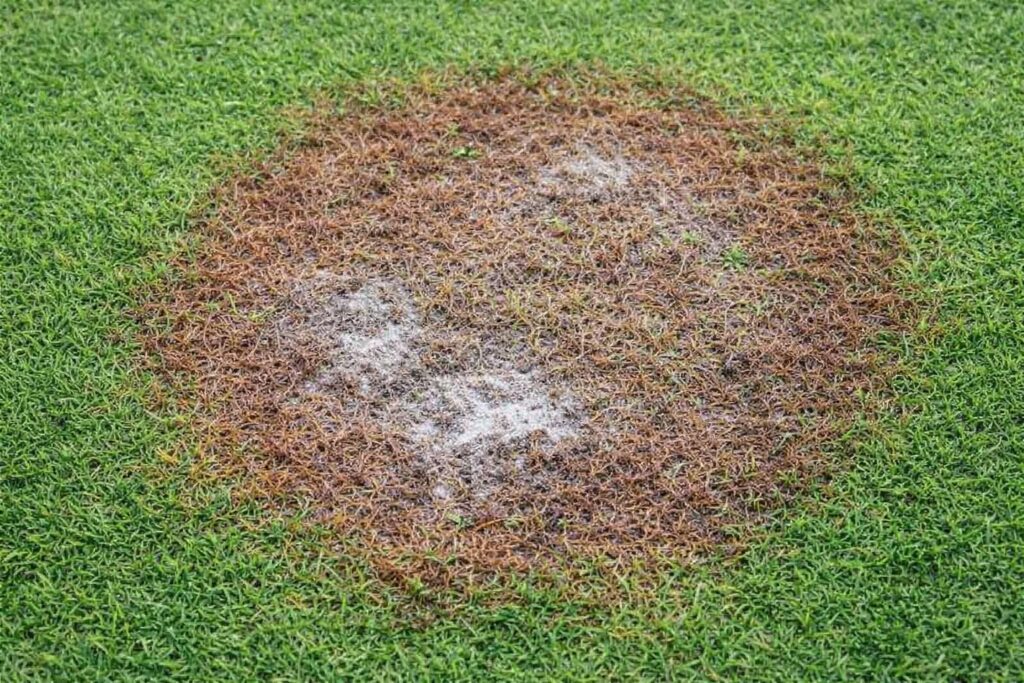
Crown rot targets the base of grass plants where the stems meet the roots. This devastating condition thrives in the wet, poorly ventilated conditions created by leaf accumulation. Once crown rot takes hold, affected grass rarely recovers, requiring full lawn renovation work.
Amplified Risks in Wet UK Winters
Our climate creates a perfect storm for lawn diseases. The extended moisture, combined with leaf cover, can turn minor fungal issues into major problems. What starts as a small affected area can quickly spread to encompass entire lawn sections.
Early Warning Signs
Watch for these indicators of leaf-related lawn problems:
- Yellowing grass beneath leaf accumulations
- Musty or sour odours from covered areas
- Soft, spongy feel to the turf
- Circular patches of discoloured grass
- Grass that pulls away easily from the soil
The Science Behind Proper Lawn Ventilation
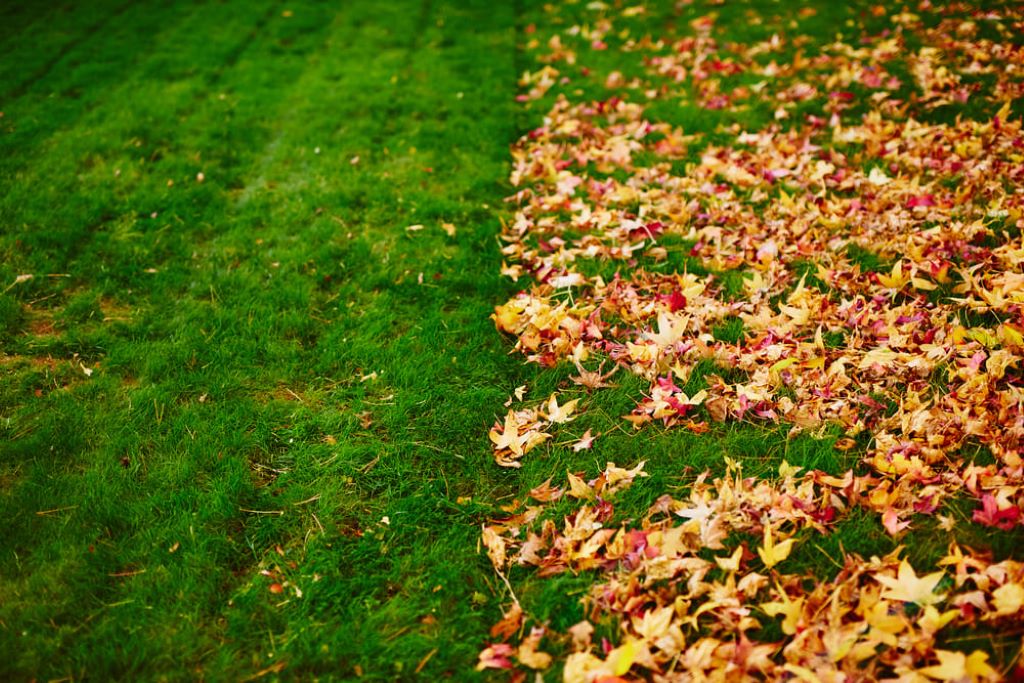
Understanding why your lawn needs proper air circulation helps explain why leaf removal is so critical.
Photosynthesis: The Life Process
Even in autumn and winter, grass continues photosynthesis at reduced levels. This process requires:
- Adequate sunlight (even filtered light helps)
- Carbon dioxide from the air
- Water from the soil
- Proper temperature regulation
Leaves block the first two requirements and disrupt temperature regulation, effectively shutting down this vital process.
Root Health and Oxygen Requirements
Grass roots need oxygen to function properly. They absorb nutrients and water more effectively when they can “breathe.” Compacted, poorly ventilated soil leads to:
- Reduced nutrient uptake
- Weaker root systems
- Increased susceptibility to disease
- Poor recovery from winter stress
Winter Dormancy vs. Grass Death
There’s a crucial difference between natural winter dormancy and actual grass death. Healthy grass enters a dormant state during cold months, slowing growth but maintaining its root system and ability to recover. Grass stressed by leaf accumulation may die completely, requiring reseeding or turfing in spring.
Understanding Seasonal Needs
Your lawn’s needs change throughout the year, but autumn care sets the foundation for spring recovery. Proper leaf management ensures your grass enters winter dormancy healthy and ready to bounce back when growing conditions improve.
Professional vs. DIY Leaf Removal: What Works Best
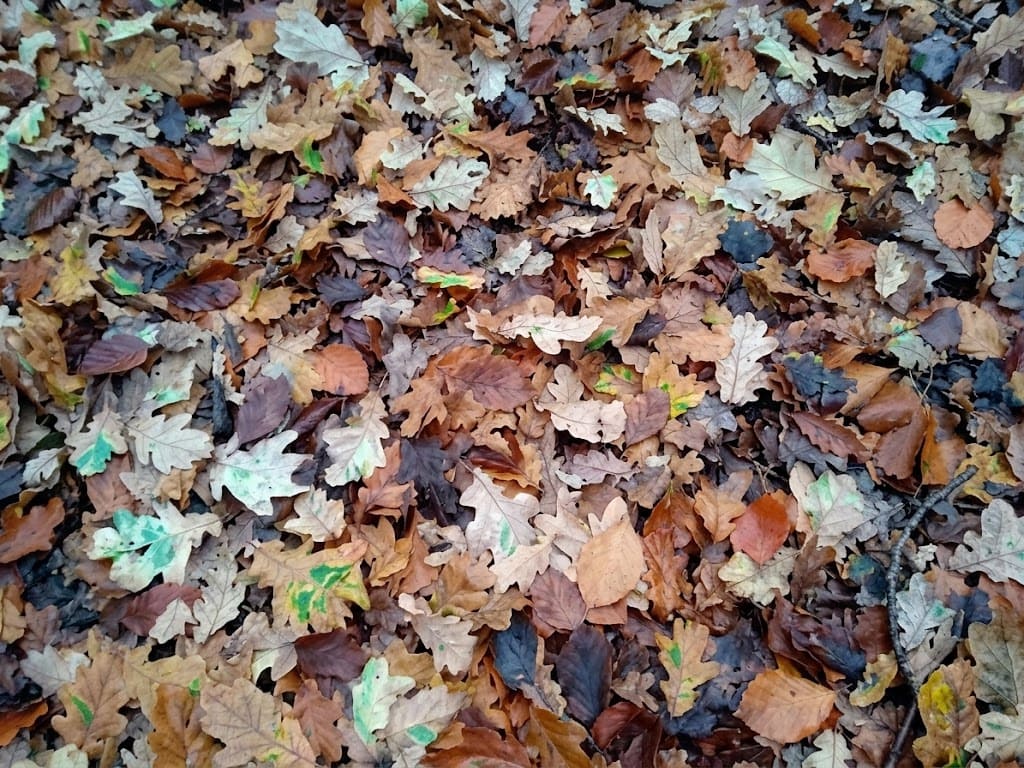
Many Rotherham homeowners wonder whether to tackle leaf removal themselves or call in a lawn care professional. Here’s what you need to know:
Essential DIY Tools
If you’re managing leaves yourself, invest in quality tools:
- Leaf rake: Choose one with flexible tines that won’t damage grass
- Leaf blower: Useful for moving leaves efficiently
- Garden vacuum: Combines blowing and collection
- Tarps or garden bags: For easy collection and transport
Timing Is Everything
Don’t wait until all leaves have fallen. Remove them regularly throughout autumn, ideally every week or two. This prevents heavy accumulation and makes the job more manageable.
When to Call Professionals
Consider professional lawn care services if you have:
- Large properties with extensive leaf coverage
- Physical limitations that make raking difficult
- Limited time for regular maintenance
- Valuable or delicate lawn areas requiring expert care
- Recurring disease problems
Cost-Effective Strategies
For budget-conscious homeowners:
- Focus on priority areas (main lawn areas, high-visibility spots)
- Use a combination of raking and natural leaf placement in garden beds
- Consider sharing equipment costs with neighbours
- Time your efforts for maximum efficiency
Avoiding Common Mistakes
Poor technique can damage your grass:
- Don’t rake when grass is wet (causes tearing)
- Avoid aggressive raking that damages grass crowns
- Don’t pile leaves directly against trees or shrubs
- Never leave heavy piles sitting on grass for extended periods
Smart Leaf Management Strategies for UK Gardens
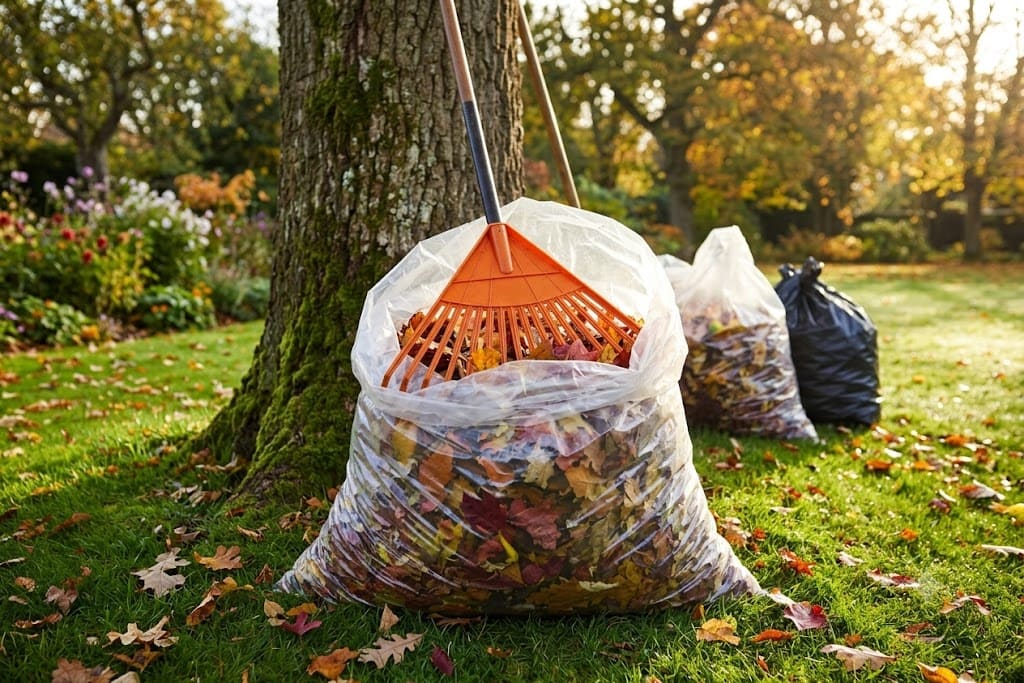
Effective leaf management goes beyond simple removal. Here are strategies that work well in our climate:
Creating Nutrient-Rich Compost
Fallen leaves are gardening gold! They’re rich in carbon and make excellent compost material. Layer them with nitrogen-rich materials (grass clippings, kitchen scraps) to create valuable soil amendment for next year’s garden.
Natural Mulch for Flower Beds
Shredded leaves make excellent mulch for flower beds and around trees. They:
- Suppress weeds naturally
- Retain soil moisture
- Gradually break down to improve soil structure
- Provide habitat for beneficial insects
The Partial Raking Approach
For established, healthy lawns, you might consider partial leaf management:
- Remove leaves from 70-80% of the lawn surface
- Leave light coverage in less visible areas
- Focus removal efforts on problem-prone spots
- Monitor covered areas for early disease signs
Integration with Autumn Routines
Make leaf management part of your regular autumn garden care:
- Combine with final grass cuts
- Coordinate with gutter cleaning schedules
- Time with other seasonal cleanup tasks
- Plan around weather forecasts for dry conditions
Seasonal Calendar for South Yorkshire
- September: Begin light leaf removal as early leaves fall
- October: Increase frequency to weekly removal
- November: Peak leaf fall – may require twice-weekly attention
- December: Final cleanup before winter sets in
Long-term Benefits of Proper Autumn Lawn Care
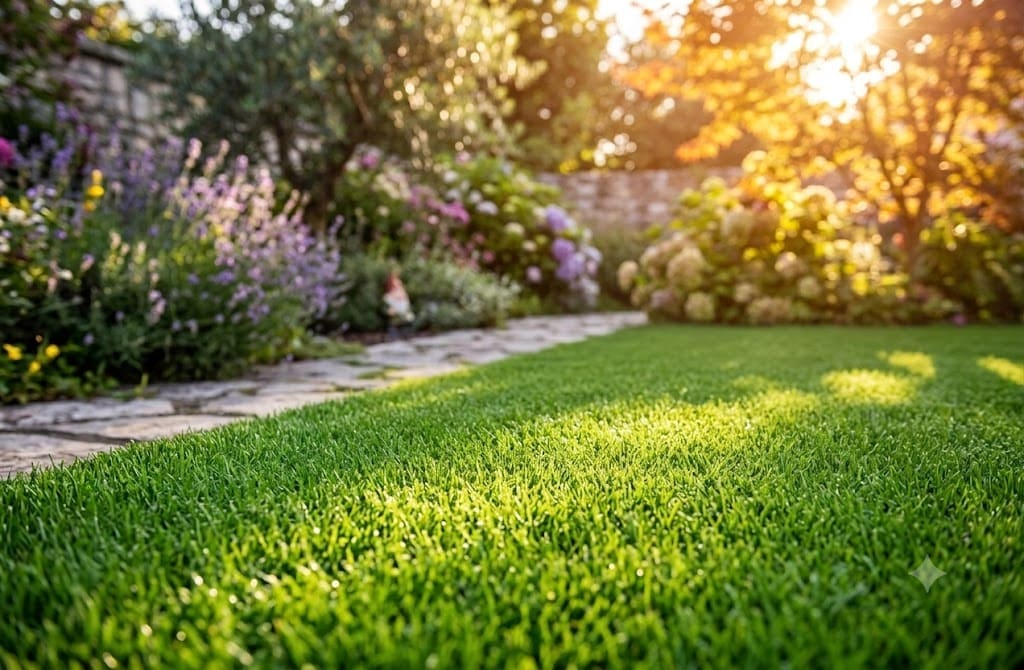
Investing time and effort in proper leaf management pays dividends:
Stronger Spring Recovery
Lawns that enter winter healthy bounce back faster and stronger in spring. You’ll notice:
- Earlier green-up as temperatures rise
- More uniform grass growth
- Reduced bare patches requiring repair
- Better resistance to spring weeds
Reduced Treatment Costs
Prevention is always cheaper than cure. Proper autumn care reduces the need for:
- Expensive disease treatments
- Overseeding to repair damaged areas
- Soil amendments to correct poor conditions
- Professional renovation services
Enhanced Drought Resistance
Healthy grass with strong root systems better withstands summer drought conditions. This means:
- Less frequent watering requirements
- Lower water bills
- Maintained appearance during dry spells
- Reduced need for irrigation systems
Improved Property Value
A well-maintained lawn significantly enhances kerb appeal and property value. Estate agents consistently report that quality landscaping, including healthy lawns, can add thousands to a home’s value.
Prevention Strategies That Save Money
Regular maintenance costs far less than emergency repairs. By investing in proper autumn lawn care, you avoid:
- Complete lawn renovation projects
- Expensive soil treatments
- Professional disease control services
- Emergency spring repair work
Leaf Piles Vs. Lawn Health Conclusion
Your lawn is an investment in your home’s beauty and value, and proper autumn care is essential for protecting that investment. We’ve explored how something as simple as raking leaves can prevent costly damage, reduce disease risk, and set your lawn up for healthy spring growth.
The evidence is clear: leaving leaves to accumulate on your lawn creates perfect conditions for disease, blocks essential sunlight, and can cause permanent damage that will cost you to repair. In Rotherham South Yorkshire’s challenging climate, these risks are amplified, making proactive leaf management not just beneficial but essential.
Remember, every lawn is unique, and our specific climate conditions require tailored care approaches. Don’t let autumn leaf accumulation undo months of careful lawn care maintenance! Whether you tackle the job yourself with the correct tools and technique, or partner with experienced lawn care professionals, the key is consistent, timely action.
Ready to give your lawn the care it deserves this autumn? At AJR Lawn Care, we’ve been helping Rotherham homeowners maintain beautiful, healthy lawns for over 15 years. Our team understands the unique challenges of South Yorkshire’s climate and can provide effective leaf management services tailored to your lawn’s specific needs.
Contact us today for a free consultation and discover how our comprehensive autumn lawn care services can transform your garden for the seasons ahead. Don’t let leaf piles compromise your lawn’s health – let our expertise protect your investment and ensure a stunning spring recovery.
Frequently Asked Questions
How often should I rake leaves during autumn?
Ideally, you should rake leaves every 1-2 weeks throughout autumn, or whenever leaf coverage becomes thick enough to block grass visibility. Don’t wait until all leaves have fallen – regular removal prevents heavy accumulation that can damage your lawn. In South Yorkshire, peak leaf fall typically occurs in October and November, requiring more frequent attention during these months.
Can I use a leaf blower instead of raking, and will it damage my grass?
Yes, leaf blowers are excellent alternatives to raking and won’t damage healthy grass when used properly. They’re particularly effective for light leaf coverage and can save significant time and effort. However, avoid using leaf blowers on wet grass or extremely delicate lawn areas. For best results, blow leaves onto tarps or directly into garden beds where they can serve as natural mulch.
What should I do with all the leaves after I've collected them?
Collected leaves are valuable garden resources! You can compost them (they’re excellent carbon-rich “brown” material), use them as mulch in flower beds, or create leaf mould for soil improvement. Avoid putting them in general waste – many councils in South Yorkshire offer garden waste collection services. Never burn leaves, as this is often prohibited and releases harmful pollutants.
Is it too late to rake leaves if I've already missed most of autumn?
It’s never too late to remove leaves from your lawn, even if it’s well into winter. While earlier removal is better, clearing leaves at any time prevents continued damage and gives your grass the best chance of spring recovery. If you discover matted, decomposing leaves in spring, remove them immediately and consider overseeding damaged areas. Professional assessment may be helpful for severely affected lawns.
How can I tell if my lawn has been damaged by leaf accumulation?
Look for yellowing or brown patches where leaves have been sitting, grass that feels soft or spongy underfoot, musty odours from covered areas, and grass that pulls away easily from the soil. You might also notice circular patches of dead or discoloured grass, which could indicate fungal diseases like snow mould. If you spot these signs, remove leaves immediately and consider contacting a professional lawn care service for disease assessment and treatment recommendations.