
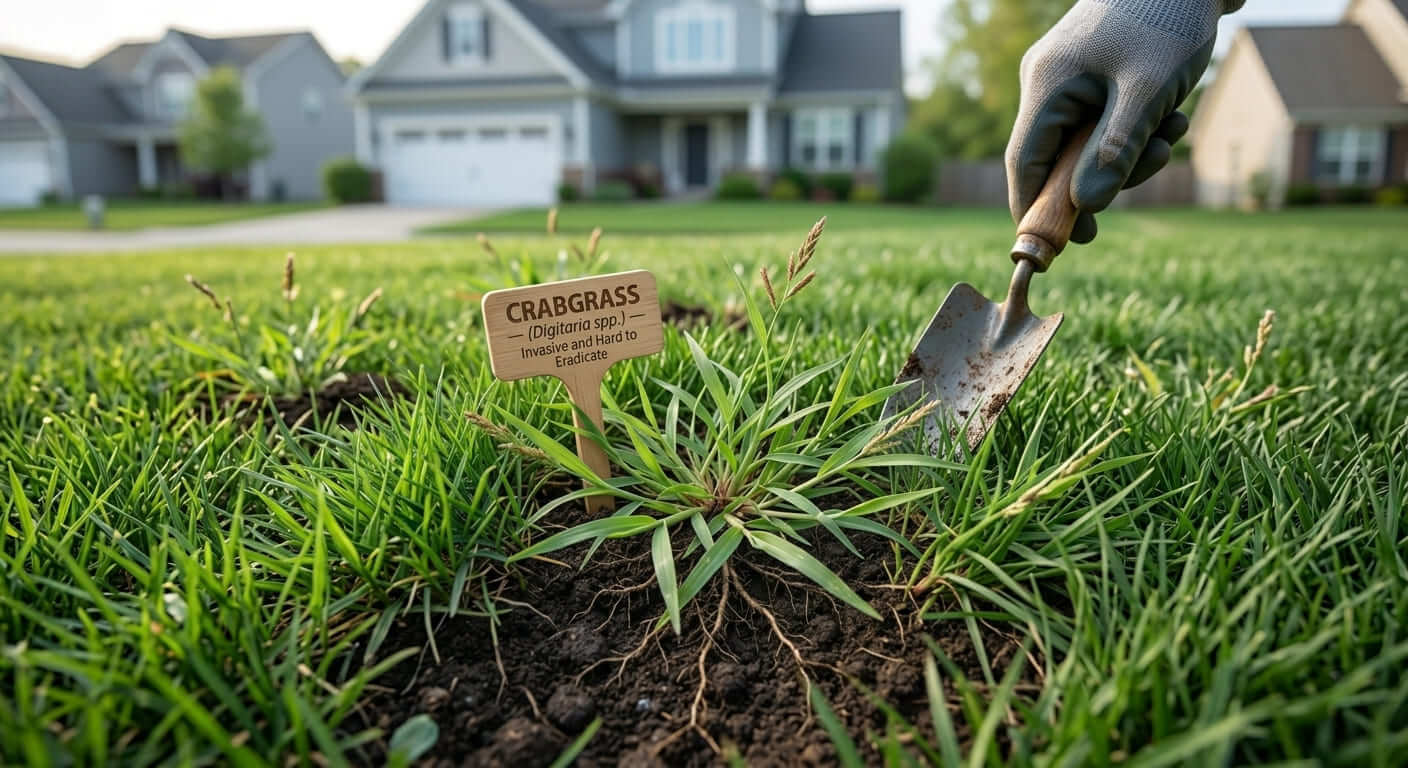
I remember a few summers ago, a lawn I used to walk past, and I watched in horror as crabgrass completely took over it that was in fairly good condition in just six weeks. That’s the terrifying reality of this aggressive weed – a single crabgrass plant can produce over 50,000 seeds in one season!
I learned this the hard way when I ignored a few “harmless” patches in my own back lawn. By August, what started as small clumps had spread into a nightmare that made my lawn look unsightly. The frustration was real, and I knew I had to get serious about crabgrass control.
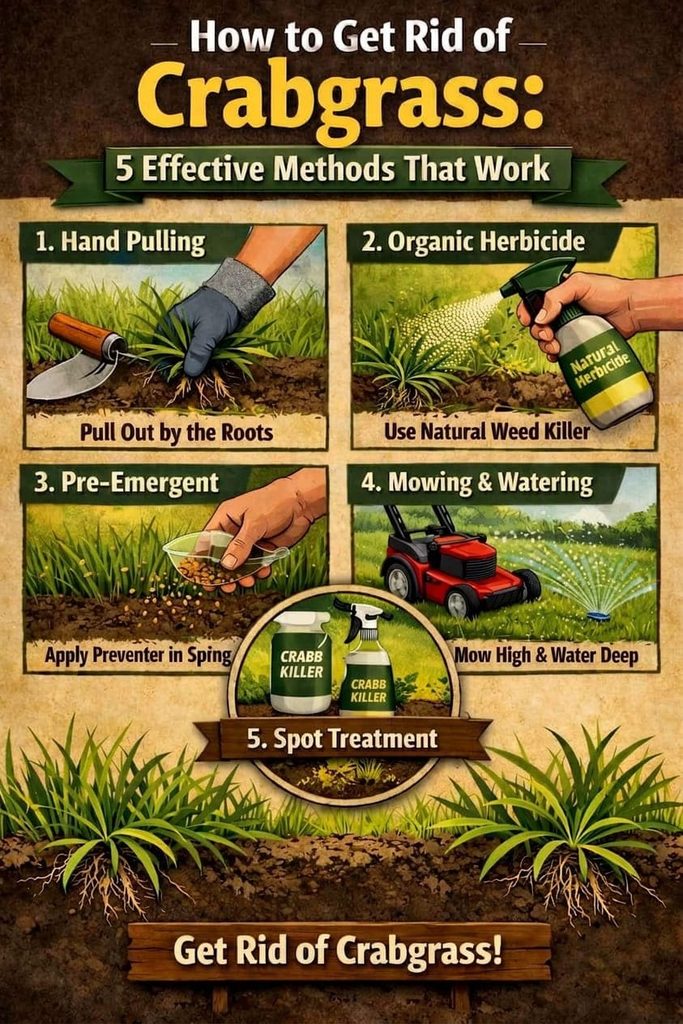
After years of battling this stubborn invader and talking with dozens of lawn care professionals, I’ve discovered 5 methods that actually work. Some are preventive, others tackle existing problems, and a few will completely change how you think about lawn maintenance.
The key isn’t just killing what you see – it’s understanding why crabgrass thrives and creating conditions where your desirable grass wins the competition. Let me share what I’ve learned from both my mistakes and victories in the war against crabgrass.
What is Crabgrass and Why is it So Difficult to Control?
In the early days before I started doing lawn care professionally, I used to think all grass was basically the same until I started really looking at my lawn problems. Crabgrass is sneaky because it actually looks alright when it first emerges – it’s that light green, slightly wider-bladed grass that seems harmless enough.
But here’s what makes it such a nuisance: crabgrass is an annual grassy weed that germinates from seed every spring when soil temperatures hit about 13-15°C consistently. Unlike your perennial turf grass that comes back from its root system, crabgrass starts fresh each year but grows incredibly fast during our warm summer months.
The real problem is how crabgrass spreads. Those innocent-looking plants develop into sprawling mats that can stretch 60-90cm across. I’ve seen single plants take over entire sections of lawn because they grow in a crab-like pattern (hence the name) with stems radiating out from the centre.
What really gets me is the seed production. Each mature crabgrass plant drops thousands of seeds that sit dormant in your soil all winter, just waiting for the right conditions. I made the mistake of letting crabgrass go to seed one year, and was still dealing with the consequences five seasons later.
The worst part? Crabgrass thrives exactly where your good grass struggles – thin patches, compacted soil, areas that get too much or too little water. It’s like this weed evolved specifically to exploit every weakness in your lawn maintenance routine.
Method 1 – Pre-Emergent Herbicide Application (Most Effective)
After trying everything else first, I finally learned that prevention beats treatment every single time. Pre-emergent herbicides are honestly the closest thing to a magic bullet for crabgrass control, and I wish someone had explained this to me years ago.
The timing is absolutely critical though. You need to apply pre-emergent herbicide before soil temperatures reach that 13-15°C threshold where crabgrass seeds start germinating. In the UK, this typically means late February through early April, depending on your location and the season’s weather patterns.
I use a soil thermometer now (learned that lesson the hard way), but a good rule of thumb is when daffodils start blooming or when you see the first dandelions popping up in your garden. That’s your window.
The products I’ve had the best luck with contain active ingredients like pendimethalin or propyzamide. You can find these in products at most UK garden centres – brands like Scotts EverGreen or Bayer Garden work well. I’ve also had success with professional-grade products from suppliers like CMO or Rigby Taylor if you want stronger formulations.
Application is pretty straightforward – use a broadcast spreader for granular products or a knapsack sprayer for liquid versions. The key is getting even coverage and watering it in within 24-48 hours if you don’t get rain (which is rare in Britain, let’s be honest!).
Here’s the thing that surprised me most: pre-emergent herbicides create an invisible chemical barrier in the top 2-3cm of soil that kills weed seeds as they try to germinate. When applied correctly, this method prevents 80-90% of annual grassy weeds including crabgrass. That’s far better odds than trying to kill established crabgrass later in the season.
Method 2 – Post-Emergent Herbicide Treatment for Existing Crabgrass
Sometimes prevention fails, or you inherit a garden that’s already infested. That’s when you need post-emergent herbicides, but I’ll be honest – this approach requires more patience and multiple applications to really work.
The best time to tackle crabgrass with post-emergent treatments is when the plants are young and actively growing, typically late spring through early summer (May through July in the UK). Once crabgrass gets mature and starts developing seed heads, it becomes much harder to kill completely.
For selective post-emergent control, I’ve had decent results with products containing fluroxypyr or mecoprop-P. Many UK lawn weedkillers contain these ingredients – products like Verdone Extra or Weedol Lawn Weedkiller can be effective on young crabgrass plants. The trick is reading the label carefully to ensure it’s suitable for your grass type.
If you’re dealing with a completely overrun area where you don’t mind killing existing grass, glyphosate-based products (like Roundup) will knock out everything. I’ve used this approach for really bad sections, then reseeded after waiting the recommended time period.
Application timing matters hugely. I treat on calm days when temperatures are between 15-27°C and no rain is expected for at least 6 hours. Early morning works best because there’s usually less wind and the herbicide has all day to absorb before any evening dew.
Don’t expect instant results – it typically takes 7-14 days to see crabgrass yellowing and dying. I’ve made the mistake of reapplying too quickly because I didn’t see immediate results, which can damage your good grass. Patience is key with post-emergent treatments, especially during our cooler British summers.
Method 3 – Hand Pulling and Mechanical Removal
I know this sounds like the most tedious approach, but hand pulling actually works brilliantly for small infestations or as part of a broader strategy. Plus, there’s something quite satisfying about physically removing your enemy from the battlefield!
The best time for hand pulling is when soil is moist – either after watering or following a good rain (which happens frequently enough in the UK!). Crabgrass has a relatively shallow, fibrous root system compared to deep-rooted weeds, so it comes out easier than you might expect.
I use a dandelion weeder tool or a small hand fork to get under the centre of the plant and lift the entire root system. The key is getting it all – if you leave root pieces behind, some crabgrass varieties can regrow from root fragments.
Young crabgrass plants (less than 15cm across) are definitely the easiest to remove completely. Once they get established and start spreading into those crab-like mats, you’re looking at a lot more work. I’ve spent entire mornings pulling large crabgrass plants, and it’s honestly decent exercise.
After removal, I always overseed those bare patches immediately. Nature abhors a vacuum, and if you don’t get desirable grass growing in those spaces quickly, you’re just creating perfect conditions for more weeds to establish.
The downside is obvious – this method is labour-intensive and only practical for smaller areas. But it’s chemical-free, gives you immediate results, and helps you really understand where crabgrass problems are occurring in your garden.
Method 4 – Natural and Organic Crabgrass Control Methods
I’ll be upfront – natural methods require more patience and realistic expectations, but they can work as part of an integrated approach. I started exploring these options when my wife was concerned about chemicals around our children and pets.
Corn gluten meal is the most popular natural pre-emergent option available in the UK. It works similarly to synthetic pre-emergent herbicides by inhibiting seed germination, but the timing has to be absolutely perfect. I apply it about 6 weeks before crabgrass typically germinates in my area, which means late February for most of England.
The challenge with corn gluten meal is that it also prevents desirable grass seed from germinating, so you can’t overseed for about 6-8 weeks after application. I learned this lesson when my overseeding efforts completely failed one spring.
For spot treatments, I’ve experimented with white vinegar solutions. A mixture of strong horticultural vinegar (20% acetic acid, available from specialist garden suppliers) can burn down young crabgrass plants, but it rarely kills the root system completely. I use this approach for small patches in flower borders where I don’t want any grass growing.
The “smothering” method involves covering crabgrass areas with cardboard or thick mulch to block sunlight. This works, but it takes an entire growing season to be effective, and you’re left with dead patches that need renovation.
I’ve found that organic methods work best when combined with cultural practices like proper fertilisation, watering, and overseeding. The goal is creating conditions where desirable grass outcompetes weeds naturally – something that works well with our British climate.
Method 5 – Thick Lawn Strategy (Long-term Prevention)
This is honestly the most important lesson I’ve learned: the best crabgrass control is a thick, healthy lawn that doesn’t give weeds room to establish. It took me far too long to understand that lawn care is really about grass competition.
Crabgrass needs light and space to germinate and grow. When your desirable grass is thick and healthy, it shades the soil surface and uses up available nutrients and water, making it nearly impossible for crabgrass seeds to get established.
My overseeding game changed everything. I now overseed my entire lawn every autumn with a high-quality grass seed blend suitable for British conditions – usually a mix of perennial ryegrass and fine fescue. Autumn seeding works brilliantly because new grass gets established before winter and is ready to compete with weeds come spring.
The seeding process is crucial – I use my core aerator every autumn to reduce soil compaction (our clay soils need this!), then broadcast seed at the recommended rate. I follow up with a starter fertiliser and keep the soil consistently moist (not soaked) until germination occurs.
Fertilisation timing matters too. I feed my lawn heavily in autumn when grass is storing energy for winter, then give it another boost in late spring after the pre-emergent herbicide window closes. This keeps my desirable grass growing vigorously during peak crabgrass season.
Mowing height is probably the easiest change that makes a huge difference. I keep my grass at least 7.5cm tall during summer, which helps shade the soil and promotes deeper root growth. Cutting grass too short weakens it and creates perfect conditions for crabgrass establishment – something I learned during the hot summer of 2018.
Prevention Tips to Stop Crabgrass from Returning
After dealing with crabgrass problems for several years, I’ve developed a prevention-focused approach that saves me loads of time and frustration. Prevention really is 10 times easier than trying to kill established weeds.
My annual crabgrass prevention calendar starts with a soil test every 2-3 years. Crabgrass thrives in compacted, nutrient-poor soil with pH problems. I’ve found that maintaining proper soil pH (6.0-7.0 for most British lawns) and addressing nutrient deficiencies makes my lawn naturally more competitive.
Spring aeration has become non-negotiable for me. I use my core aerator in early spring before applying pre-emergent herbicide. This reduces soil compaction (a real problem with our heavy clay soils), improves water infiltration, and helps my grass roots grow deeper and stronger.
My watering schedule focuses on deep, infrequent irrigation rather than frequent light watering – though let’s be honest, with British weather, irrigation is often unnecessary! When I do water during dry spells, I run sprinklers 2-3 times per week for longer periods, which encourages deep root growth in desirable grass.
Autumn overseeding is my secret weapon for thickening weak areas where crabgrass typically establishes. I target these problem spots aggressively, sometimes overseeding at double the recommended rate to ensure thick establishment before winter.
I also keep a garden journal now (sounds a bit keen, but it works) where I track application dates, weather conditions, and problem areas. This helps me adjust timing and identify patterns I might otherwise miss.
Common Mistakes That Make Crabgrass Problems Worse
I’ve made pretty much every crabgrass control mistake possible, so let me save you some frustration by sharing what doesn’t work and why.
The biggest mistake I made for years was fertilising at the wrong time. Spring fertilisation, especially with high-nitrogen feeds, can actually promote crabgrass growth over cool-season grasses like ryegrass and fescue (which are most common in UK lawns). I now do my heavy feeding in autumn and use a balanced fertiliser in late spring after the pre-emergent window closes.
Watering shallow and frequently is another trap I fell into. This keeps soil surface moist, which is exactly what crabgrass seeds need to germinate. Daily light watering creates perfect crabgrass conditions whilst weakening your desirable grass roots – though thankfully, our unpredictable British weather often prevents this mistake naturally!
Cutting grass too short is probably most peoples most persistent mistake. Quite a lot of my older clients want a “bowling green look”, but mowing below 6cm stresses the average grass and opens up the soil surface for weed establishment. Taller grass shades out competing weeds naturally.
Ignoring bare patches is like sending crabgrass an invitation. Every thin or bare area in your lawn is a potential crabgrass colony waiting to happen. I now treat bare spot repair as an emergency lawn priority, overseeding immediately rather than waiting for the “right time.”
In the early days timing mistakes with herbicides cost me entire growing seasons of progress. Applying pre-emergent too late (after seeds have already germinated) or too early (where it breaks down before germination) renders the treatment useless. I learned to use soil temperature and local weather patterns rather than just calendar dates – something particularly important given our variable British springs.
Conclusion
After years of battling crabgrass, I’ve learned that successful control comes down to understanding the enemy and using multiple strategies together. Pre-emergent herbicides are your most powerful weapon, but they’re just one part of a comprehensive approach.
The five methods I’ve shared – pre-emergent herbicides, post-emergent treatments, hand pulling, natural controls, and thick lawn strategies – all have their place depending on your situation and preferences. The key is choosing the right combination and timing everything correctly for British conditions.
Prevention really is easier than treatment. A thick, healthy lawn maintained with proper fertilisation, watering (when needed), and mowing practices will naturally resist crabgrass establishment. Focus on growing brilliant grass, and the weed problems take care of themselves.
Start with pre-emergent herbicides if you’re dealing with annual crabgrass problems – the results will convince you this approach works. Then build your long-term strategy around lawn thickness and health, taking advantage of our cool, moist climate that favours dense turf growth.
I’d love to hear about your crabgrass battles! What methods have worked best for your situation? Every lawn is different, and sharing experiences helps everyone learn faster. Don’t let this aggressive weed win – your perfect lawn is definitely achievable with the right approach and persistence.
FAQ for Dealing with Crabgrass
What is crabgrass and how do I identify it in my UK lawn?
Crabgrass (Digitaria sanguinalis) is an annual weed that’s becoming increasingly common in British gardens, especially during our warmer summers. You can identify crabgrass by its distinctive sprawling growth pattern – it grows outward in a crab-like formation with thick, coarse stems that root at the joints. The grass blades are wider than your lawn grass, often with a bluish-green tint, and it tends to grow much faster than surrounding grass. In the UK, you’ll typically notice crabgrass appearing in thin or bare patches of lawn from late spring through summer, particularly in areas that get full sun and have compacted soil.
When is the best time to treat crabgrass in British gardens?
The most effective time to tackle crabgrass in the UK is with pre-emergent treatment in early to mid-March, before soil temperatures consistently reach 10°C (50°F). This timing is crucial because crabgrass seeds germinate when the soil warms up, typically when forsythia bushes start blooming. However, our unpredictable British weather can make timing tricky – some years it might be February, others not until April. If you’ve missed the pre-emergent window, post-emergent treatments work best on young crabgrass plants in late spring (May-June) when they’re actively growing but haven’t yet gone to seed.
Can I get rid of crabgrass naturally without using chemical herbicides?
Absolutely! Natural crabgrass control works brilliantly in the UK, though it requires more patience and consistency. The most effective natural approach is maintaining a thick, healthy lawn that crowds out weeds – overseed bare patches in autumn with quality grass seed mixtures suited to British conditions. Hand-pulling works well for small infestations, especially after rain when the soil is soft. Corn gluten meal can act as a natural pre-emergent, though it’s harder to find in the UK (try online suppliers or specialist garden centres). Regular feeding, proper watering, and raising your mowing height to at least 6cm helps your grass compete naturally with crabgrass.
Why does crabgrass keep coming back in my lawn every year?
Crabgrass is persistent because it’s an annual that produces thousands of seeds before dying off in winter – those seeds then germinate the following spring, creating a continuous cycle. In British lawns, the main reasons it keeps returning are: thin or patchy grass that provides perfect germination spots, compacted soil (common in our clay-heavy soils), cutting grass too short (scalping weakens lawn grass), and not addressing the underlying conditions that favour crabgrass growth. Even if you kill existing plants, you’re essentially fighting last year’s seed bank. Breaking this cycle requires both treating existing plants and improving overall lawn health to prevent new germination.
Will crabgrass die off naturally in winter in the UK climate?
Yes, crabgrass will naturally die with the first hard frost in autumn – it’s an annual plant that can’t survive British winters. However, this doesn’t solve your problem because the plant will have already dropped thousands of seeds throughout the growing season. These seeds lie dormant in your soil over winter and germinate the following spring when conditions are right. This is why you might notice crabgrass appearing in the same spots year after year. The key is treating it before it has a chance to set seed (typically by midsummer) and improving your lawn’s density to prevent new seeds from establishing successfully next season.



