
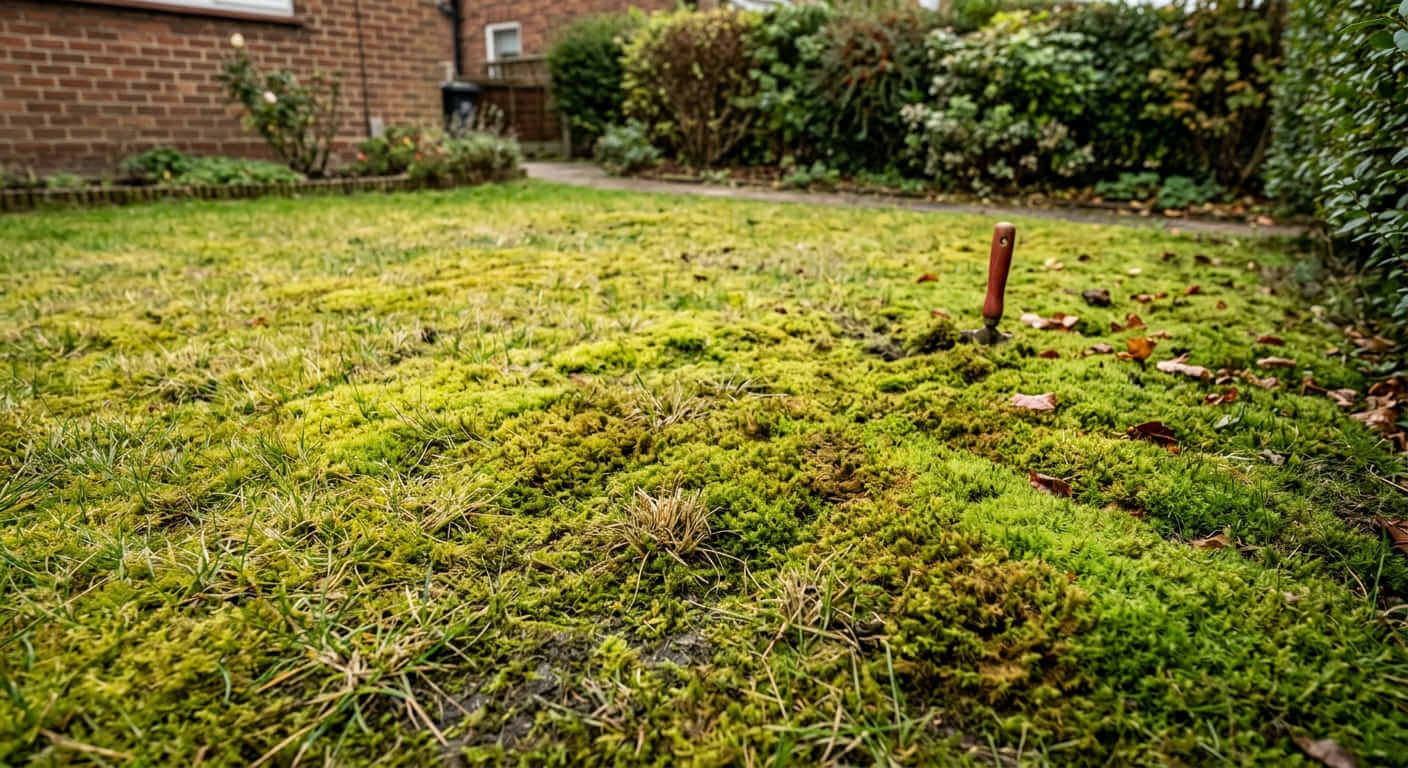
Moss invasion is perhaps the most frustrating problem facing UK homeowners. You’ve probably tried raking it out, applied moss killer, maybe even reseeded – only to watch it return within months, often worse than before. The truth is, moss doesn’t invade healthy lawns by accident. It’s a symptom of underlying problems that, once understood and addressed, can be permanently resolved.
Understanding why moss thrives in your lawn and implementing the right solutions can transform even the most moss-dominated areas into thick, healthy turf that naturally resists future invasion.
Why Moss Loves British Lawns
The Perfect Storm of Conditions
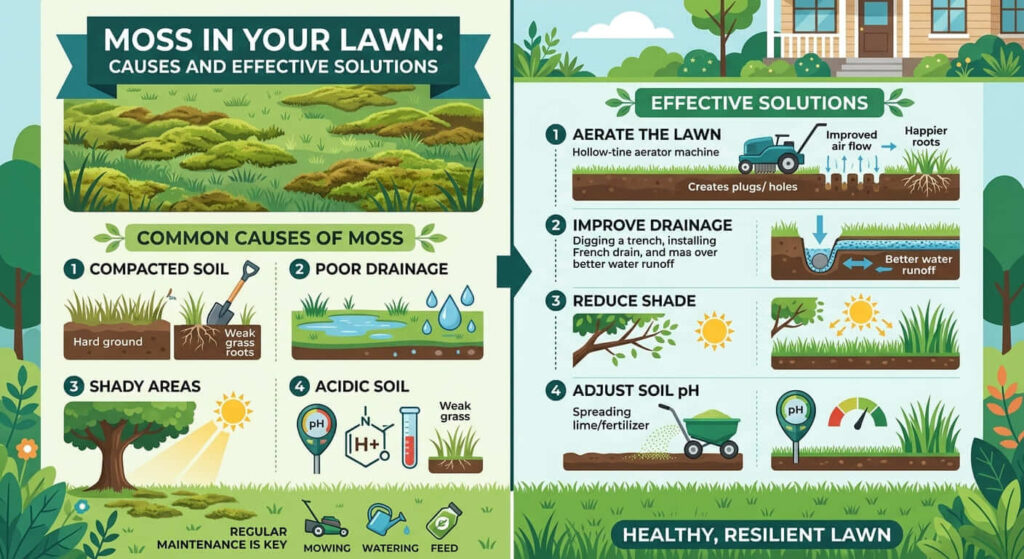
The UK’s climate creates ideal conditions for moss growth: mild temperatures, high humidity, and abundant rainfall. But moss doesn’t just appear randomly – it exploits specific weaknesses in your lawn that healthy grass cannot tolerate.
Moss vs. Grass: The Competition
Moss thrives in conditions where grass struggles. While grass needs good drainage, adequate nutrition, and proper pH levels, moss actually prefers the opposite conditions. This means addressing moss requires making your lawn more hospitable to grass and less attractive to moss.
The Real Causes Behind Moss Problems
Soil Compaction: The Primary Culprit
Compacted soil is behind most serious moss problems in the UK. Our heavy clay soils, combined with foot traffic and wet weather, create rock-hard surfaces that grass roots cannot penetrate.
Why Compaction Favours Moss:
- Prevents proper drainage, creating surface moisture that moss loves
- Restricts grass root development, leading to thin, weak turf
- Reduces air movement in the soil, suffocating grass roots
- Creates perfect conditions for moss to establish and spread
Common Compaction Causes:
- Heavy foot traffic, especially when soil is wet
- Garden machinery use during poor conditions
- Natural settling of clay soils over time
- Lack of regular aeration maintenance
Poor Drainage: Moss’s Best Friend
Standing water or constantly damp soil creates ideal moss-growing conditions whilst slowly killing grass roots.
Drainage Problems Include:
- Natural clay soil composition that holds water
- Poorly graded surfaces that collect water in low spots
- Blocked or inadequate drainage systems
- Thatch buildup that prevents water penetration
Acidic Soil Conditions
Most mosses thrive in acidic conditions (pH below 6.0), whilst grass prefers slightly acidic to neutral soil (pH 6.0-7.0). The UK’s high rainfall naturally acidifies soil over time, creating increasingly moss-friendly conditions.
How Acidity Helps Moss:
- Reduces beneficial bacterial activity that grass needs
- Makes essential nutrients less available to grass
- Weakens grass plants, making them less competitive
- Allows acid-loving moss species to dominate
Inadequate Light and Air Circulation
Shaded, still areas with poor air movement create humid microclimates perfect for moss development.
Problem Areas Include:
- Under trees or large shrubs
- North-facing slopes that receive limited sun
- Areas sheltered by buildings or fences
- Low-lying spots where air doesn’t circulate freely
Nutrient Deficiencies
Weak, undernourished grass cannot compete with hardy moss species. Poor nutrition leads to thin turf that allows moss to establish easily.
Key Deficiency Problems:
- Nitrogen shortage causing pale, slow-growing grass
- Potassium deficiency reducing disease resistance
- Iron deficiency in alkaline soils causing yellowing
- Overall poor soil fertility from lack of feeding
Types of Moss in UK Lawns
Cushion Moss (Leucobryum and Dicranum species)
Forms distinctive rounded cushions or mounds, particularly common in acidic, sandy soils with poor fertility. Often appears silvery-green and feels springy underfoot.
Sheet Moss (Rhynchostegium and Brachythecium species)
Grows in flat, spreading mats that can quickly cover large areas. Most common in compacted, poorly-drained clay soils and shaded areas.
Sidewalk Moss (Bryum species)
Low-growing moss that forms dense, flat patches, often with a reddish tinge. Thrives in compacted soil and high-traffic areas.
Cord Moss (Funaria species)
Appears as small, bright green tufts, often the first moss to colonise bare or thin grass areas. Common after lawn damage or in newly seeded areas.
Why Traditional Treatments Fail
The Moss Killer Trap
Most homeowners reach for moss killer as their first solution, but this approach often makes problems worse in the long term:
Temporary Results:
- Kills visible moss but doesn’t address underlying causes
- Dead moss leaves behind bare soil perfect for recolonisation
- Often damages surrounding grass, creating more bare areas
The Rebound Effect:
- Moss returns quickly because conditions remain ideal
- New moss growth is often denser than before treatment
- Repeated treatments weaken grass further, worsening the cycle
Raking Without Recovery
Vigorously raking moss out can provide immediate satisfaction but creates new problems:
- Damages grass crowns and root systems
- Creates bare soil that moss recolonises faster than grass
- Spreads moss fragments to previously unaffected areas
- Compacts soil further, worsening underlying problems
The Professional Approach to Moss Control
Step 1: Comprehensive Problem Assessment
Before any treatment, we identify the specific factors encouraging moss in your lawn:
- Soil compaction testing using professional equipment
- pH testing to determine acidity levels
- Drainage assessment to identify problem areas
- Light and air circulation evaluation
- Soil fertility analysis to reveal nutrient deficiencies
Step 2: Address Root Causes First
Successful moss control starts with making conditions better for grass:
Soil Decompaction:
- Professional hollow-tine aeration to relieve compaction
- Deep aeration in problem areas using specialized equipment
- Sand top-dressing to improve drainage in clay soils
- Organic matter incorporation to improve soil structure
pH Correction:
- Lime applications to raise pH to grass-friendly levels
- Timing applications for maximum effectiveness
- Choosing appropriate lime types for your soil conditions
- Monitoring pH changes over time
Drainage Improvement:
- Installing drainage systems where necessary
- Improving surface grading to eliminate standing water
- Creating better air circulation through selective pruning
- Addressing thatch problems that prevent water penetration
Step 3: Strategic Moss Treatment
With conditions improving, targeted moss treatment becomes effective:
- Selective moss killers that don’t damage recovering grass
- Timing treatments for maximum moss vulnerability
- Combining treatments with overseeding for rapid grass recovery
- Follow-up applications timed to prevent reestablishment
Step 4: Grass Recovery Programme
The key to permanent moss control is establishing thick, healthy grass:
- Overseeding with appropriate grass varieties for your conditions
- Targeted fertilisation to encourage rapid grass establishment
- Proper watering to support new grass without encouraging moss
- Ongoing maintenance to prevent future problems
Seasonal Moss Management Strategy
Spring (March-May)
- Apply moss treatments when moss is actively growing
- Begin aeration programmes after soil dries sufficiently
- Start pH correction with lime applications
- Overseed treated areas as temperatures warm
Summer (June-August)
- Focus on grass establishment and thickening
- Maintain proper watering to support grass, not moss
- Continue feeding programmes to strengthen turf
- Monitor and treat any moss resurgence quickly
Autumn (September-November)
- Major aeration and renovation work
- Heavy overseeding to establish grass before winter
- Apply lime treatments for pH correction
- Final moss treatments before winter dormancy
Winter (December-February)
- Avoid walking on wet, soft lawns to prevent compaction
- Plan next year’s improvement strategies
- Order materials for spring renovation work
- Monitor for disease problems in damp conditions
Prevention: Your Long-Term Strategy
Regular Aeration Schedule
Annual aeration prevents the compaction problems that lead to moss invasion:
- Hollow-tine aeration in autumn for clay soils
- Solid-tine aeration in spring for maintenance
- Additional aeration in high-traffic areas
- Sand top-dressing to maintain improved drainage
Feeding Programme
Well-fed grass naturally outcompetes moss:
- Balanced fertilisation throughout the growing season
- Appropriate feeding rates to avoid over-nutrition
- Organic matter additions to improve soil biology
- pH monitoring and correction as needed
Proper Maintenance Practices
- Avoiding traffic on wet lawns
- Maintaining appropriate cutting heights
- Ensuring good air circulation around problem areas
- Regular thatch management through scarification
When Professional Help Is Essential
While some minor moss problems can be managed through improved maintenance, certain situations require professional intervention:
Extensive Moss Coverage: Large areas dominated by moss need systematic renovation rather than spot treatments.
Recurring Problems: If moss returns despite your best efforts, underlying problems need professional diagnosis and correction.
Complex Drainage Issues: Serious drainage problems often require professional assessment and potentially major remediation work.
Soil Condition Problems: Severe compaction, pH problems, or soil fertility issues need professional testing and correction programmes.
The Transformation Process
Successful moss control doesn’t happen overnight, but the results are dramatic and lasting:
Months 1-3: Initial moss treatment and problem correction begins Months 4-6: Grass establishment accelerates as conditions improve
Months 7-12: Thick turf develops, naturally suppressing any remaining moss Year 2 and beyond: Healthy lawn maintenance prevents moss reestablishment
Your Moss-Free Future
Imagine walking across your lawn without feeling the spongy, uneven surface of moss patches. Picture thick, green grass that stays healthy even in our challenging British climate. This transformation is possible when moss problems are addressed systematically rather than symptomatically.
At AJR Lawn Care, we’re passionate about helping UK homeowners achieve permanent moss control through correct problem diagnosis and comprehensive solutions. Our expertise in British soil conditions and climate challenges means we can create the thick, healthy lawns that naturally resist moss invasion.
Tired of battling moss in your lawn? Contact AJR Lawn Care for a comprehensive moss assessment and get the real solutions to your moss problems.
Frequently Asked Questions (FAQs)
Why does my lawn keep getting moss?
Moss thrives in lawns with poor drainage, compacted soil, low sunlight, or acidic soil pH. It often signals underlying issues with your grass’s health rather than being the root problem itself.
Does moss kill grass?
Moss doesn’t directly kill grass, but it competes for space, light, and nutrients. Left untreated, it can spread and choke out weak or thinning grass over time.
What is the best way to get rid of moss in a lawn?
The most effective approach combines removing existing moss (by raking or using a moss killer) with fixing the underlying cause, such as improving drainage, aerating soil, or increasing sunlight exposure.
Will moss go away on its own?
Moss rarely disappears without intervention. Even if you remove it, it will likely return unless you address the conditions—like shade, moisture, or soil compaction—that allowed it to grow in the first place.
How can I prevent moss from coming back?
Regular aeration, proper lawn fertilization, correcting soil pH, and improving sunlight and drainage are key long-term strategies to keep moss from returning.



