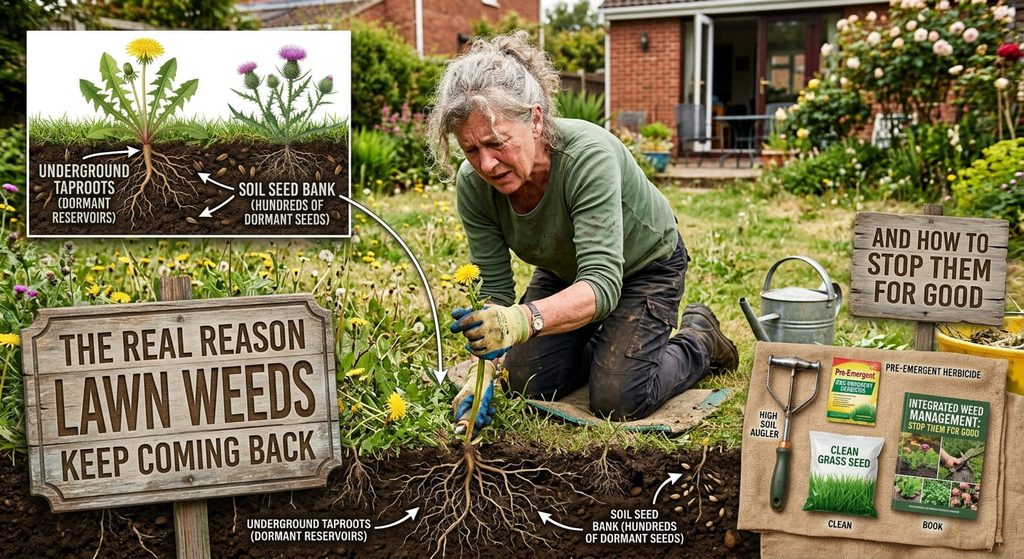
If you’re tired of seeing dandelions, plantain, and clover reappear in your lawn just weeks after treating them, you’re not alone. Many UK homeowners find themselves in a frustrating cycle of weed treatment that seems never-ending. But here’s the truth: if weeds keep returning to your lawn, you’re likely treating the symptoms rather than addressing the root cause.
Why Your Weed Treatments Keep Failing
The Problem Isn’t the Weeds – It’s Your Lawn
Most homeowners focus entirely on killing the weeds they can see, but successful weed control starts with understanding why weeds are thriving in your lawn in the first place. Weeds are opportunistic plants that exploit weaknesses in your turf. When your grass is struggling, weeds move in to fill the gaps.
Common Underlying Issues That Invite Weeds
Poor Soil Compaction Our heavy clay soils across much of the UK become easily compacted, especially after our wet winters. Compacted soil prevents grass roots from accessing oxygen and nutrients, creating thin, weak areas that weeds love to colonise. This is particularly common in high-traffic areas or where heavy machinery has been used.
Incorrect Soil pH Most UK soils tend to be acidic due to our rainfall, but many homeowners don’t realise their soil pH is too low for healthy grass growth. When grass struggles in acidic conditions, acid-loving weeds like moss, sorrel, and certain clovers thrive.
Nutrient Deficiencies Applying generic lawn feed from the garden centre might not address your lawn’s specific nutrient needs. Nitrogen-deficient lawns develop thin, yellow grass that can’t compete with vigorous weeds. Meanwhile, over-fertilising with phosphorus can actually encourage weed growth.
Poor Drainage Our unpredictable British weather means many lawns suffer from waterlogged conditions, especially during autumn and winter months. Wet, poorly-drained soil favours weeds like plantain, moss, and buttercups whilst weakening grass roots.
The Cycle That Keeps You Stuck
Here’s what typically happens:
- You spot weeds and apply a weed killer
- The visible weeds die back temporarily
- The underlying lawn problems remain unchanged
- Weak grass continues to struggle
- New weeds germinate in the same problem areas
- You repeat the process, growing increasingly frustrated
The Professional Approach to Permanent Weed Control
Step 1: Comprehensive Lawn Analysis
Before any treatment, we assess your soil type, pH levels, compaction, drainage, and grass health. This reveals why weeds are thriving in specific areas of your lawn.
Step 2: Address the Root Causes
Rather than just applying weed killer, we tackle the underlying issues:
- Aeration to relieve soil compaction and improve root health
- pH adjustment using lime applications where needed
- Targeted fertilisation based on your soil’s specific nutrient requirements
- Overseeding to thicken thin areas and improve grass density
Step 3: Strategic Weed Treatment
With the lawn conditions improving, selective herbicide treatments become far more effective. We time applications precisely for maximum impact whilst minimising environmental effects.
Step 4: Ongoing Maintenance
A regular feeding and care programme keeps your grass healthy and competitive, naturally suppressing weed growth.
Why DIY Weed Control Often Falls Short
Timing Issues Many shop-bought weed and feed products are applied at the wrong time of year for UK conditions. Weed treatments are most effective during active growing periods in late spring and early autumn. It’s also worth mentioning that most shop-bought product are far weaker that the commercial products used by professionals.
Wrong Product Selection Different weeds require different approaches. What works for dandelions won’t necessarily control clover or moss. Professional-grade selective herbicides target specific weed types more effectively.
Lack of Follow-Through Successful weed control requires consistent lawn care throughout the year, not just reactive treatments when problems become obvious.
Signs Your Lawn Needs Professional Assessment
If you recognise any of these patterns, it’s time to address the underlying causes:
- Weeds returning to the same spots repeatedly
- Moss appearing in shaded or damp areas
- Thin, patchy grass that won’t thicken despite feeding
- Poor grass colour even after fertilising
- Standing water after rainfall
- Hard, compacted soil
The Long-Term Solution
Permanent weed control isn’t about finding the strongest weed killer – it’s about creating conditions where your grass thrives and naturally outcompetes weeds. A healthy, dense lawn is your best defence against weed invasion.
At AJR Lawn Care, we’re passionate about transforming problem lawns into thick, healthy turf that stays weed-free naturally. Our comprehensive approach addresses the real reasons weeds keep coming back, giving you the beautiful lawn you’ve been working towards.
Ready to break the cycle of recurring weeds? Contact us for a detailed lawn analysis and discover what’s really causing your weed problems.
FAQ’s
Why do lawn weeds keep coming back every year?
Lawn weeds keep coming back mainly because their roots or seeds are still in the soil, and your lawn’s growing conditions (like bare patches, compacted soil, or poor mowing habits) are giving them the perfect chance to thrive. Treating the weeds you see without fixing the underlying cause means new ones will just take their place.
Will pulling weeds by hand stop them from returning?
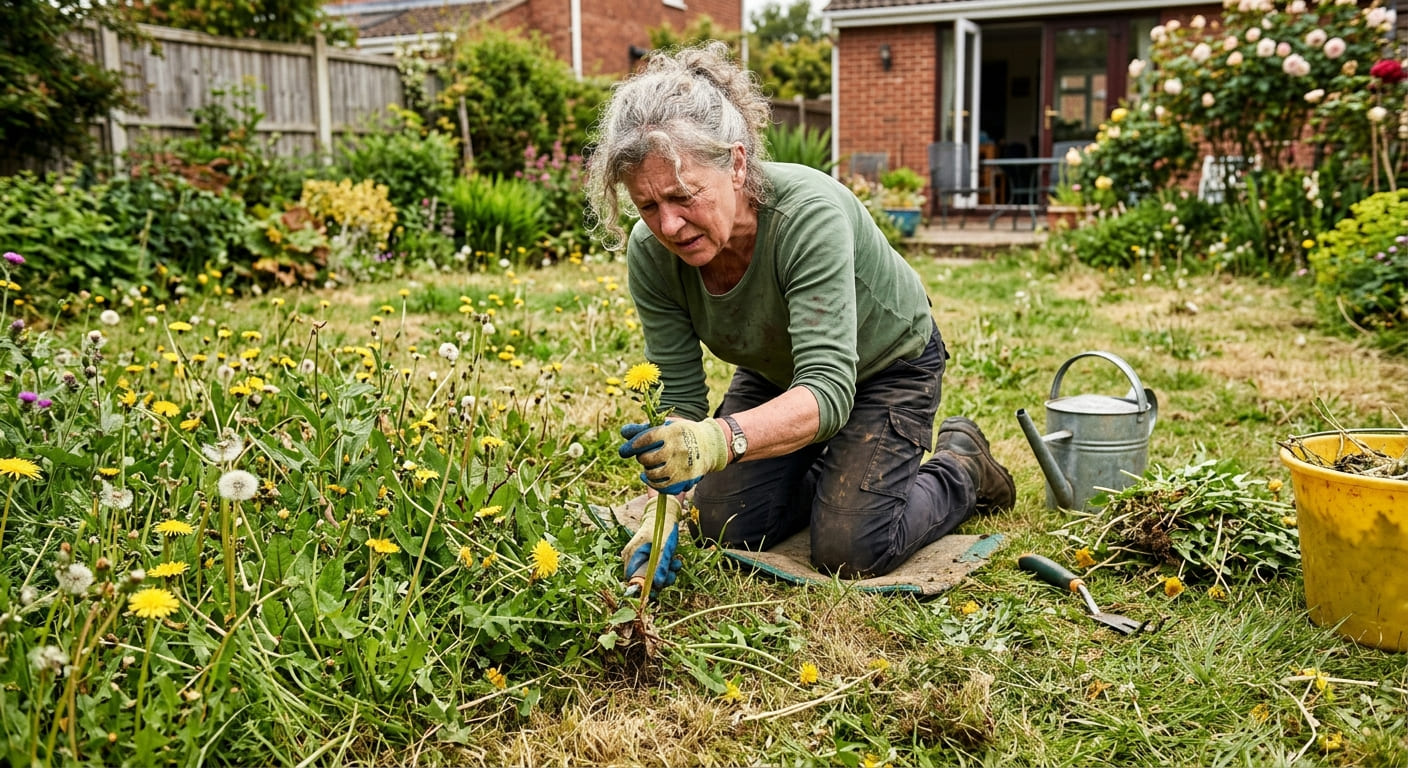
Hand-pulling can help in the short term, but it rarely stops weeds for good. Many weeds regrow from tiny root fragments left behind, and pulling them can even disturb the soil, creating more space for new weed seeds to germinate.
What's the best way to stop weeds from coming back permanently?
The most effective approach combines targeted weed treatment with improving your lawn’s overall health—think proper feeding, regular mowing at the right height, and addressing issues like compacted soil or poor drainage. A thick, healthy lawn naturally crowds out weeds.
How often should I treat my lawn to prevent weeds?
Most lawns benefit from a seasonal treatment programme, typically 4-6 visits a year, to tackle weeds at different growth stages and keep your lawn strong year-round. This is usually far more effective than a single one-off treatment.
Can professional lawn care really make a difference with persistent weeds?
Yes, professional treatment plans use targeted products and timing that go beyond typical DIY methods, and they address the root causes making your lawn vulnerable in the first place. This is often why weeds that keep coming back despite home efforts finally stop with expert help.