
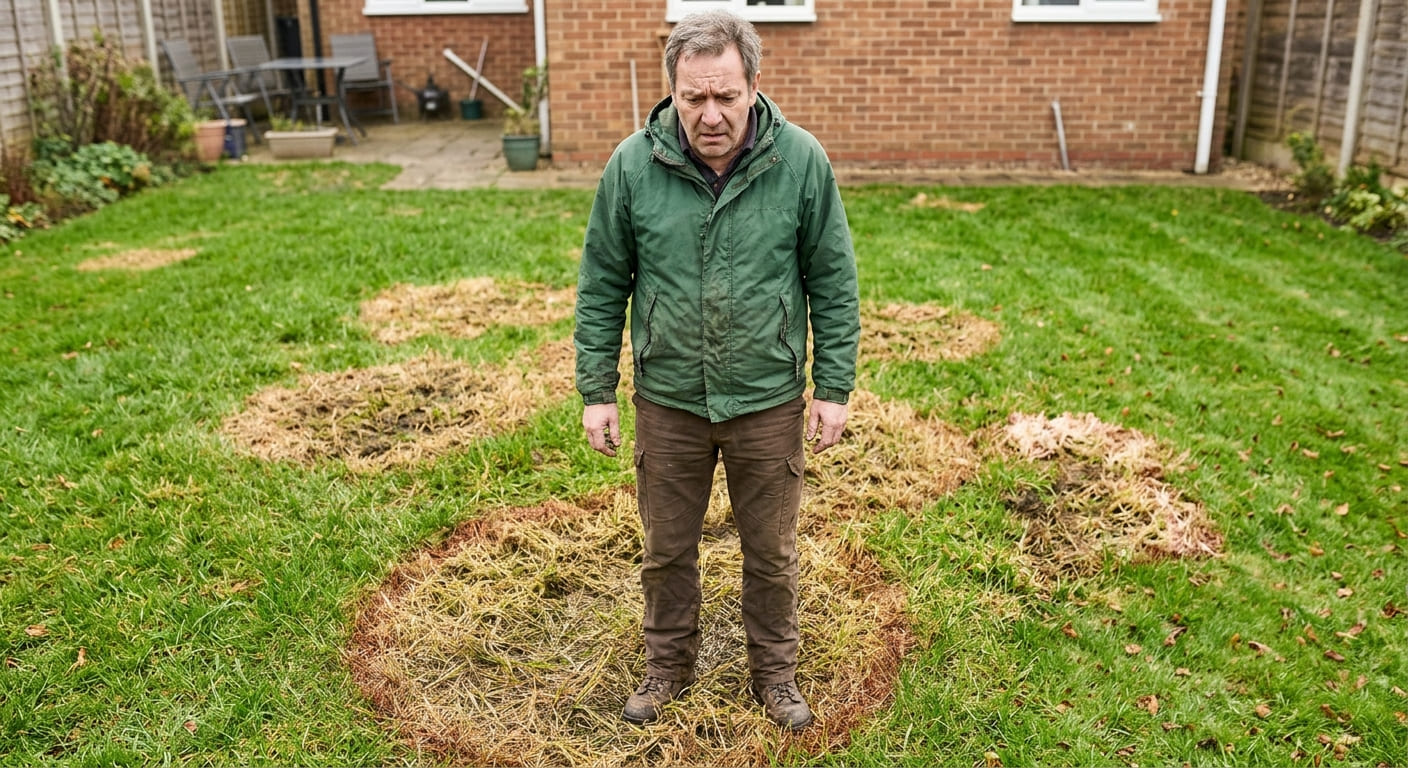
You’ve had your morning coffee, you’ve pulled back your kitchen curtains to find a tawny (orange brown) patch of the size of a dinner plate. You were not expecting this to happen. Fusarium patch is the most common lawn disease in the UK. Between October and March it is by far the most common question we receive “What is wrong with my lawn?” After working on lawns across Rotherham and South Yorkshire for over a decade, I can’t tell you how many times I’ve got down on my knees to have a closer look and confirmed it’s definitely Fusarium patch.
Luckily the majority can be prevented. If you already have it, you can prevent the spread and have your lawn back in full health by spring. Let’s take a look.
What is fusarium patch?
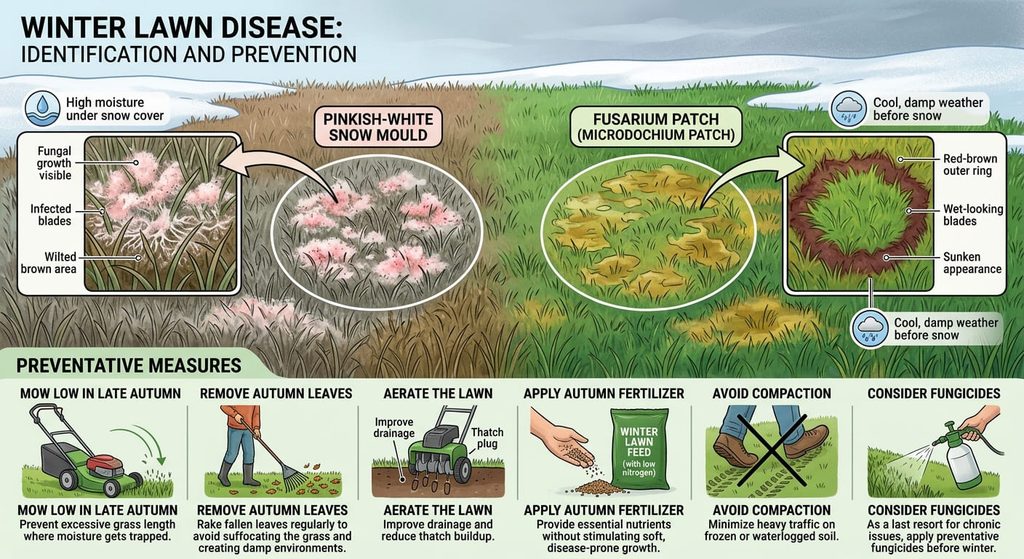
Fusarium patch (Also know as Microdochium patch as it’s caused by the fungus Microdochium nivale) is a cool season fungus. It thrives when temperatures are around 5-15 degrees and the lawn stays damp for long periods. Basically it thrives in a typical South Yorkshire winter!
Signs to look out for:
- Small circular patches of yellow/orange/tan grass. Usually 2-10cms in diameter.
- Patches will grow and join together to form larger irregular patches if not treated.
- There will be a slight darker ring around the circumference of the patch.
- On dewy mornings there will be a slight white/pink fluffy cotton like substance around the edges of the patch. This is caused by the mycelium of the fungus. If you can see this then it’s almost certainly fusarium patch.
In most cases the disease only affects the blade of grass and not the root or crown of the plant so your lawn will recover in Spring. However in severe cases the whole plant can die leaving bald patches which require overseeding.
Snow Mould
Often Fusarium will be mentioned alongside Snow mould. This is because Pink snow mould is caused by the same fungus as Fusarium. It occurs when the grass is covered in snow for long periods of time. There is another type of snow mould called grey/speckled snow mould which is caused by a different organism.
True snow mould is not very common in the UK as we don’t tend to have weeks of snow. However if we do have a cold snap (We’ve had some good ones in recent years!) then you can get circular patches of matted grass as the snow melts. If you don’t get snow then you are much more likely to get regular fusarium patch. Prevention and treatment is the same so we’ll cover both.
7 common causes of fusarium (And how to prevent them)
Fusarium doesn’t just randomly occur, it takes advantage of situations we create. Listed below are the 7 most common causes we see on lawns in Rotherham and surrounding villages.
1. Leaves on your lawn
A layer of wet autumn leaves creates a warm humid dark environment which is perfect for the spores. Make sure throughout October and November you are keeping on top of clearing leaves off the lawn. A leaf blower or quick rake once a week will be sufficient. We explain exactly why in our leaf piles article but it really is the easiest thing you can do over winter.
2. Overfeeding with Nitrogen
Feeding with a high nitrogen feed after early September will encourage soft, lush sappy growth which Fusarium loves to feed on. From mid September onwards use a Autumn/Winter feed with high levels of potassium and phosphorus but low nitrogen. This will help harden the grass and make it more resistant to diseases. We use the correct ratio and timing of our winter liquid feed as part of our lawn care treatment program.
3. Thatch
A thick thatch layer will trap moisture at the base of your grass and encourage fungal spores. If you haven’t scarified this Autumn make a note to get it professionally done in September. or a light rake will at least clear some of the debris.
4. Poor drainage
Water sitting on your lawn for hours after rainfall will encourage diseases. Our clay soils in South Yorkshire are prone to this. Aerating your lawn with a hollow tine in Autumn will help improve drainage and reduce the attractiveness to Fusarium.
5. Mowing too short
Mowing your lawn too short will stress your lawn and make it more susceptible to disease. Increase your mowing height for your last few mows of the year. Never cut shorter than 25mm in Autumn. The taller the grass the deeper the roots will be making it more resilient.
Check out our article about: Lawn Mowing & Grass Cutting Tips
6. Dew
For the fungus to affect your grass the leaves need to stay wet for long periods. A light brushing/switching of your lawn on still dewy mornings will help. It may seem like a silly task but it’s a trick we greenkeepers use!
7. Poor air circulation
Overhanging shrubs/fences and lots of tree cover will reduce light and air flow causing the grass to stay damp for longer. Try to prune back any overhanging growth.
If you already have it:
Don’t panic but act quickly as it can spread very quickly in damp conditions.
1. Confirm it is Fusarium. Check for white/pink fluffy edges on a dewy morning. If you’re unsure take a photo and send it to a lawn care specialist. We’re always happy to have a look!
2. Stop using any Nitrogen feeds.
3. Brush off the dew if possible.
4. Remove fallen leaves the same day.
5. Avoid walking on the patch. Especially if it’s frosty as the blades will be damaged and more prone to infection.
6. Consider using a Fungicide. Unfortunately since most amateur fungicides have been removed from the UK market, the real effective ones are only available to professionals. We use professional systemic fungicides at the correct rate and time as part of our winter treatment.
7. Plan to overseed any bald/thin patches in Spring once the soil temperatures have risen. Contact us for a free lawn renovation quote.
Common mistakes to avoid:
Using a “Quick green” feed in Autumn to make your lawn look nice for your neighbours. This encourages the lush growth Fusarium needs.
Leaving the box off your mower so clippings are left on your lawn over Winter.
Walking on your lawn when it’s frozen. This will cause damage to your blades making them more susceptible to infection.
Ignoring small patches. They will join together within days in damp conditions.
Conclusion
Prevention is always easier and cheaper to prevent lawn diseases in Winter. If you’ve had Fusarium/Snow mould before or just noticed the first orange patches then don’t wait until Spring. The quicker you act the less damage will be done.
At AJR Lawn Care we offer a seasonal treatment including Winter Moss Control and Winter Liquid Feed. We will notice the early signs of Fusarium during our regular visits before most Homeowners would. If you’d like us to have a look we’ll carry out a free lawn analysis and advise you exactly what is happening and what we can do to protect your grass through to Spring.
Attention to detail is key! Including the Winter treatments most people won’t even see.
Request your free lawn check & quote →
FAQs
Will fusarium patch kill my lawn?
Most of the time it will only affect the grass blades. There will be some recovery from spring. However if left untreated over the winter it can severely affect the crown of your grass, therefore causing bare patches needing to be reseeded.
Can I treat fusarium?
Yes you can control the conditions (dew, leaves, feeding & air flow) which will often be sufficient for a small area of infection. As the products have been removed from the UK, effective chemical controls are now reserved for professionals. If you are suffering from regular or quickly spreading fusarium a professional fungicide will give you a guaranteed solution.
When is the best time to prevent it?
We would recommend taking steps in early autumn to prevent it. Getting your last feed, clearing your leaves & aerating by mid October will help throughout the winter. However you can take action at any time to prevent it spreading.
Is it safe for pets & children?
The fungus itself is completely harmless to humans and pets. If we do treat it professionally we will advise you how long to keep off the grass, usually until it is completely dry.
Why does it happen every year?
As the reasons for the fungus occurring (compacted clay soil, shade, thatch & incorrect feeding times) are still present every winter. By tackling the root cause it will no longer be a yearly problem.



